
Your cart is currently empty!
2023 Garden Review: Missed, and Misses

Get updated by email whenever there’s a new post
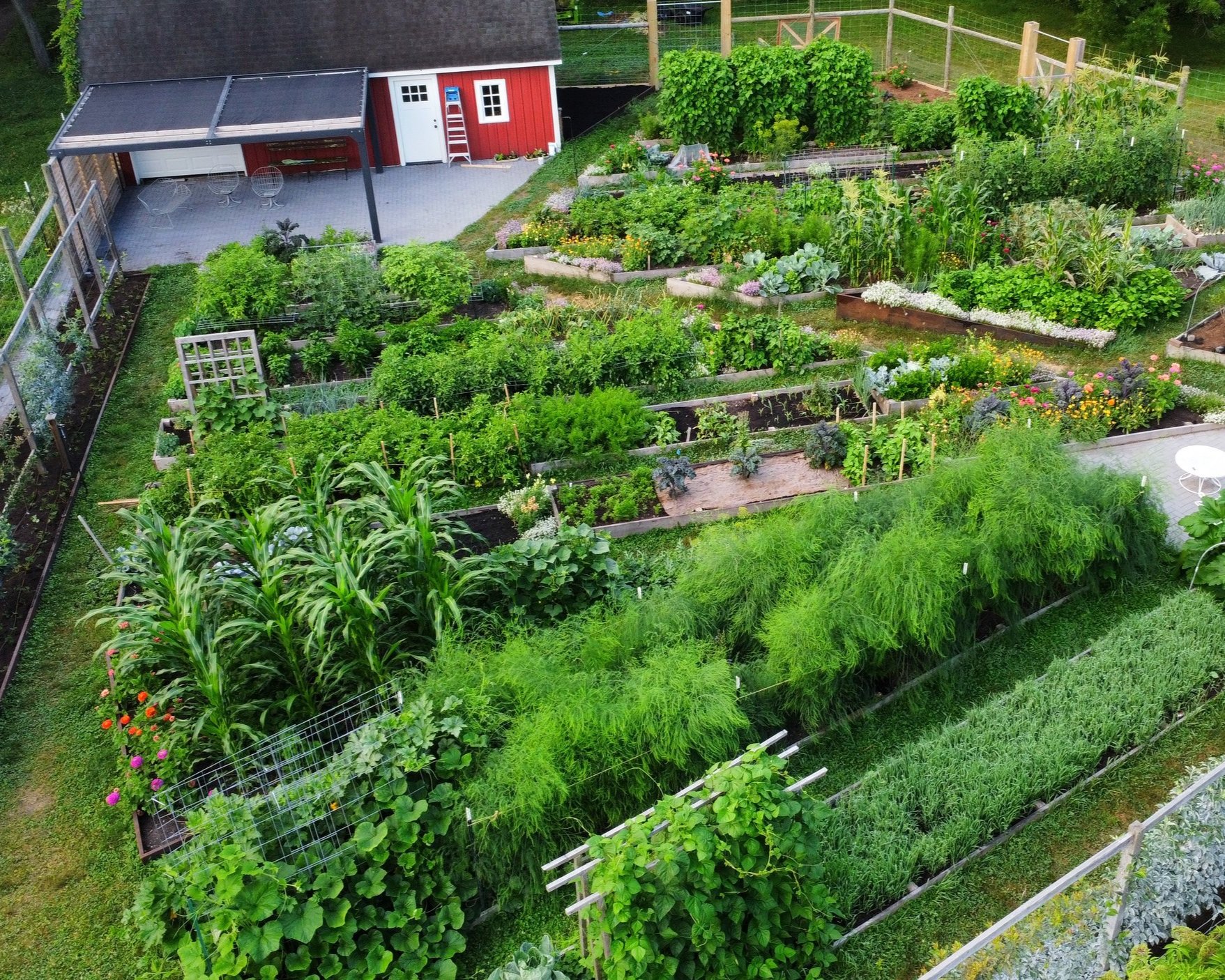
Well the garden always provides. That much we know. It just doesn’t always provide that which we’d hoped. Or maybe we took a leap of faith and extended ourselves in a way we’d dreamed would be life-changing but it only reinforced that we already had the best approach.
These are the great, expansive parameters in which we grow. The ability to re-define our garden every year is without a doubt why this pasttime turned career has not gone dull, competing for newness and sparkle, it delivers every single year.
Here are some of the things we did differently that didn’t work and the things I didn’t grow that I missed. All these topics are deeply defining our 2024 garden plans.
Needs Work
The Tomatoes
I talk about tomatoes often. We grow a lot of tomatoes. We eat a LOT of tomato-based dishes in winter, hence the tomato talk and growing. Also true: our family size will be changing soon. Our biggest tomato-based fan will be flying the coup, which leaves me sincerely rethinking our tomato square footage.
We used about the equivalent of 3, 4×8 beds for determinate tomatoes this year for 14 plants. The plants, despite our horizontal panels and an increase of space from 30” in parallel rows to 36” offset zigzag type rows, were planted too densely and again were a real pain the you-know-what to harvest. And the disease pressure mounted by late August, around the time the Italian Romas had peaked and the Plum Perfects were just getting going.
I am going to try to grow just 12 Plum Perfects next year, and plant them one plant in the center of the bed 36” apart. It will take more square footage for fewer plants, but I think we will need to start growing fewer tomatoes starting in 2024.
As far as our indeterminates, I am planning on reducing the numbers there too. We had about 4 pastes in that planting, and I’ll likely keep at least 3 Speckled Romans — and then allow myself maybe 7 more plants, 2-3 cherries and the rest beefsteak/slicers. This is a continued reduction of tomatoes in this bed as this year I think I grew 14 there as well.
I attempted — and succeeded — at growing patio (micro) tomatoes along our main path this summer. They were adorably cute, topping out at maybe 24” tall at most, highly productive and would be excellent in containers … yep, you guessed it, on a patio. I will try these on our deck next year and it will allow us to grow one fewer cherry tomato. They were extremely prolific and if I only had a small urban garden, I’d probably be growing more of these and less of the larger tomatoes.
Near Misses
I missed late summer squash. I didn’t plant more in late July and so when I pulled it out to prevent a lot of Squash Vine Borers from pupating in our soil, I had no more squash.
I also succession planted bush beans 3 times but wasn’t very good about harvesting every day and so both the Gold Rush and the Maxibel Haricot Vert got tough, and then I sort of abandoned them. Because the Japanese beetle pressure has subsided, I am going to revisit pole beans next year (Fortex is my old favorite) — and I might try a variety that is good for canning too. More on bean varieties in the winter months.
I think I need to really refine our peppers for next year. We grew more poblanos — and a short-season hybrid at that — and they just didn’t ripen at all (at which point they’d become anchos after smoking and drying). I want more bell peppers too, because if climate change continues to impact my garden the way it did this year, the future for Minnesota bell peppers is looking very very bright.
Complete Misses
How I failed to plant, killed starts, or overlooked crops is really a testament to trying to do too much in any given year.
Parsnips
I just forgot to sow these in May. I am sad because mashed parsnips with my stuffing and other roasted roots was so delicious last year. I will make notes in my sowing spreadsheet so that I don’t forget them. I’ll try to sow them on Mother’s Day along with my buckwheat cover crop to anchor them to a specific time in May that’s easy to remember. They are a late season and somewhat novel crop for me, having only grown them once in 2022 so far. They would be great root cellar companions and store for months in cold storage.
Fall Kohlrabi & Napa Cabbage
Well this was just a complete lack of follow through and overwhelm, with some procrastination mixed in, too. I didn’t get my fall kohlrabi and napa cabbage planted before my knee surgery, and then left them to be devour while desiccating on our patio, much like I did to my fall celery last summer. It’s almost a rite of summer passage to intend to grow it all and watch as a different crop each year falls through the predictable cracks in my system.
Napa cabbage stores like a dream, so I am extra cranky at myself for not following-through on these starts and instead abandoning them.
Wheat
We have Red Fife wheat seeds and I did want to grow some this year as sort of an easy use of space. We’ve done calculations and if we wanted to grow enough wheat for our sourdough needs, we would have to plant the entire garden in wheat. So, for obvious reasons, this is just a novel crop, not one that we will make too much with, though we would use the harvest for some special loaves at the holidays I’m guessing.
In order to make this work, I’ll need to reduce my brassica plantings and/or reduce some other summer planting for next year so I need to. figure out where this will grow.
Poppy Seeds
Poppy Seeds sat out all spring on my kitchen countertop hoping to be sowed — indoors, in a winter sowing jug, or even direct-seeded. Alas, it never happened. But this, like the pepitas and sesame I so enjoyed growing, is a crop that I hope to add to the garden annually for baking needs. Who doesn’t love a lemon-poppyseed cake? I plan to grow poppy seeds in the triangle bed where we grew watermelon this year and interplant with other flowers and sweet potatoes. Like the flowers + watermelon, this combination should work well, and the poppies will be done by sometime in July as the sweet potatoes are just starting to sprawl every which way.
Late summer dill
Probably one of the most disappointing failures of summer is my continually fragile relationship with succession planting dill. And it’s for one reason only: I’ve stopped sowing it, and just let the self-sown dill do it’s thing. This means that I have dill nearly-perfectly timed dill blossoms for the first round of pickles (mid-July), but later in summer (late August and September) we enter the great dill dearth.
So I intend to direct seed dill in the middle of June and again in early July to get us through the season. Dill like to be crowded, so sprinkle heavily and don’t bother to thin them out.
Cumin
I really really wanted this to be a thing I succeeded at, growing my own cumin. It’s probably in our top 3 herbs we use. It’s used in our chili, Latin, Mediterranean, and Asian cuisines. But it just shriveled up and died when I transplanted it. I will keep growing and studying it and hope I can unlock the secret to growing it here. There’s hope, I know I just need more time understanding the plant’s needs.
None of these things broke my heart or ruined our summer. We lived with less dill, using seeds instead of fresh blossoms. We worked around the diseased tomato beds, enlisting the kids to harvest the canning tomatoes. We overdid our fall cabbages, so the lack of napa cabbage is more than accounted for in the heaps of green and red cabbage I’ve put up in the cellar. But I do appreciate the opportunity to witness some common threads through time: that something will always fall through the cracks and that even with failures, abundance prevails.


Get updated by email whenever there’s a new post
Comments
If you’re a subscriber, you can discuss this post in the forums
Leave a Reply