
Your cart is currently empty!
Tomato Powder: How to Make Your Own Tomato Paste from Garden Tomatoes
Get updated by email whenever there’s a new post
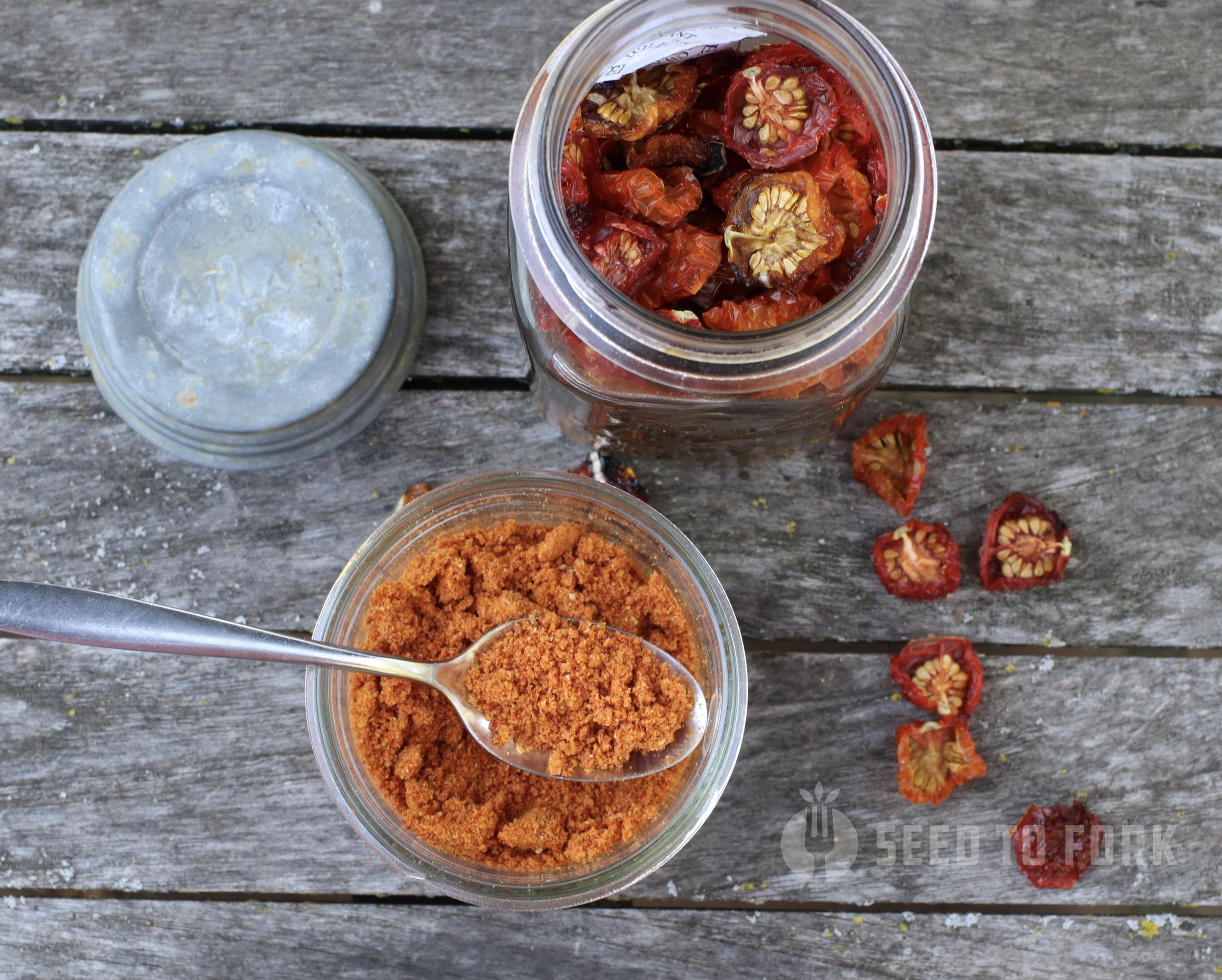
One of my favorite new ways to process tomatoes I learned last summer from my friend, Kristina, in California, tomato powder continues to be a simple, effective way to “put up” tomatoes in a jiffy. Taking a few days to dehydrate in a food dehydrator, you yield little chewy to crunchy garden snacks. Leave them chewy and you have a snack, let them go another 12 hours or so, and you have the makings of a dehydrated tomato paste.
The result is a versatile pantry item that bolsters sauces, soups, and other tomato-based dishes. Depending on the variety, it adds a rounded tomato sweetness that can only be found in homegrown tomatoes. To add even more flavor to these dehydrated tomatoes, consider oven roasting them first, though it is not necessary.
This super simple preservation method is also a favorite of mine because it allows you to store a lot of tomatoes in very little space, and frees me from buying cans of tomato paste anymore. And I really love that freedom.
Instructions
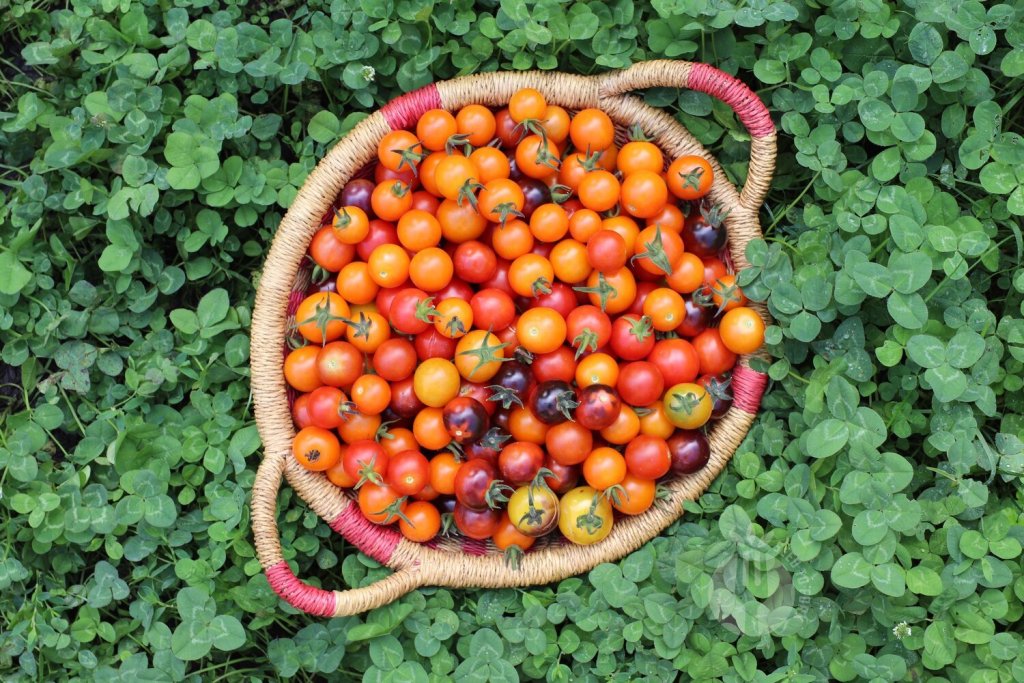
- Gather a few pounds of cherry tomatoes.
- Halve the tomatoes and lay on on a dehydrator tray.

- Set your dehydrator to 135 degrees (fruits and veggies).
- Set a calendar reminder to check on them in 48 hours. Depending on moisture, it may take a little longer.
Personally, these little summer bites are like candy. I enjoy snacking on them as much as I use them in the kitchen in place of tomato paste.
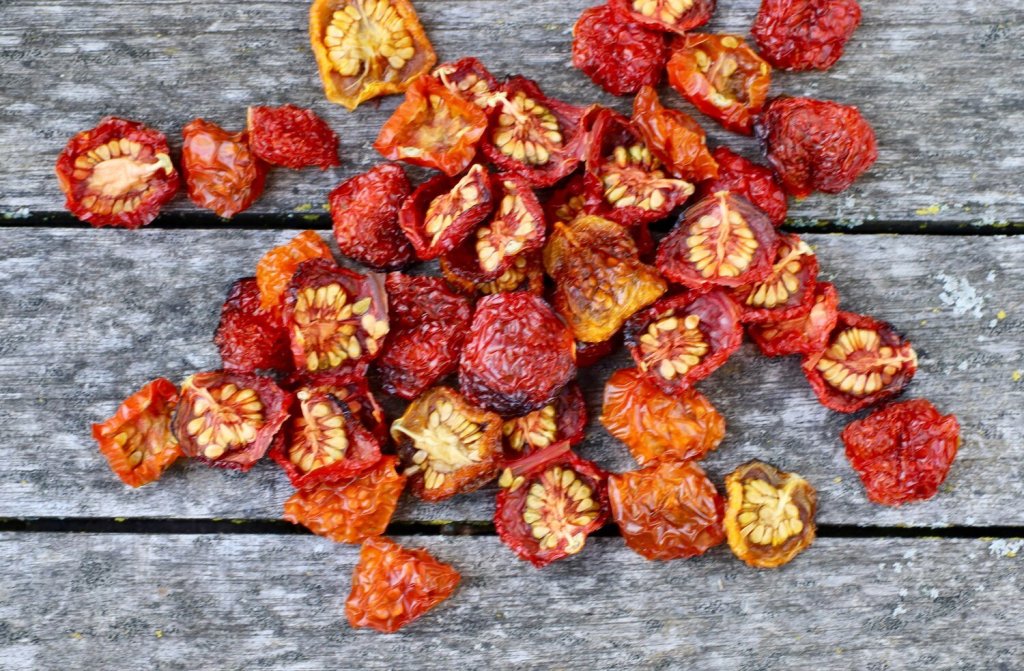
I set some up before leaving town for 3 nights. I set it on about 115 degrees. When we arrived home, they were done but not completely overdone.

ou need enough dehydrated tomatoes to use something large like a Vitamix for processing, but you could do it in smaller batches in a coffee grinder. We have a very old Krups coffee grinder whose sole purpose now is to grind spices.
Once fully dried, the key to safe, longterm is to keep the moisture out. I use these tomatoes up within about 9 months, or until fresh tomatoes are available again next summer.
Airtight containers, a freezer bag in the freezer: use what you have, but be sure they are stored in a low-moisture environment. If you have high moisture in your home, I’d strongly recommend storing them in your freezer. The main concern with dehydrated tomatoes is the possibility of mold forming, which would spoil your food.
I encourage you to take the time to visit some of the USDA’s recommended websites on drying vegetables, including this one: https://nchfp.uga.edu/how/dry/csu_dry_vegetables.pdf.
How I Store Them
I store my tomato powder in an airtight glass container in my pantry. It definitely clumps a little, but nothing a splash of water won’t remedy as I use it in my cooking.
I don’t grind all my tomatoes at once. Instead, I grind about 1/2 cup at a time, use that up, and then grind a new batch. I find leaving the tomatoes in whole form is best, though perhaps that is just because I think it’s a beautiful sight to behold on my countertop all winter.
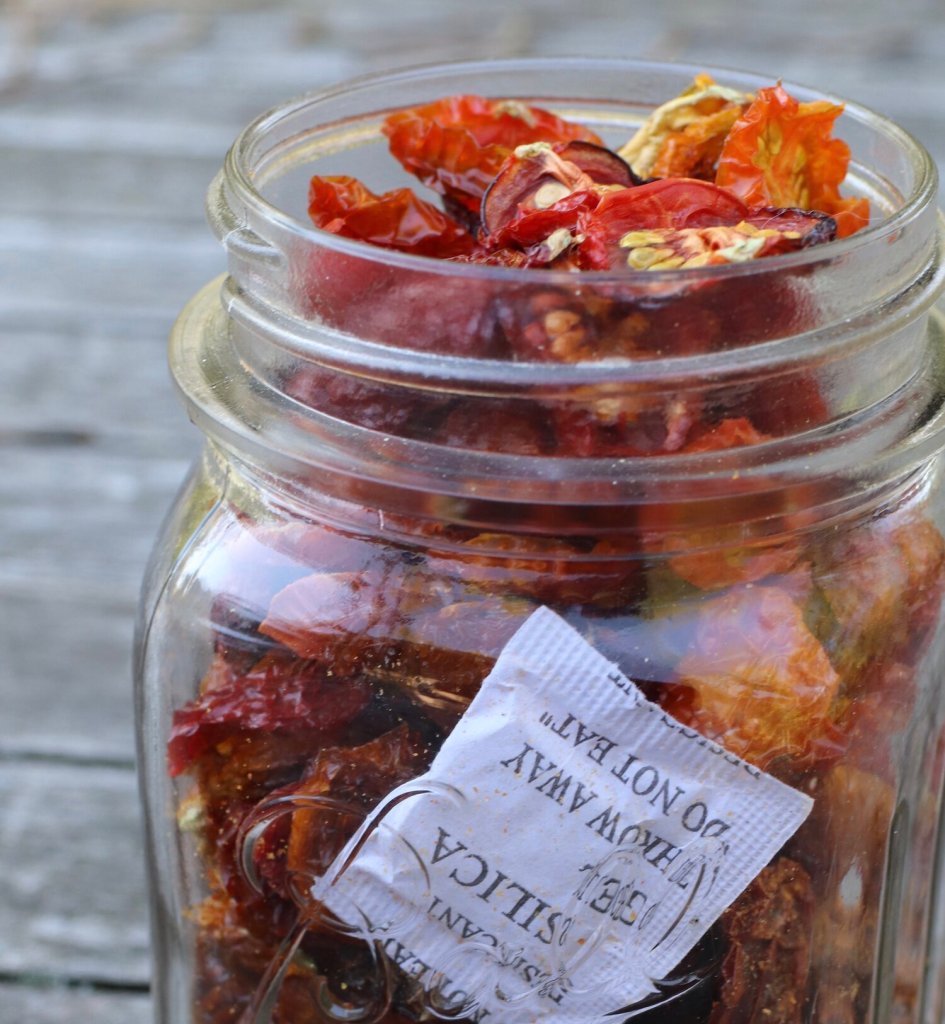
I always add a desiccant to my dehydrated tomatoes to ensure moisture remains low inside the container. I reuse these from packaged foods such as sushi roll packages and other prepared foods or shipped goods we purchase from time to time.
Sometimes preserving the beauty of the season is half the fun of preservation.


Get updated by email whenever there’s a new post
Comments
If you’re a subscriber, you can discuss this post in the forums
Leave a Reply