
Your cart is currently empty!
Best Practices for Heat Waves

Get updated by email whenever there’s a new post
I admit heat waves in Minnesota are not super common. Don’t get me wrong. It breaks 100, sometimes for multiple days in a row. But as we are in the midst of a dry hot spell and it’s barely past our last frost date/planting date, it made me think just how important these practices are becoming for me every year, and I wanted to revisit this topic ASAP for everyone who might be in it with us.
These heat waves sometimes leaves our plants in a bit of a protest or might invoke flowering as in heat intolerant brassicas, but I tend to be an optimist and hope that by gardening with sound practices, I am setting my garden up for being able to weather the weather.
I don’t completely fret heat waves in spring for a few reasons. First, because we start so early, therefore most of our heat intolerant spring garden vegetables are nearly mature. I find our bok choy the most heat intolerant early season veggie, along with the arugula which had already bolted before the heat wave.
There are some strategies for helping plants manage stress during heatwaves. Deep watering during early hours (if you have irrigation on a timer, you can set this up for 4am or so) is a key strategy. And know that some plants will wilt — its a physiological response and if it’s happening when it’s 100-degrees out, and it doesn’t mean it’s dying, though it is stressed. It’s doing what it knows to do to preserve its energy. For us in the upper midwest, this too shall pass, so we just need to get through this week or so and hopefully our plants will more that survive.
Select your seeds wisely
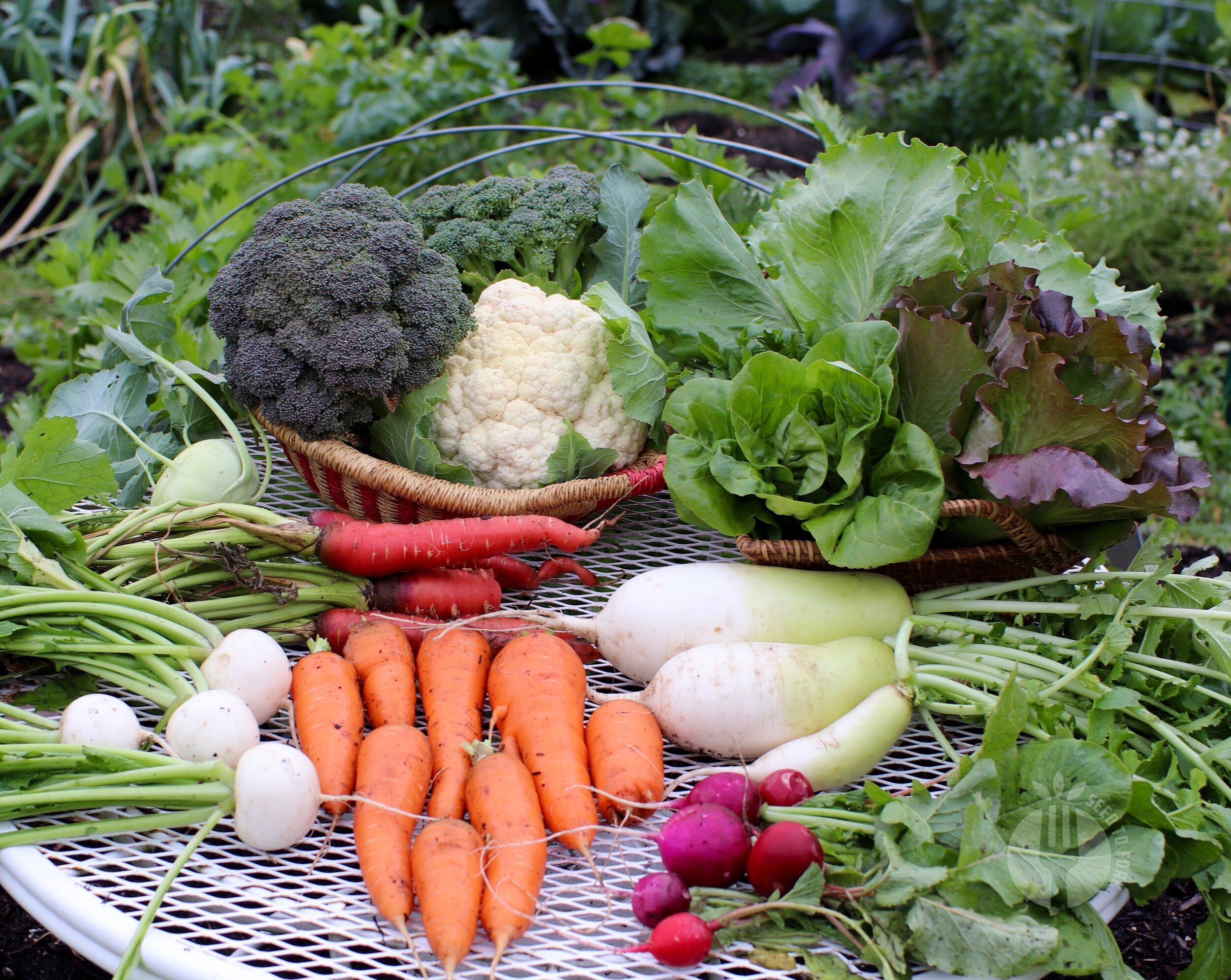
I grow a lot of heat tolerant varieties, even in the early season. I find they are adaptable to both cold and heat, so they are wonderfully reliable in spring when temperature spikes are as likely as dreaded cold snaps. At this point, it appears that we may be in for a scorcher of a summer, and a June heat wave is now the norm even way up here at 45 degrees north. My favorite hybrid broccoli varieties include Belstar and Covina. They both grew wonderfully for me last summer and it was our hottest and driest summer ever here.
I’ve never had red cabbage bolt on me, not even when it sits in the garden for weeks in August waiting for me to harvest it. Same goes for green cabbage; the more probably thing that occurs is the fast growing varieties will split open on me, which demands harvest and processing immediately.
Lettuce is another vegetable I plant many varieties of, and by April my focus is on heat tolerant varieties. I currently grow Coastal Star, Concept, and Jericho in summer. They do bolt, but not nearly as fast as more tender romaines or even our darling icebergs.
Many of the foods I enjoy growing in spring I also grow in fall. Perhaps a strategy would be to lean into more leafy greens in the early season, things that mature in 40 days or so, and leave the 2-3 month cabbage, broccoli, and the like for the late summer and early fall garden where shorter days and cooling temperatures are ideally suited to their needs.
Time your plants appropriately
You see me push my early season. How early are you starting? Can you start earlier without much extraneous efforts or resources? If you don’t have the resources to extend the early season for more heat intolerant foods like bok choy and some types of broccoli, consider focusing on fast-maturing direct-seeded leafy vegetables in early spring. I’m thinking mustard greens, arugula, spinach, leaf lettuce, cilantro, radishes, and so on.
It’s not advisable to transplant or prune right before or during a heat wave. Now, I can’t in good conscience say I haven’t or don’t do this from time to time, but it does require extra work. One hot July weekend, I transplanted a bunch of strawberries into compost. They wilted and shriveled and protested but bounced back later in summer and went on to produce over 100 lbs of berries the next spring. So, yeah, we make the rules.
Focus on the Basics
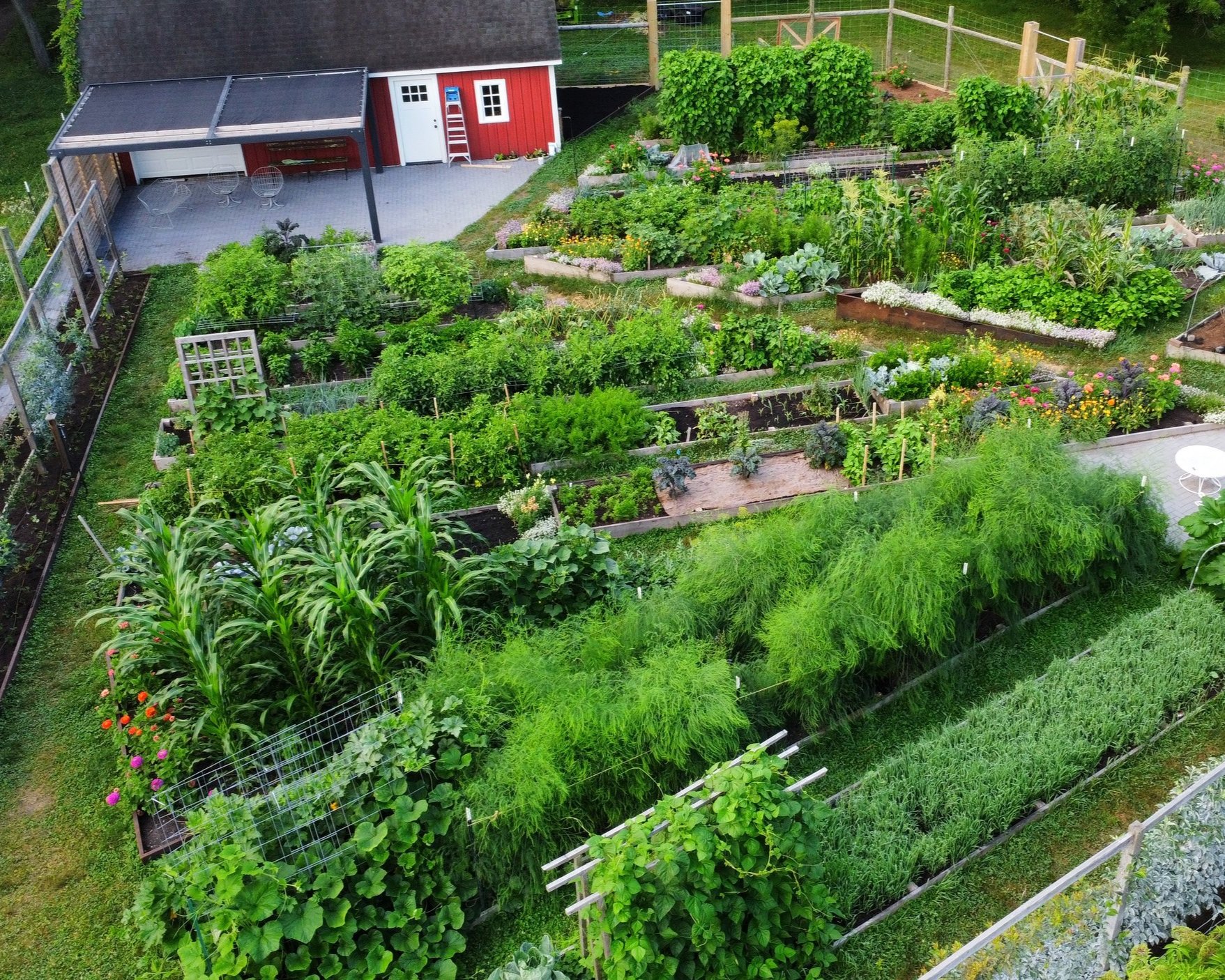
Have you taken the time to really set your garden up for success? Like with any home improvement project, building a garden is 80% pre-work. You need to think about the resources, design the space, invest in the materials, and execute.
Growing food that is resilient to heat waves includes what I’ve mentioned above (timing, seed selecting, and season extending) plus a core foundation of best practices. Mulch may be the best change you could make to your garden this season. It holds in moisture and helps keep the soil cool, two key threats to moisture retention.
Drip irrigation is also key. We actually have buried our drip irrigation under our top dressing of compost — the drip lines are 2-3” below ground in most beds. This means the plants are getting a deeper watering from the start — and our installer said the lines will last longer when not exposed to UV, so it’s a win-win.
If you don’t have drip irrigation, deeply water in the early morning or later at night. If seedlings are in the ground, watering daily during heat waves is sometimes a good idea. Your plants will tell you if they are unhappy and if they droop in the middle of the day, they are stressed (but I swear, most times, will bounce back in a week or so, especially after it cools off).
Keep up with the weeding. Minimize competition for water and nutrients by keeping weeds at bay. The more weeds your vegetables are contending with, the more they are competing underground for resources. In times like unusually hot weather, you don’t want your tomatoes or cucumbers to be negotiating water uptake with crabgrass seedlings or creeping charlie or .
When in Doubt, Harvest Early
If you have some food that is “close”, maybe the best strategy is to harvest small and enjoy. We have some broccoli side shoots on some of our DiCiccio that has bolted on us this week. More of our napa cabbage, I’m told, has also started to bolt on us! I’ll be home tonight and will share more details as soon as I see it.
If your heads are not quite the size you wanted them to get but they are modest, harvesting and enjoying them right before the heat wave is a great way to enjoy your hard work and reset the space for some warmer season succession
Protect your Prized Possessions
At what point do you take extraordinary efforts to lay shade cloth over your vegetables? This is a question I don’t have a clear answer for. To be honest, I am very hands off with the garden. I enjoy seeing how plants respond to these uncertain times, selecting varieties that will walk alongside me for seasons to come in a way that meets my ability to support them (which is, ideally, plant them and set them free!).
A few years ago I set up a very last-minute, shoddy shade cloth for some summer lettuce, but it looked terrible and as such, I took the eyesore down almost immediately — and my lettuce bolted. Haha! Two years ago was the first time I really tried to use shade cloth proactively in the garden — and the only planting I used it for was my beautiful planting of 9 iceberg head lettuce. They were close but still a few weeks out from maturity when I left, and I wanted to see this planting come into its fullest potential, so I installed several hoops and my husband fashioned the shade cloth on.
Shade cloth is not the only resource you can use.
You may recall that I sometimes double up my agribon for protection as I harden off seedlings. Row cover, the common name for agribon, can also be fashioned as a shade tent over plants. When doubled up, they usually reduce sunlight by 20-30%, depending on the type. Sheets can also work in a pinch, but not recommended in my opinion. Plastic will not work because it’s not breathable like the other materials I mentioned and will instead make it hotter. As an aside, I saw a toddler in a plastic-covered stroller in downtown Minneapolis yesterday and almost fainted at the site. The parents were maybe thinking they were protecting them from the sun, or ?, but it was a heat stroke in the making.
I also regularly use shade cloth now as my hardening off helper. I can set and forget the plants outside, assuming they are all well watered, and let them sit in shade for several days until I have more time to dedicate to the hardening off timing.
A few years ago, I wouldn’t have considered shade cloth a necessity here, but I have completely changed my mind and am glad I have several sizes ready for use for these sudden burst of heat.
transplanting: When to Hold Back
I don’t usually get so cautious but this season I have made the decision to delay all of my flower transplanting until after the majority of this heat wave moves through. I technically could have planted them all last week, as they were all hardened off by then, but I’ve been watering them twice a day (why I prefer to get them in the ground … it’s a lot of babysitting) all week and even adding the shade cloth to keep it cooler.
Because of this early heat, I am protecting all my seedlings and waiting until it passes before planting. In part, because I can see that our weather will break and we will dip way down into highs in the 60s for the next week or more.
So, why risk it? Why take these beautiful starts and subject them to such a difficult start?
Is it possible I’m mellowing out and growing wiser over these last few years? Taking less risks and being more level-headed with my garden plans? It’s oddly comforting and makes for a much less stressful start to the gardening season.
You might also like:
Get updated by email whenever there’s a new post
Comments
If you’re a subscriber, you can discuss this post in the forums
Leave a Reply