
Your cart is currently empty!
Crunchy Dill Pickles
Get updated by email whenever there’s a new post
I don’t know about you, but if you’re a canner and have ever opened a jar of your summer’s cucumbers pickled only to be met with a floppy mess, you may be leery of recipes claiming crunch.
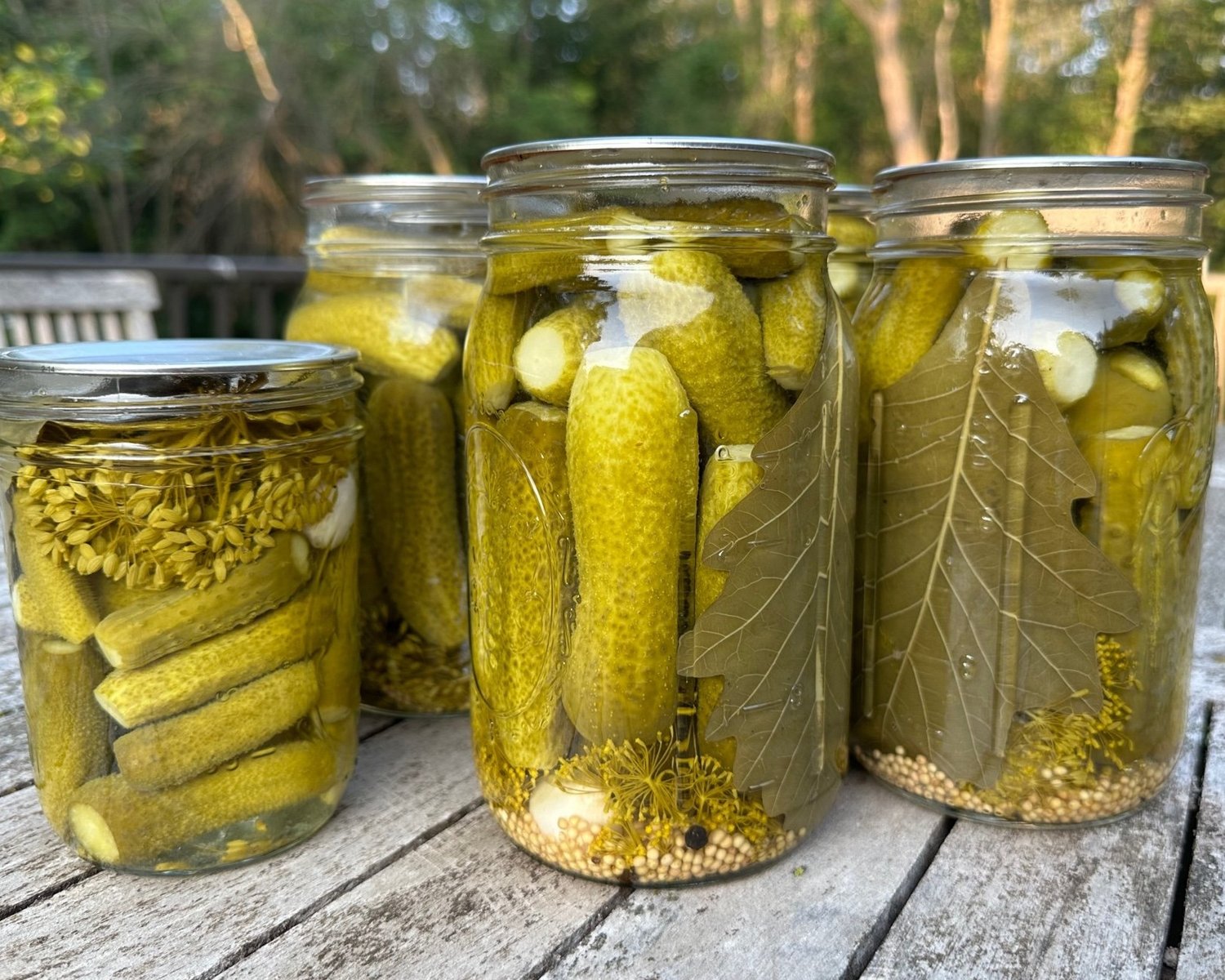
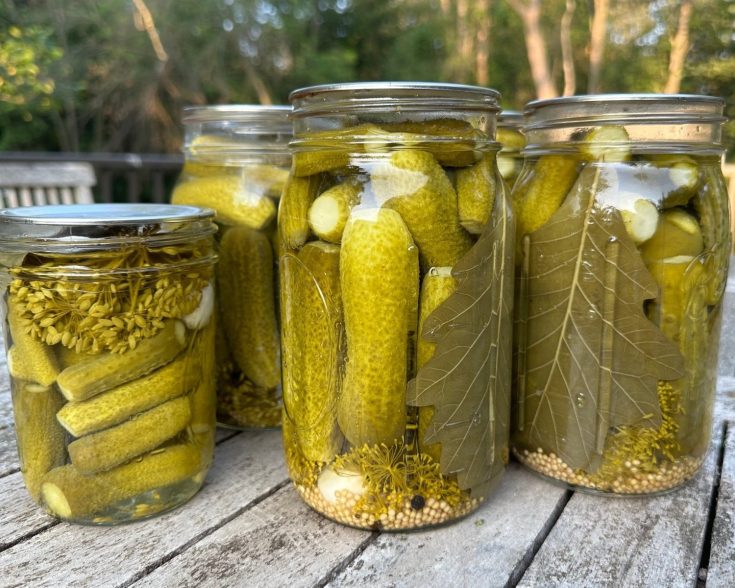
The first key to our pickle recipe is the addition of tannins in the form of oak leaves. Lucky for us, we have planted about 6 swamp white oak trees on our property since moving here, so never have a lack of leaves. Alternatives to oak leaves include grape leaves (I’m guessing many of you might have grapes growing wild or otherwise), raspberry or cherry leaves.
The second most important key for crunchy cucumbers is to pick them small! We have been learning this the hard way. It’s not always easy to get out there every 12-24 hours to pick them, and even more so challenging to have enough ready at the right time to preserve their crunch. But we have transitioned to pickling our cucumbers WHOLE and this has really improved their crunch.
If you have pickling cucumbers that are wider than an an inch, consider making it into bread and butter pickles or sweet relish instead. This is what we do with our “too big” cukes, of which there are always some (and sometimes too many). And these other pickling recipes are less urgent in my opinion, and can be done up to a week after harvest, so that’s a definite bonus too. They also make great holiday gifts.
The final and equally important step for good pickles is to soak them in an ice water bath for an hour before processing. This gives you time to get the oak leaves, peel the garlic, clean the jars, and get them set up in the hot water canning bath.
In the past I’ve used recipes that are 50/50 distilled vinegar and water and they are, frankly, intensely vinegary. So this year I’ve switched to the Ball canning jar brine recipe but with my tried and true seasonings. I think the slightly lower acidity and small amount of sugar will help balance the sourness just the right way.
Crunchy Dill Pickles
Ingredients
- 4.5 pounds pickling cucumbers, all smaller than 5” long and blemish free
- 4.5 cups vinegar
- 6 cups water
- 5 tablespoons canning salt
- 3 tablespoons sugar
- ADD TO EACH QUART JAR:
- 1 oak leaf
- 1-2 heads of dill, flowering
- 1 tsp mustard seeds per quart
- 6 peppercorns per quart
- 1 clove garlic
- 1 chunk jalapeño, or other hot pepper (optional but fun)
Instructions
- Rinse cucumbers and place in a large bowl. Cover with ice and add enough cold water to submerge. Set aside for 1 hour.
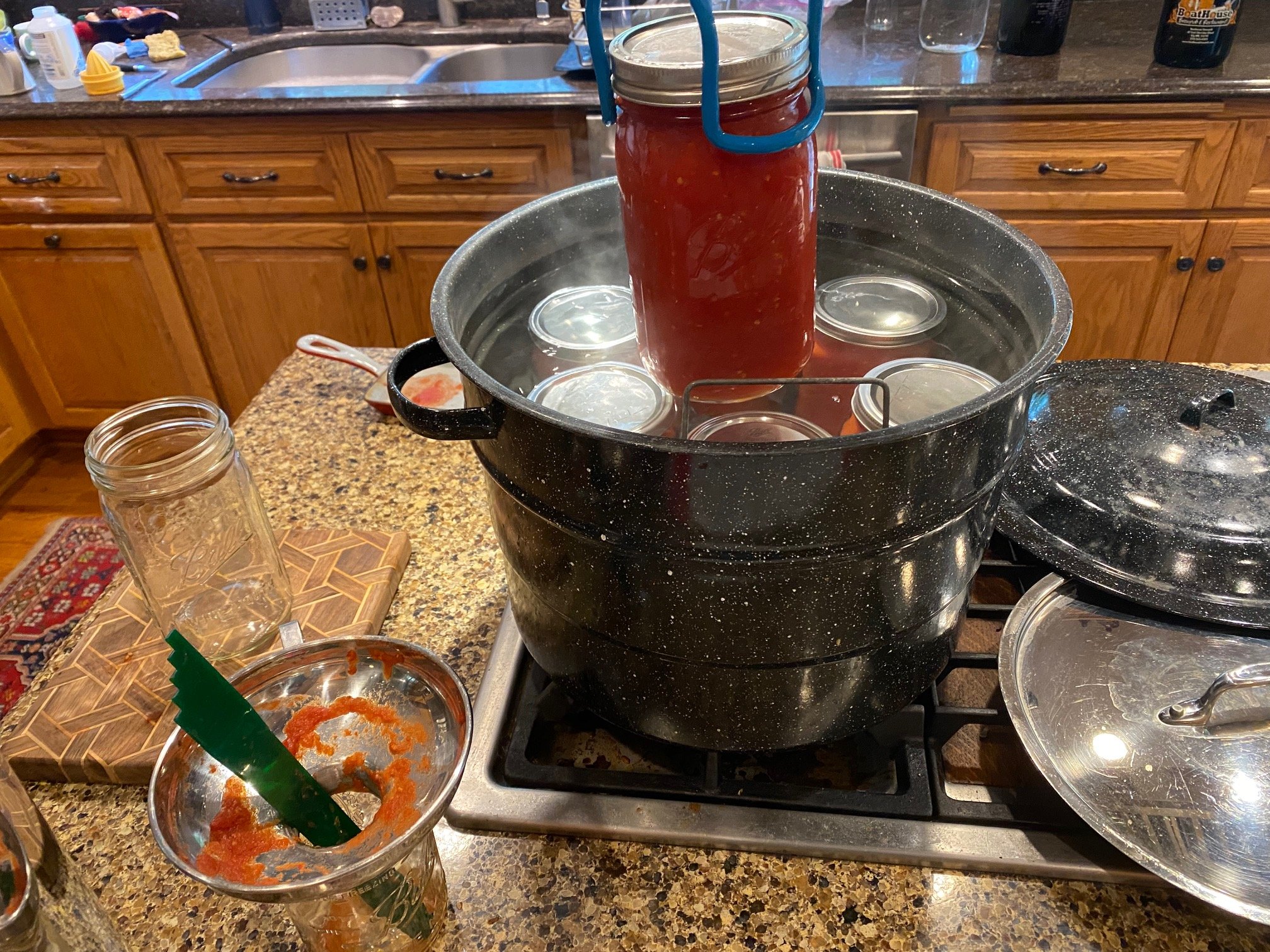
- Meanwhile, prepare 4 quart jars and 1 pint jar. Wash jars and lids with soapy water. Fill water bath canner to about 3/4 full and add the glass jars. Bring to a boil and then turn to simmer.
- Take lids and rings for jars and place in a one quart pot. Bring this to a simmer and then turn off. I add my ladle and funnel to this water a few minutes before I will be assembling the jars.
- In a stockpot, combine vinegar, water, canning salt, and sugar. Bring to a boil.
- Prepare cucumbers by cutting a small piece (1/16”) off each end. This also helps preserve the crunch so do not skip this step.
- Now it’s time to assemble the jars. Take the jars out of the hot water bath Set the oak leaf into the jar, then add the dill, garlic, peppercorns and mustard seeds. Finally, start to stack the cukes in there. Get them as packed in as possible; you’ll be able to fit more than you think.
- Once all the cucumbers are packed into the jars leaving a solid 1/2” head space, grab the funnel and start ladling the hot brine into the jars filling to 1/4” from the top.
- Using a damp paper towel, wipe the rims of each jar before placing the canning lid on. Finally, screw them tight and place each back into the hot water bath.
- After all jars are filled, rims cleaned, lids secured, and all back in the hot water bath, bring the canner back to a boil and boil for 10 minutes (up to 1000 feet, add 5 minutes for each additional 1000 feet of elevation).
Notes
TIP: You want to use your pickling cucumbers within a few days of harvesting. Ideally it would be the next day, but honestly that only happens for about half of any batch for me. I try to use them within 3-5 days of harvest.

Get updated by email whenever there’s a new post
Comments
If you’re a subscriber, you can discuss this post in the forums
Leave a Reply