
Your cart is currently empty!
Defining the 2023 Garden Goals

Get updated by email whenever there’s a new post
Let’s talk about how we define our garden goals. This is a topic I come back to time and again because it is inextricably linked to my seed buying, seed starting, timing of my plantings, the actual garden layout, and my sense of fulfillment year over year.
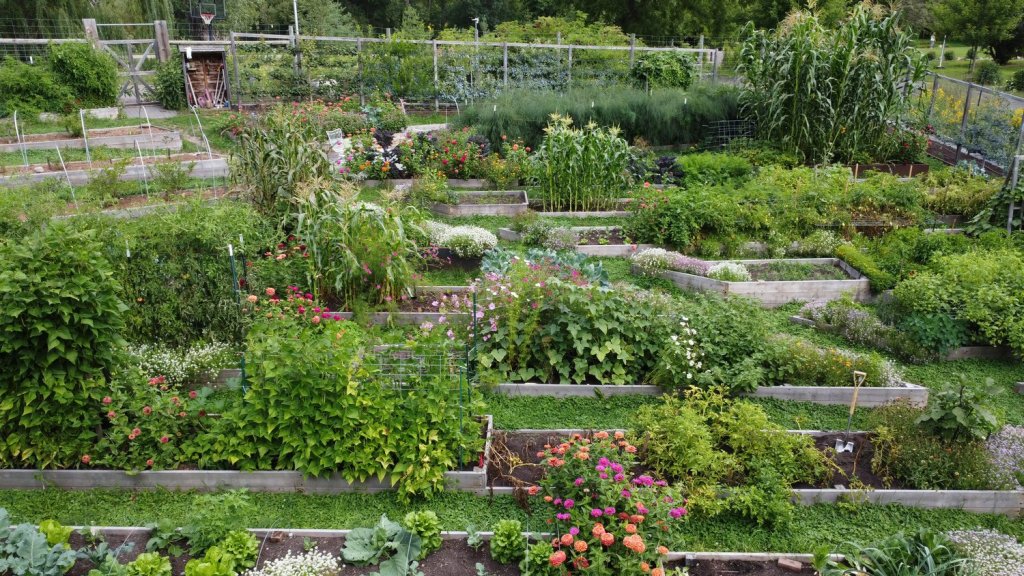
This year we have two really big, competing events that will directly impact how I plan and plant the garden. The first is a pretty big, local garden tour that is happening on July 8. It’s with my Hennepin County Master Gardener program, and it’s a Learning Garden Tour. Succession planting will be the topic covered at this garden (there are 10 gardens to visit), and we will have 10 plants of interest ot highlight, an education station, and the garden needs to be as perfect as possible, a goal I think is toxically positive. The paths will need to be tidy yet lush, the flowers as full bloom as possibly by Fourth of July, and as much early season summer fruit as I can push is my goal. So that means possibly starting some things extra early, like a few cucumbers, and definitely lots of flowers. I really want the garden to be screaming summer at us with pops of color everywhere. Zinnias are usually in bloom along with calendula, snapdragons, alyssum, chamomile, and more by early July.
I also want to demonstrate how robust a diversely planted early summer harvest can be — so I’d like to have cauliflower, fennel, broccoli, cabbages, beets, and possibly some carrots and kohlrabi in season too. Of course, herbs, and lettuce, green onions and peas will also be a goal. I’m sure I’m forgetting something too.
In stark contrast to this early season push, a few weeks after this tour we plan to depart for Europe for 2 weeks!
Gulp.
There are so many factors to consider. Why are we leaving our garden in the height of the growing season? Who’s going to take care of it when we’re gone? How will I start and seed all my fall crops when we are out of town from late July through the first week in August? What can I alter the timing ahead of leaving while not diminishing the lushness of the July 8 garden tour? What kind caretaker will be willing to pick of colorado potato beetles twice daily in our stead? Who’s going to know when to harvest our garlic?! Who will do all the harvesting, weeding, and application of Bt and Cease in our absence? And so on ….
The weeds are the least of my worries, honestly.
How do I plan a lush and early season garden while also, hopefully, equal parts delaying the season on my pickling cucumbers and tomatoes?! This is the big puzzle piece that has been twisting and turning around in my mind’s eye for months now. I think succession planting is probably the answer. Like, duh, Meg!! If I can push the cucumbers early, somehow, I can pull them out in mid-July and replant the space before we leave. That’s a big if though.
Or we delay them and let early flowers and brassicas and some tomatoes be the focus of the garden tour, and highlight the fall garden starting to take shape. That seems like a more solid and wise plan.
I also plan to utilize a lot of cover crops this summer too, to make the garden lush in July but give me some big spaces I can set fall crops in before we depart.
The third big goal is of course annual goal of increasing and improving our year-round consumption. We want our hundreds of pounds of potatoes, and dozens of jars of tomatoes, salsa verde, and pickles plus loads of shelf-stable vegetables too. We hope to grow at least as many dry beans as this year, maybe more. So the big question is: do we delay our vining crops to come into season starting in mid-August, after we return?
I think the wise answer is YES.
But this might mean my normal, jaw-dropping ripe tomatoes won’t be in season for the July 8 tour. See how inextricably linked these goals are? They really are interdependent. The thing is, those early sungolds are a big part of how and why I push the season here — to start every harvest season as early as possible so they can extend for longer and/or turn over space for new crops. And it’s an really important part of the story I want our garden to tell to those hundreds of visitors this summer.
So the path, by this logic, would be this: still go for early indeterminate tomatoes, the ones that produce until first frost and delay the determinate paste tomatoes to not be ripe until mid to late August. And as I type this, I am realizing that I think I already do this for the most part. I start two succession of tomatoes, one in late February (indeterminates) and a second succession in early April (determinates) for this very reason. I have tried to time my tomato harvest to come after our pickling season.
Which leads me to cucumbers, melons and summer squash. The most difficult one of these is cucumbers and there’s not an easy way around this one. I think ideally they come into season in early August, we miss the first week, the caretakers (hopefully) harvest and enjoy them, and we get whatever comes next. This will, however, delay some fall plantings as that space has become prime fall root crop square footage over the years.
Luckily, there are a large swath of crops and flowers that can be planted per usual, following my sowing guide, including: carrots, beets, lettuce, corn, green beans, potatoes, herbs, fennel, cabbage, broccoli, kale, onions, garlic, peppers, tomatillos, peas, winter squash, watermelon, musk melon, sesame, zinnia, cosmos, marigold, alyssum, calendula, snapdragons, and most of our herbs.
So it really does come down to timing my tomatoes, cucumbers, summer squash, and our final successions of snap beans, those unrelenting summer producers.
Now within these goals, there is the matter of how the garden will be planted. My goal is to go even more flower forward. Yes, this will take up some vegetable real estate, but it also eases the burden of vining crop production in our absence and achieves this goal of a robust and colorful garden for July 8.
I’m hopeful we have enough space for more flowers without losing a lot of functional vegetable square footage. I do usually have some novelty or ornamental crops, ones we don’t really eat; last summer it was the Japonica striped maize corn. And I will probably only do one big spring succession of brassicas and then one more in fall (I usually do 3-4 successions of cabbages, broccoli, kohlrabi, and bok choy). This will certainly open things up.
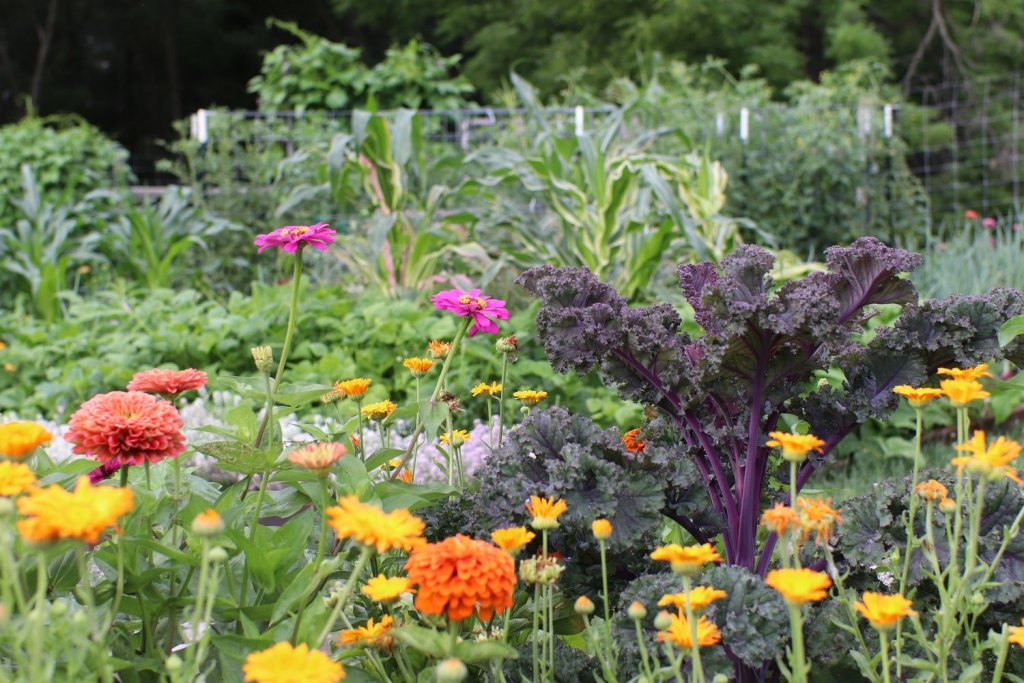
My next step in working to implement these goals is to start thinking visually where I want the anchors of the garden to be: the watermelon trellis, the bean and cucumber trellises, the tomato cattle panel walls, our blocks of corn, and the massings of Benary’s zinnia. These are each really important focal points that draw our eyes in and around the garden.
Lower growing crops like potatoes and tomatillos, carrots, and green beans don’t have the same wow factor on the landscape, though they contribute texturally and impact the garden in other, more subtle ways. So that whole process will in all likelihood come together sometime in late April as I physically move the trellises around. I look for good angles from the top of the garden, the main entrance, as well as the long diagonals from the south entrance and from the northeast corner looking southwest.
I hope you found this out-loud process a bit helpful in understanding the factors that drive how and when I plant the garden. Because these are the framework for the year, a lot of what I talk about in the coming months will be orbiting around these goals and deadlines.
You might also like:

Get updated by email whenever there’s a new post
Comments
If you’re a subscriber, you can discuss this post in the forums
Leave a Reply