
Your cart is currently empty!
Favorite Varieties: Dry Beans
Get updated by email whenever there’s a new post
Growing your own protein is one of our favorite ways to set and forget a portion of our large garden each summer. Like with so much of what has become essential to our home garden and pantry, this was another crop that became possible with extra space. We did grow dry beans back in 2013 when we had land outside the city, but we’d never allocated space in our urban garden for dry beans. And that’s because they take a lot of time to fully dry, and as such are a bit of a space hog.
Dry beans typically will take a “full season” for us. This means from direct sowing the seeds in the beds in mid to late Spring to harvest, the bed is occupied by this solitary crop (excepting interplanting) for the majority of the growing season. I don’t try to get more than one major succession out of our dry bean beds each year, though if I had an extra 3-4 weeks in my growing season I could do some quick spring or fall crops before or after them, respectively.
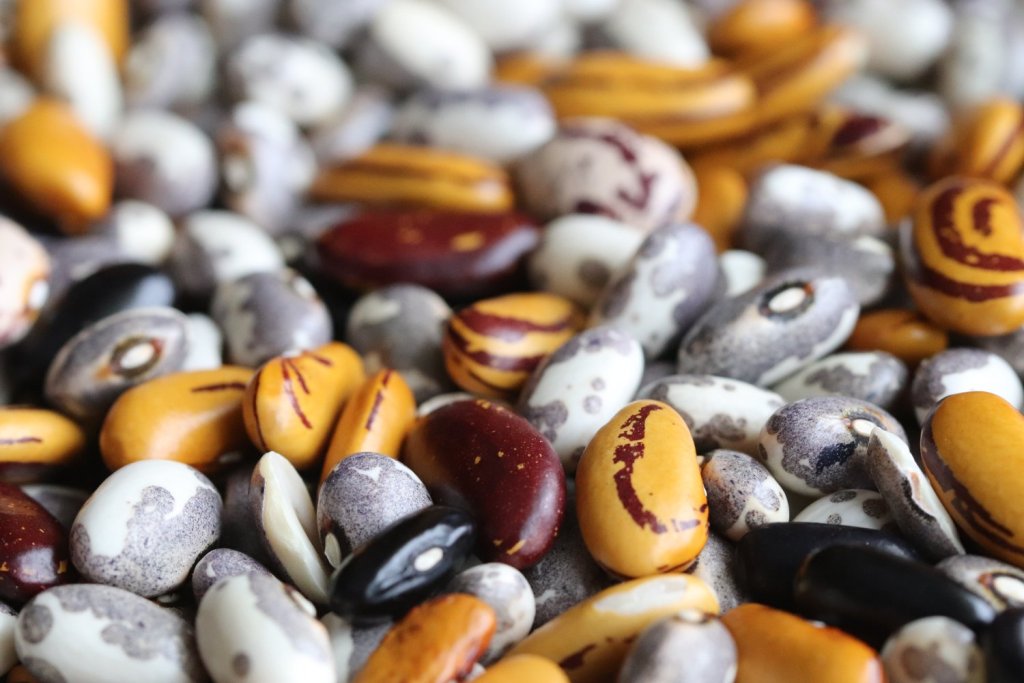
However, they are an amazing crop to grow on so many levels. Shelf stable and high in protein makes them a very unique food to have in our home gardens. They help me feel deeply connected to the garden when I’m snowed in this time of year. And perhaps most notably, I find them to be vastly pest and disease free, which means less work for me in the height of the season where I tend to be bombarded by other pests and harvest needs. So in this way, they bring a heavy dose of harmony to the chaotic summer rhythms of our garden life.
Borlotti / Speckled Cranberry pole bean
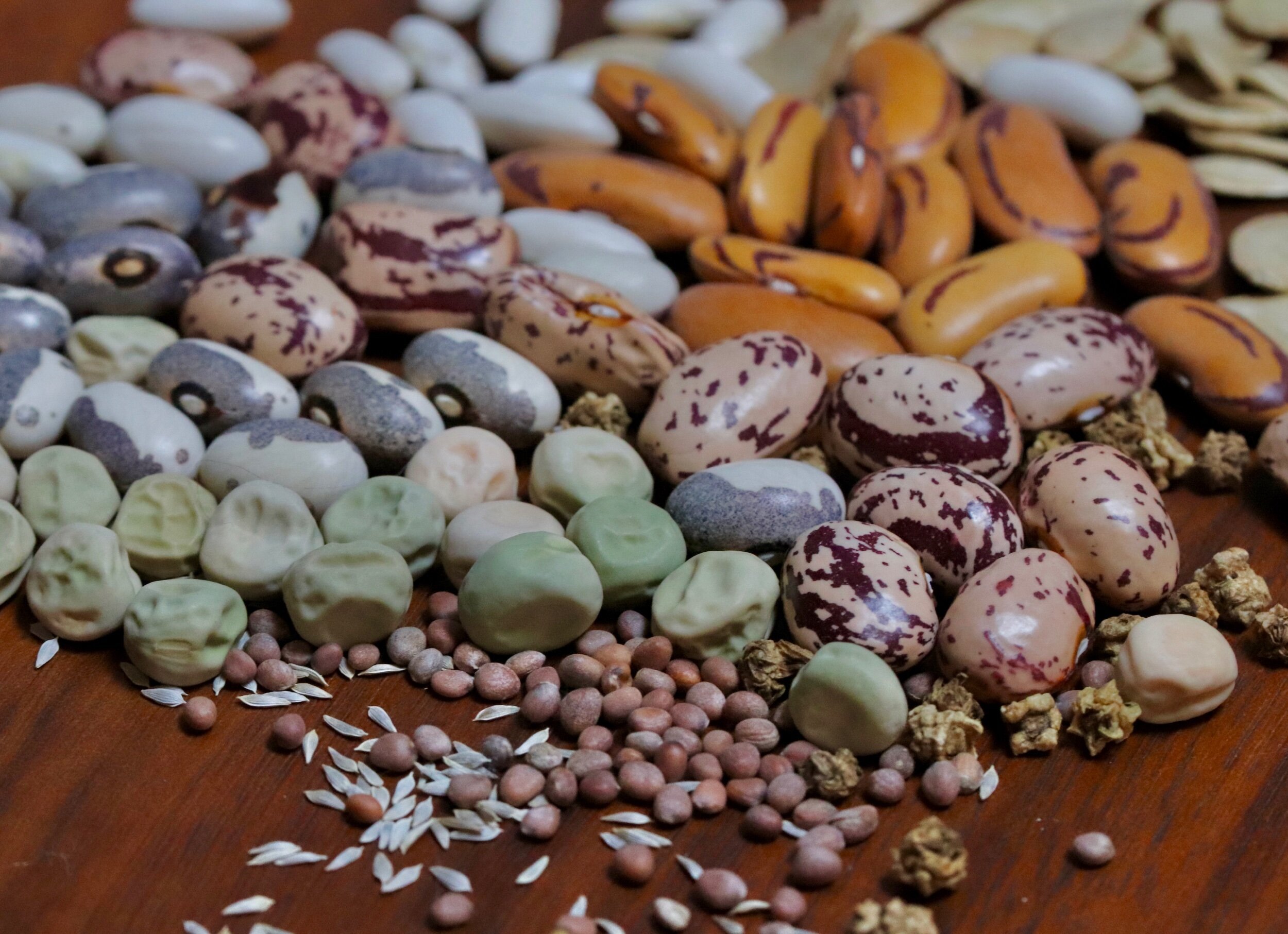
This bean is far and away our favorite. It is highly productive, the beans are enormous, and the immature pods are my favorite color: pink! I mean, it’s almost too good to be true. The beans are really easy to shell, which as you’ll see isn’t a given even with dry beans, and they are also delicious. We use them in just about any dish that calls for beans.
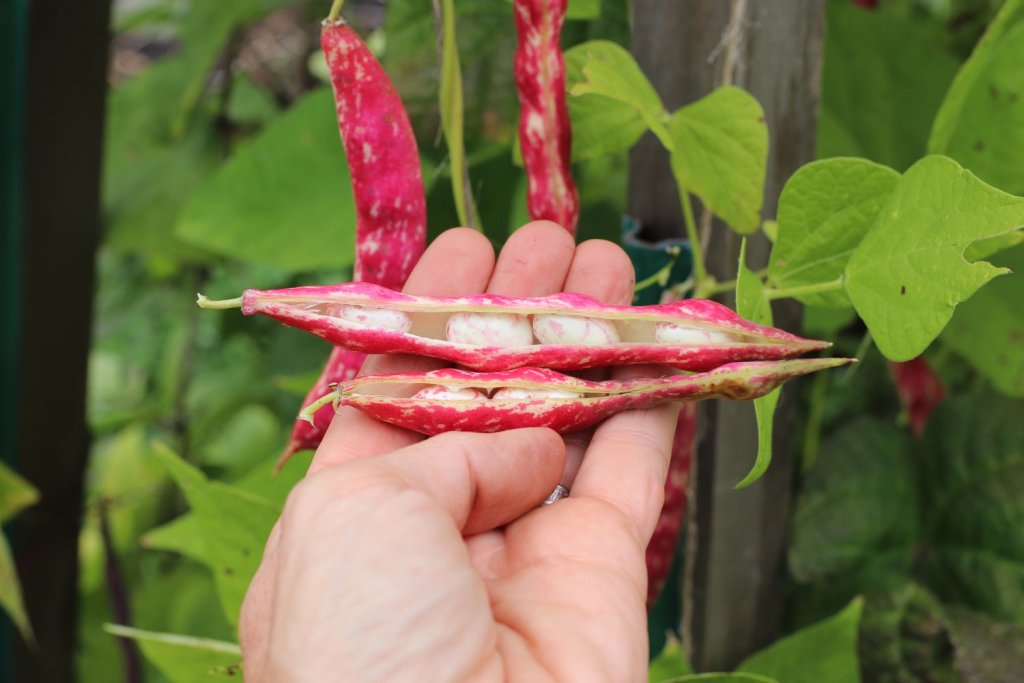
I was given about half a dozen seeds in 2019 during my master gardener core course at the University of Minnesota. I planted them having no idea what they would look like, because I love to grow things blindly and be awed by what transpires. Well, I was completely floored by the mottled hot pink pods and saved the seed for the next year. We did cook with some and like them. I’ve been growing and saving seed ever since.

In 2021, we grew our largest borlotti planting under our new arbor — 25 row feet yielded 14 pounds of dry beans which felt like a mighty fine harvest to us. I haven’t finished shelling the 2022 harvest, but when I do I’ll share productivity by square footage for all beans grown.
Many borlotti varieties out there exist, and most seem to be bush type. If you only have room for one dry bean to try and you want productivity and beauty, I highly recommend this one.
Tiger’s Eye half runner
This is my favorite bean for flavor and texture, but it’s not nearly as productive as Speckled Cranberry. They have a very thin skin and they cook quickly and are silky smooth. They make an amazing refried bean, a perfect stand-in for pinto beans. They do mature a little faster than our other varieties, which is a bonus, but the seed source (Seed Savers Exchange) calls this a bush bean but it’s not. I’ve grown it many times from their seed and it’s more of a half-runner. This means it grows to about 5’ tall and needs support! I think it should be the Minnesota state bean (the University of Minnesota colors are maroon and gold).
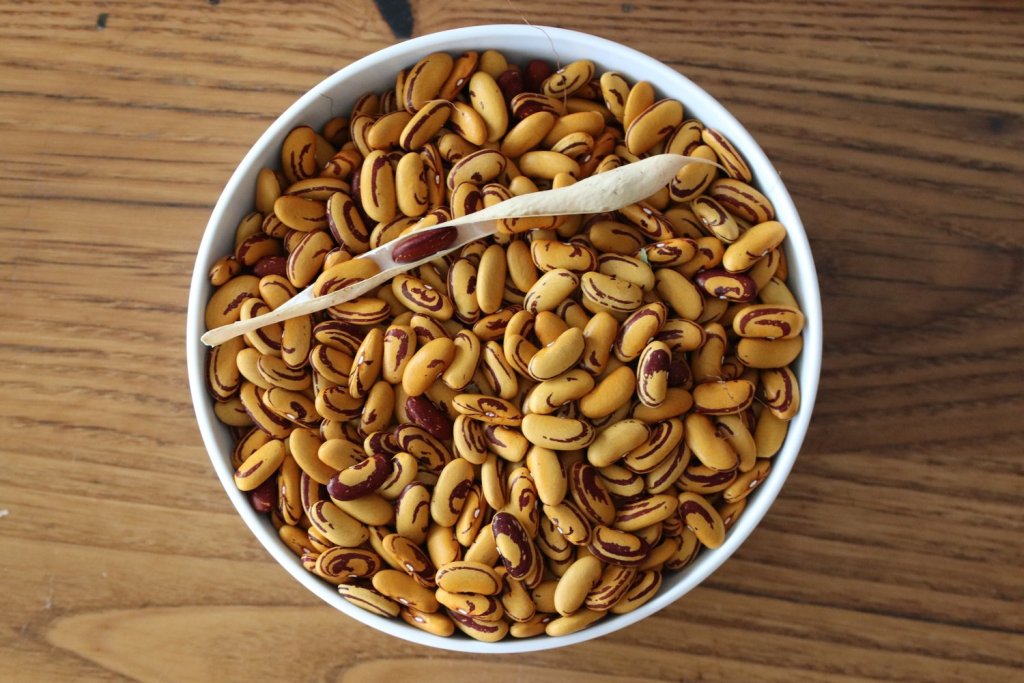
If you’re one to prioritize flavor over productivity, Tiger’s Eye is absolutely the bean for you.
Dapple Gray bush bean
I bought these seeds in 2018 from Trade Winds Fruit in Florida. For several years now this bean has not been in stock, so I think I just got lucky. The first few years I grew it, they barely matured in time, even though they claimed to be a 55 day variety. Obviously, that was incorrect information. Perhaps 55 days to setting pods, but what dry bean is mature in 55 days.
This bean ends up being more like a 90-day variety for me. And it does seem to have developed a type of fungal disease, as many pods develop circular black spots on them. It’s not present on all the Dapple Gray beans, but I suspect I’m carrying the disease forward annually by growing from saved seeds. It hasn’t spread to other varieties, but I am watching carefully.
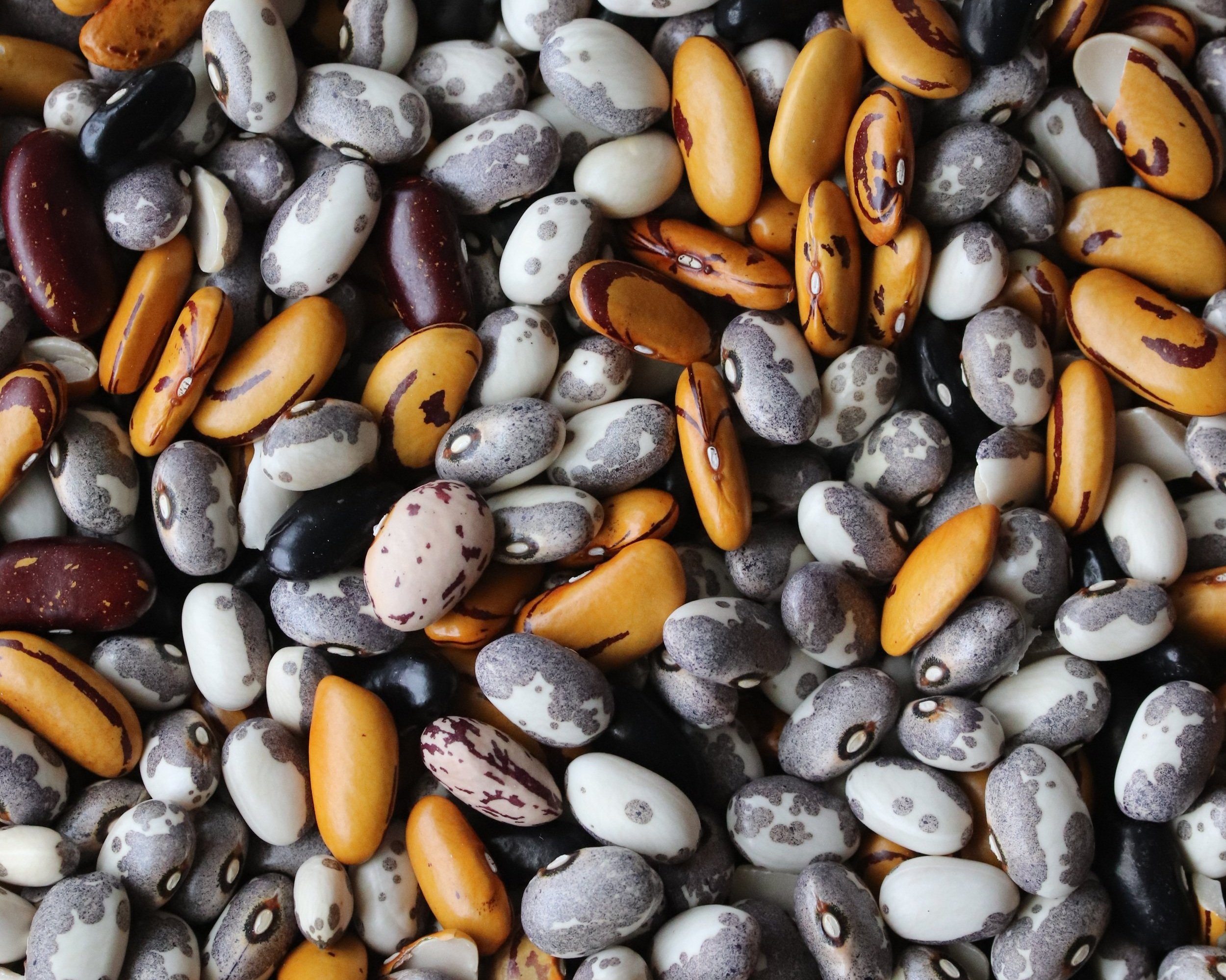
These beans are not as easy to shell as the others we grow, but I think their texture and unique mottling is more than worth the extra effort.
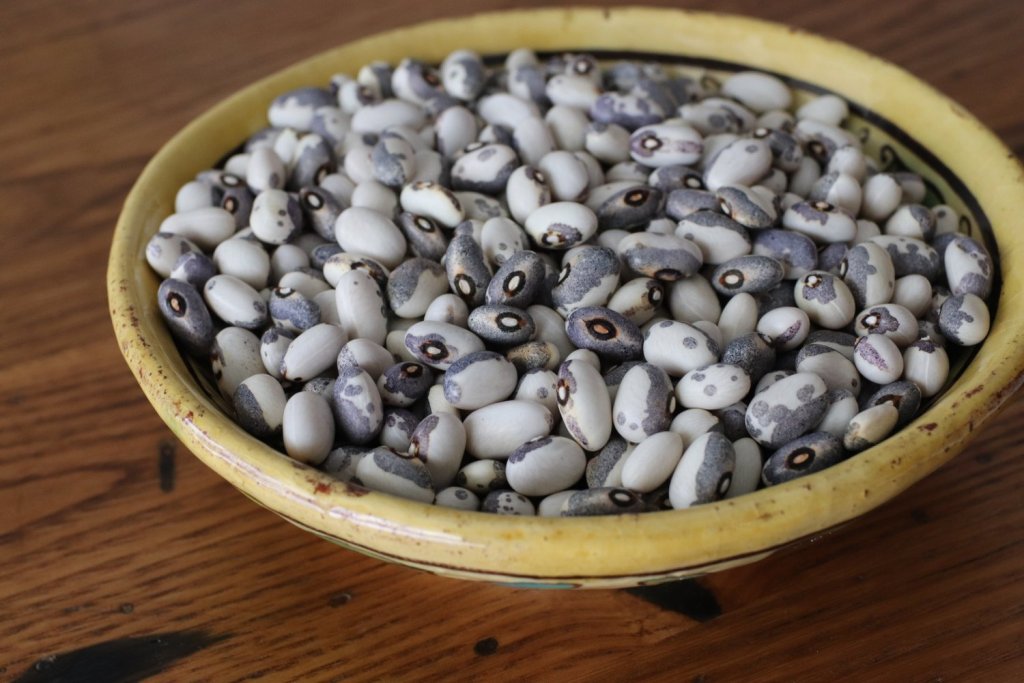
It is another absolutely delicious bean that I have been saving the biggest and plumpest seeds each year since then and it has started to mature a little faster for me.
What I love most about this bean is that the mottling doesn’t disappear when you cook it down like it does with Tiger’s Eye and Speckled Cranberries. In this way, it’s a true culinary delight and we use these for recipes that call for Great Northern or Navy beans like a French Cassoulet and the like.
Fort Portal Jade pole bean
I was given these seeds from an upper midwest seed saver from northern Wisconsin. It is an absolute delight to shell, it’s green-blue pearl-shaped beans are truly jewels of nature. Furthermore, the beans completely transform in the pot to … well, I don’t want to spoil it for you but I guess I will … a navy bean! It’s the wildest thing.
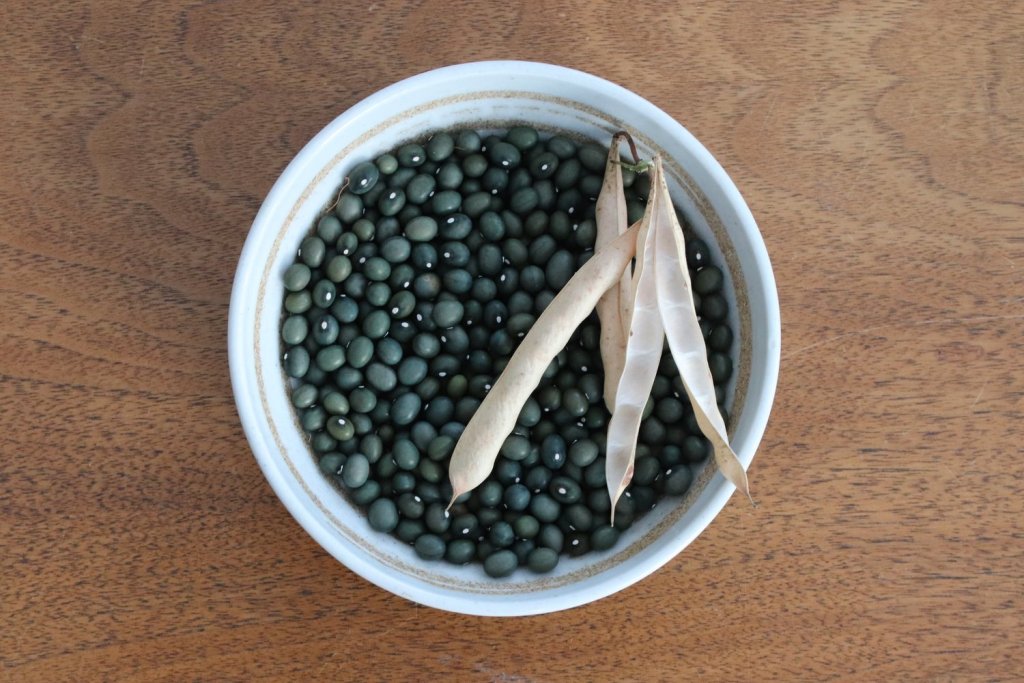
All that being said, these are probably the least productive of all the dry beans we grow. If there were even slightly more productive I’d be growing them more often. I’ve grown them two different years now, and a few years ago when I grew 4 row feet, I yielded maybe a cup of beans. It was very underwhelming and for this reason, I no longer grow them, though I do still have seed saved and I’m sure some year will give them a garden reprise.
Myles Garbanzo bush beans
These biodynamic chickpeas are much smaller than what you’ll find in your bulk food section or cooked and canned on the shelves of your grocery store. Not only are they smaller, garbanzo beans produce 1-2 beans per pod! They are a wonder to me in this way, a very labor intensive crop for sure. I grew them in 2020 for the experience of it. We love hummus, and have several recipes that use chickpeas, and my hope was to enjoy growing them, have them be productive, and an annual staple.
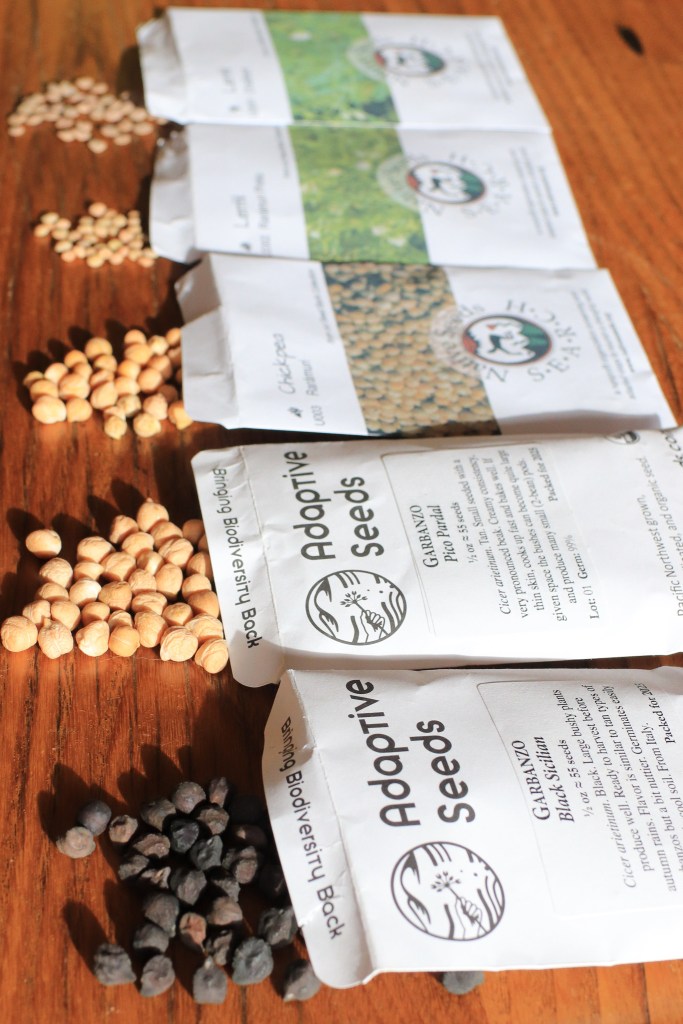
What happened instead is a very laborious harvest, and honestly I haven’t yet shelled those beans! They are still in a bag in our dry root cellar. I think I’ll have my oldest use the pillow care
Black Turtle bush beans
We’ve grown black beans a few times and liked them both times. For some reason, I either don’t remember to order seed or we just seem to prefer the Speckled Cranberry even though there’s a time and place for black beans in many cuisines. I’m convincing myself to bring the black bean back this summer as I type this article. I’ve just found them at Hudson Valley Seed.
We’ve grown other beans over the years too, though our top three annual beans are Speckled Cranberry, Tiger’s Eye, and Dapple Gray. If we could find another bean variety that is as prolific as the Speckled Cranberry but a cannelini or black bean, we would be all set for the rest of our years!
What bean varieties do you enjoy growing or have you tried?
You might also like:

Get updated by email whenever there’s a new post
Comments
If you’re a subscriber, you can discuss this post in the forums
Leave a Reply