
Your cart is currently empty!
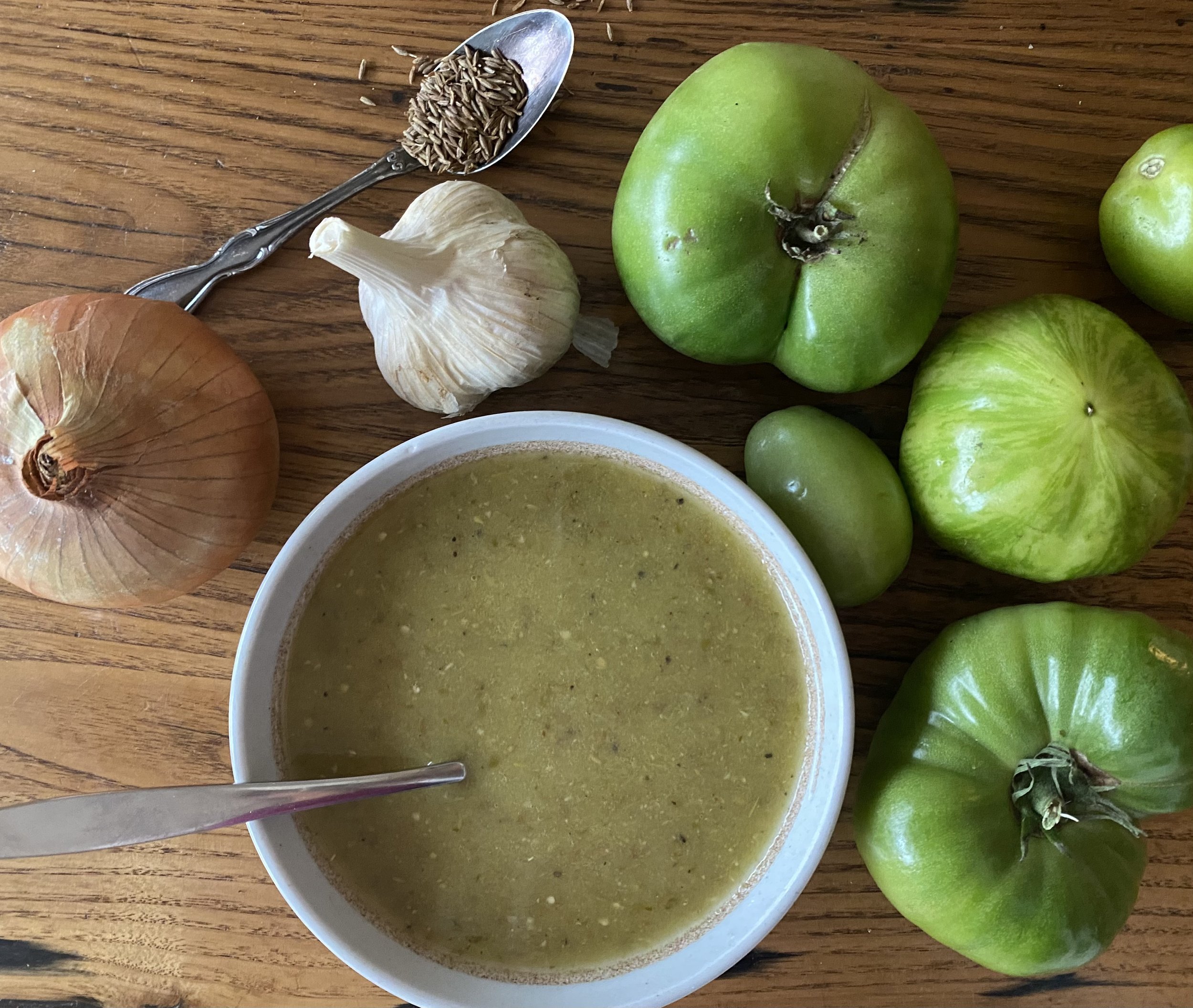
Green Tomato Enchilada Sauce
Get updated by email whenever there’s a new post
I had an unusually large amount of green tomatoes in late September before a slightly early frost took my plants out. Unusual because we typically take our tomato plants down due to disease pressure by mid-September, well before a frost. The singular benefit of this summer’s drought was the diminished fungal disease pressure in the garden.
I harvested probably 30-40 pounds of unripe, green tomatoes. Largely beefsteak and romas, I let them slowly ripen on the shelves of the root cellar while also wondering if fried green tomatoes are worth my time or not (I don’t love fried foods). I’m yet to fry up green tomatoes, but I did take the green tomato enchilada plunge, and it is a perfect stand in for tomatillo-based green enchilada sauce.
Yield: 2-3 quarts
Green Tomato Enchilada Sauce

This makes great use of those late summer/fall unripe green tomatoes. It's a one-pot endeavor, and it’s relatively quick and packs lots of flavor.
Prep Time
30 minutes
Cook Time
30 minutes
Total Time
1 hour
Ingredients
- 1 pound chopped onion (about 4 cups)
- 3 large cloves garlic, minced (about 2-3 Tablespoonfuls)
- 4 pounds chopped green tomatoes
- 1 T sea salt, or to taste
- 2 T cumin seeds
- 1 1/2 T freshly ground black pepper
- 4 ounces jalapeño (about 8 jalapeños — deribbed for medium heat)
- 2/3 cup chopped cilantro
- 5 cups chicken or vegetable broth
Instructions
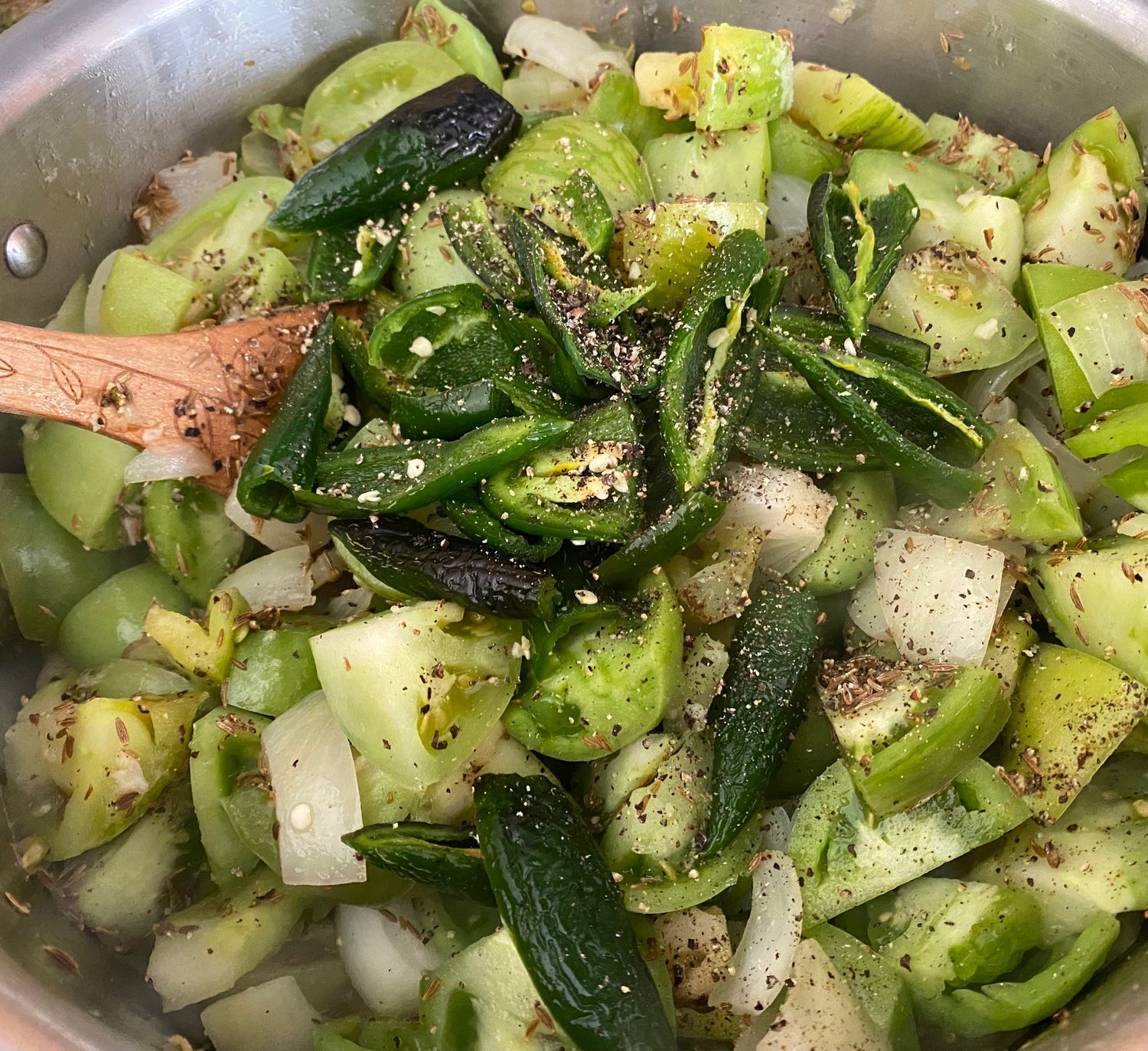
- Saute onion in a large stockpot with about 3 tablespoons of olive oil on medium high heat until translucent. Add jalapeño, tomatoes, garlic, cumin seeds, salt, and freshly ground pepper and cook a few minutes more, stirring frequently – but don’t let the garlic burn. Once the tomatoes have started to soften a bit, add the broth and bring to a boil.
- If you aren’t a fan of heat, I’d recommend halving the jalapeños. Also, you can easily substitute other peppers too — hotter or milder. If you prefer this not spicy, try a green bell pepper. If you want it hotter, throw the whole jalapeño in there! I used up what we had harvested before the frost.
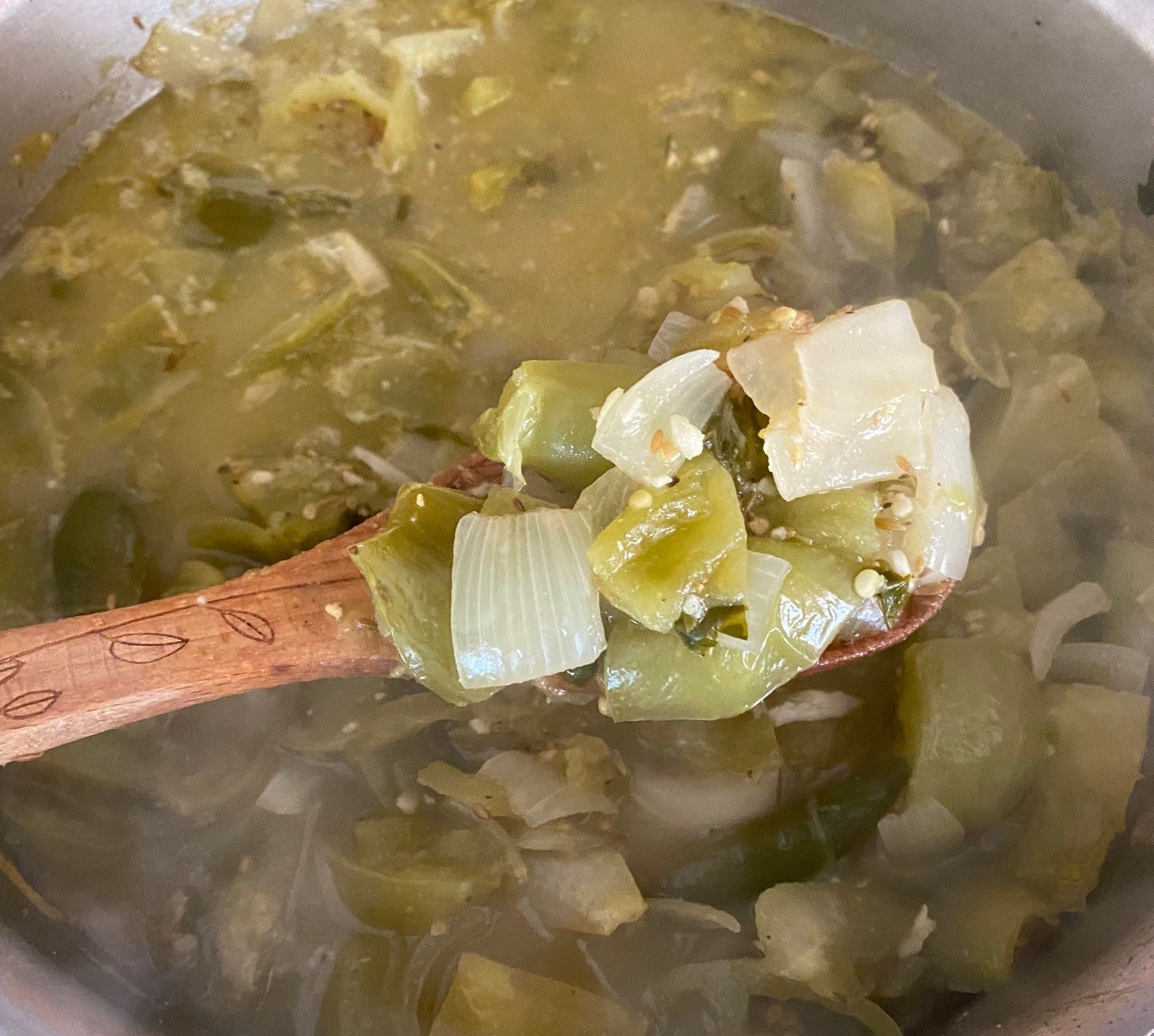
- Boil, partly covered, on medium heat for 35 – 45 minutes. To puree, you can either use an immersion blender in the pot or transfer to your blender (a Vitamix handles hot liquids much better than our old Oster blender, no more boiling liquid pushing out the top) and puree in batches.
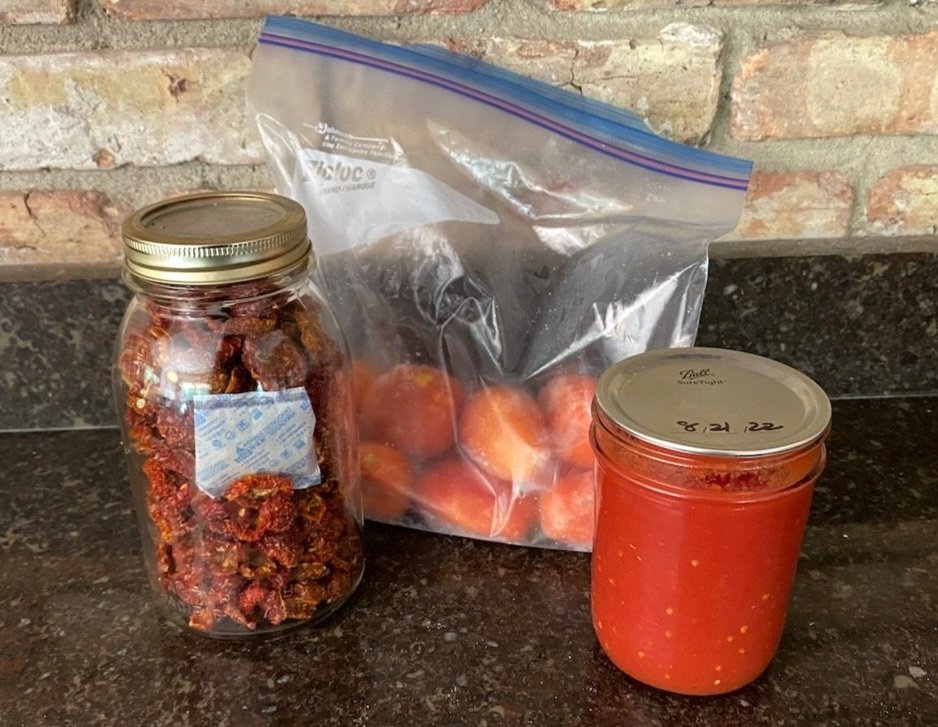
- When making for the freezer, let cool before placing into your containers for freezing. Always leave a good 1” of headspace when freezing in glass jars (I’ve had too many glass jars explode on me in the freezer). Freezing in ziploc bags is a great method too. Fill a bag, close it and then lay it flat on a small tray to freeze. It will make the freezer jenga that much easier.
Notes
This recipe yields a 2-3 quarts of enchilada sauce. I cook this way, in
batches, both because of the scale at which we grow and because we have a deep freezer for such things are storing sauces for winter meals. This
recipe is completely scalable, so feel free to halve it for a weeknight
dinner situation. I don’t know about you, but when I use a can of
enchilada sauce for dinner, one can is never enough for us, not even a
28 ounce can.
I like my enchilada sauce on the thin side, si I made this recipe with close to 6 cups of broth, though I only call for 5 cups. You can choose to start with a scant 5. cups and adjust after blending. Easier to make thinner than boil down to thicken.
Uses: traditional chicken or vegetable enchiladas, enchilada lasagna, slow-cooker pulled pork, chicken or vegetable soups, spice up your mac and cheese, rice, or any other one of your mainstays. This will bring loads of flavor to a base of any recipe.
I’m most excited to cook a vegetarian enchilada lasagna with butternut and other root veggies. I’ll open roast my butternut, beets, and other roots until cooked but still slightly firm, then slice them thin and layer in with the corn tortillas, sauce, and cheddar cheese. I could see topping this dish with fresh avocado, thinly sliced red cabbage, and quick fermented radishes too.

Get updated by email whenever there’s a new post
Comments
If you’re a subscriber, you can discuss this post in the forums
Leave a Reply