Your cart is currently empty!
The Harvest Before the Cold
Get updated by email whenever there’s a new post
Originally posted on October 19, 2022. Updated October 27, 2023.
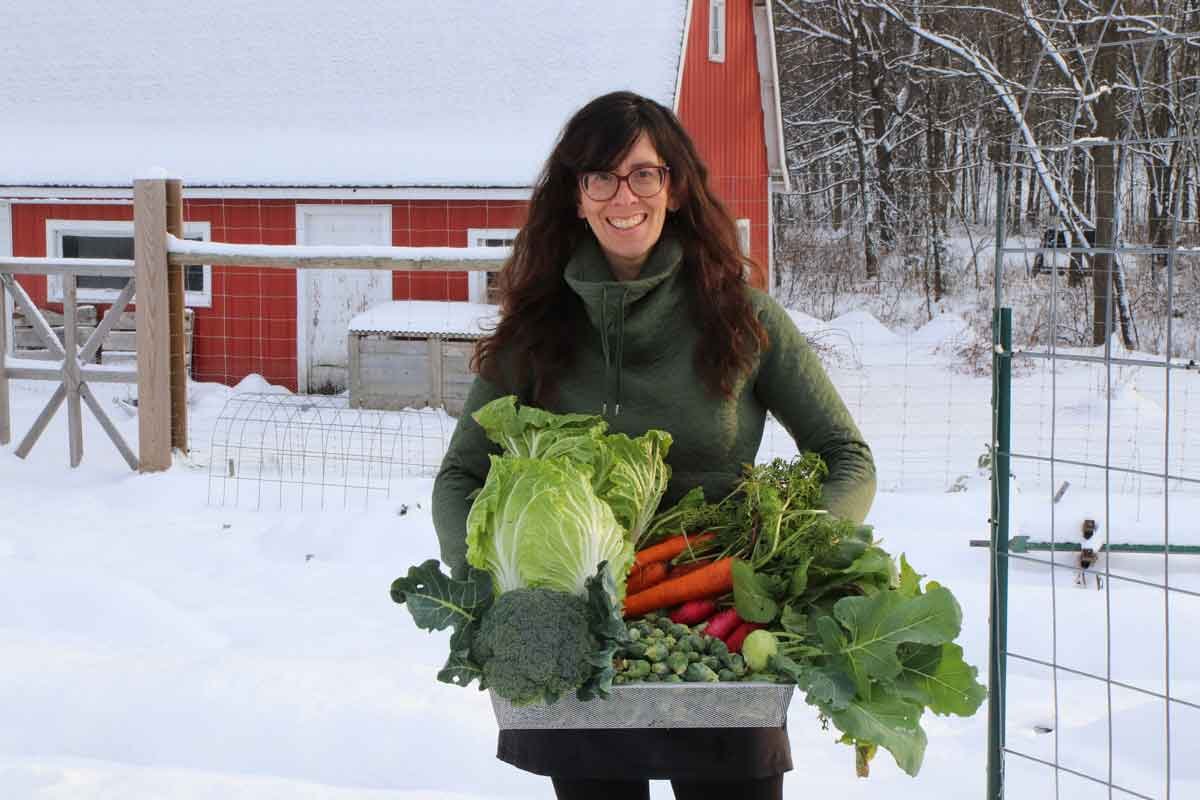
With a low of 25 in the forecast for tonight, I am going to be doing a large harvest today of food I intend to store and enjoy this winter. Yes, I could let them endure this hard freeze, but every time I let my cold-hardy brassicas freeze and thaw, I am damaging their tissues, and thus reducing their storage quality.
It’s a fine line between pushing the seasons and preserving the shelf-stability of the harvests. And of course these events occur when I’d rather be curdled up with a book or some knitting or cooking a winter squash soup than bundled up working in 40 degree soil and pulling out cold produce destined for the root cellar.
Now, not all cold hardy vegetables are treated equally in autumn, as some are hardier than others while all share the general property of being frost tolerant. Subsequently, there are stages of harvesting, depending on the low temperature and the crop at hand. So here’s a bit about what I harvested over the weekend (last year) ahead of our very cold air, and what you should prioritize harvesting and/or covering if low temperatures are going to go below 26F.
I did a quick harvest of the best of the root crops, to ensure excellent storage quality of our finest specimens because we grow these foods in fall to last months in our root cellar. While these could have “survived” a low of 22F and as much as I enjoy pushing the limits of food and cold air, the name of the game is nourishment too, so I never gamble with our best looking fall root crops as those are prized winter meals.
For what it’s worth, last fall I did leave brussels sprouts out in the garden and after a night below 20F, they got all kinds of mushy; I’ve decided to pull all but the smallest plants before we dip to 22F on Sunday night, because they are a great winter side dish that 3 out of 4 Cowdens love.
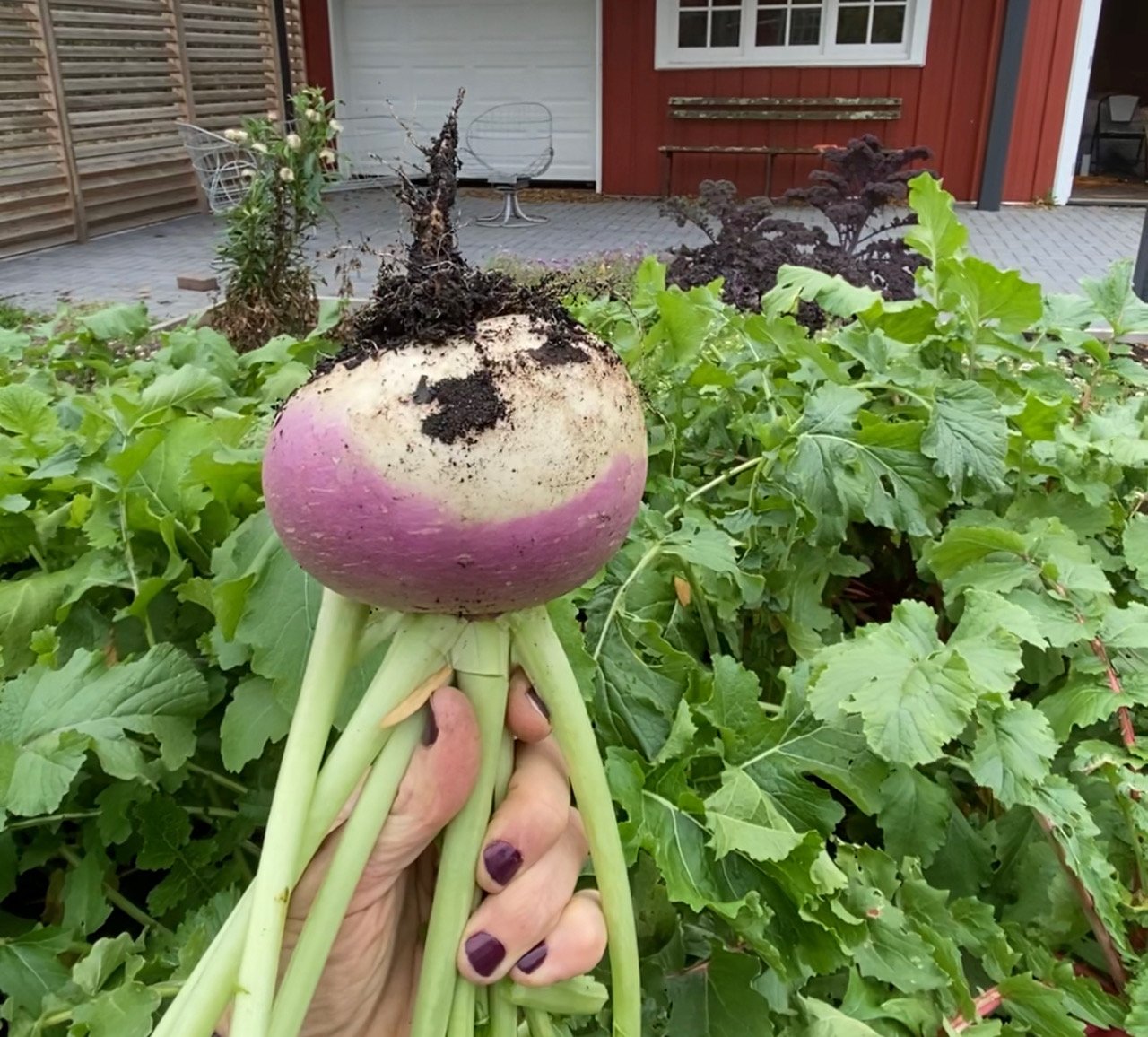
Last fall I also went a little overboard and even covered up our extremely frost-hardy cilantro and spinach because they were growing in between some nice-looking rows of more sensitive fall veggies like salad turnips and radishes, and tatsoi, respectively. While cilantro and spinach can bounce back from lows colder than 15F, their neighbors were the reason why I haphazardly draped some fleece (breathable row cover, AG19 which provides about 4 degrees of protection if installed correctly) over them. The goal was not to prevent frost, it was to prevent temps dipping below 26F. I want the tatsoi to keep well through this cold air for short-term stir fries, and the salad turnips will go into the root cellar eventually.
They probably should have been harvested but I focused on our more fruitful harvests instead. The pounds of food from our daikon and turnips far outweighs our tatsoi and salad turnip harvest, so I focused on our largest returns. I tend to wait until the last possible day to harvest because it’s easier to focus on what needs pulling in the moment, especially because the root cellar isn’t cold enough for all this food just yet.
The trickiest thing with how we store these crops is that the root cellar doesn’t get cold enough until later in November. So we accelerate the cooling with blocks of ice like I shared in my stories yesterday. (Incidentally, they are all nearly melted, but our highs tomorrow are today’s lows, so I will be able to open the space up, turn a fan on and draw in the cooler air over the next 48 hours.)
The biggest question I can’t answer for you is, how comfortable are you with leaving your food in the garden, without knowing for certain how low the nighttime temps will go? Even though your veggies may look “not dead” after a night at 24F, some cell damage occurs from the cold frozen air and slowly shows itself. If I want to store my food for winter, which I do, I try to keep them as free of damage as possible. And, I always always leave some plants to watch and learn. And marvel. We’ve eaten frost-damaged broccoli after a night in the teens. Yes, it’s a little sad, but heck, we stir fry it anyway. I love having this much latitude over when I harvest things. It’s another great reason to grow your own food and push your seasons. There’s always something to learn.

Probably our favorite storage radish, Red King F1. It’s so sweet now that a frost hit it a few times, and we enjoyed them until April this year from our root cellar, though this year I didn’t plant quite as many so we won’t be as lucky I’m afraid.
So in this vein, I harvested our potatoes between rain storms this week, and today will pull all but one or two cabbages, about half of our daikon and watermelon radish, beets, and most of our brussels sprouts. I won’t harvest our carrots, kale, or leeks, because they are super frost-hardy. I’ll grab some carrots and leeks on Saturday or Sunday before the low of 22F, but I’m really not worried about my kale or most of the carrots — just don’t want the carrots getting frozen solid once the soil starts to freeze.
I know from experience temperatures as low as 25F will damage many roots and Brussels sprouts a little, though not fatally. These prized storage-friendly vegetables are destined for our root cellar eventually, to be slowly consumed in late fall and winter, so their storage quality is key for us. However, while we wait for the root cellar to cool off below 40F they will reside in vegetative purgatory, unwashed in large ziploc bags in our basement fridge until the root cellar is consistently under 40F with humidity 95-99%. When I see the weather looks reliably cooler, likely in another week or so, I’ll start the process of packing them in damp sawdust and getting the humidity in there to skyrocket. I’ll share that process in real time in the coming week or two.
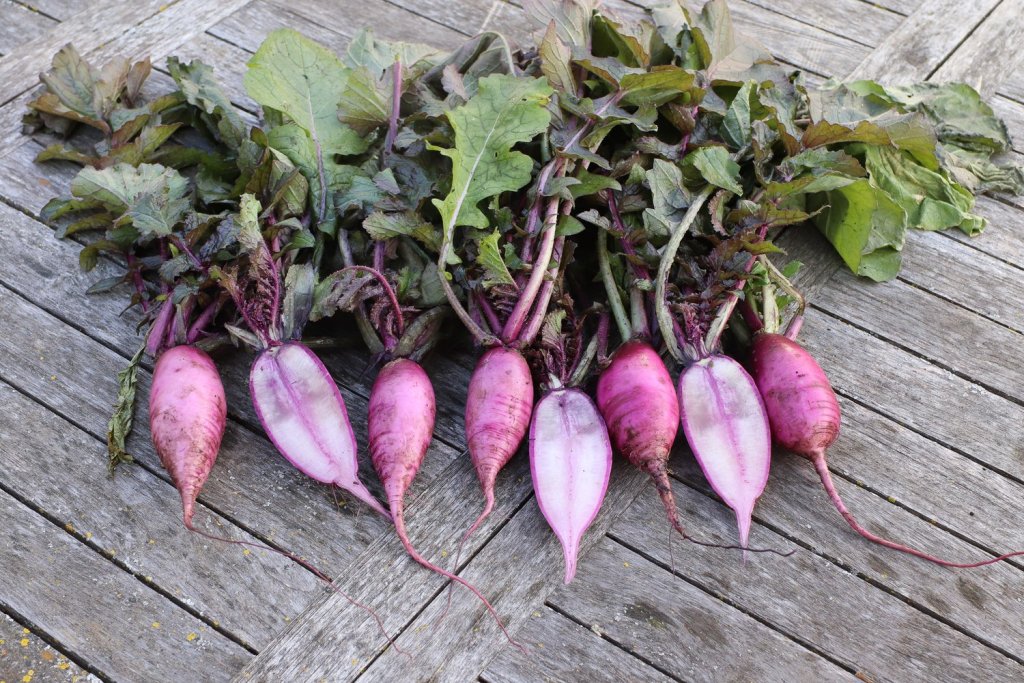
See that line on these roots? I believe that’s how deep the plant froze during a cold night. This was in 2019 or 2020. I was struck by how visible the depth of the frost was, and this has been, ever since, a visual reminder of why while daikon are frost-hardy, predicted temps below 26F is my cutoff for harvesting for maximum storage quality.
You might also like:

Get updated by email whenever there’s a new post
Comments
If you’re a subscriber, you can discuss this post in the forums
Leave a Reply