
Your cart is currently empty!
How to Find Room for a Fall Garden

Get updated by email whenever there’s a new post
There is so much potential for a spring garden to become your fall garden. When we do this, we don’t need to find the space because it’s already allocated. It’s a natural progression from one season to the next.
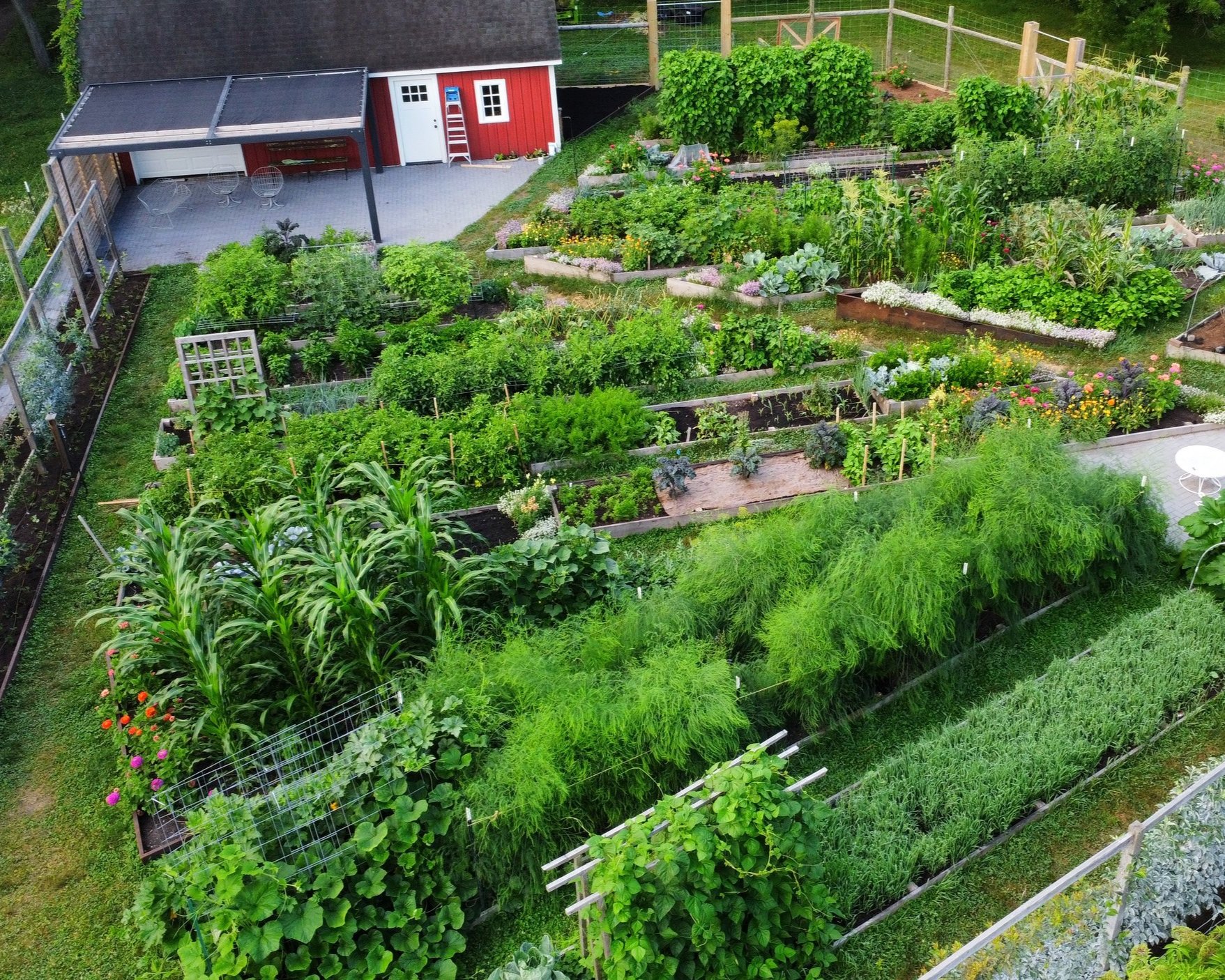
Space is likely at a premium in your garden. I admit our space is, well, spacious. It took us over 20 years of gardening to finally achieve this garden and to be relatively equipped to plan and execute a garden of this scale. I truly believe the slow evolution of gardening is its greatest gift to the gardener, and I’d argue it is also its most essential aspect in this day and age with so much information out there to consume about … everything. The garden teaches us in its own time, measures in weeks, seasons, harvests, and years.
Even with our sprawling raised beds, I make a concerted effort to plan the garden for extended fall harvests. I want to break it down for you so you can find a path, even at this moment without having a plan, to some possible fall garden vegetables to add to your garden sometime this summer. A fall garden starts now. It starts in 3 weeks. It starts in 6 weeks. And yes, it also starts in 3 months. Jump in anytime that works for you. I promise you will be delighted at the drive for these plants to produce for you.
I hope you can see one or more paths in your garden right now to deeply extending what you are able to harvest come deep autumn. Or, maybe you’re taking this all in for a future season because managing a summer garden is achievement enough. Our gardens are ours to create and tend, meeting our hearts, time, and resources right where they are at. And that’s the best part.
The Fall Garden as the Only Succession
This is what I do for my most slow to mature, full season cabbages and my Brussels sprouts. I’m talking 87-120 day varieties. We enjoyed green cabbage until January this year, thanks to our root cellar. We could have had a few more heads in there to get us into February. We will see if I am able to time it better this year.
Timing is definitely a tricky thing, and you’ll want to play with your seasons for a few years so you can gain a better understanding of how different veggies perform. For me, I start those cabbages around June 10; they mature usually by late October, around a time when we head into our shortest days and thus the plants stop growing. So if the weather is good, we can leave them outside in their garden refrigerator for a few more weeks.

Look at those densely planted full season Brussels sprouts. No room for interplanting there. This is a mid-July garden view circa 2019.
However, an extra warm summer can and has caused my cabbages to mature too quickly. Also, I remember my first serious fall garden for the root cellar back in 2017 and I proudly told my good friend who at the time was an organic farmer how I transplanted my cabbages in mid-August and she flatly said “oh they will never mature in time.” I was determined to prove her wrong, but she was right. I got a few small cabbages, thanks to a prolonged fall, but nothing like I am able to produce now with sowing them 5 weeks earlier!
If you have open space right now and you haven’t dedicated it to a summer crop, consider some Brussels sprouts or late season cabbages (as mentioned, they take 3+ months to mature). Even just a small space — 2 feet wide, is enough for a cabbage or two. In the meantime, you can interplant some cilantro or arugula or even some low-growing flowers like sweet alyssum, so the space can have a dual purpose in the short term, too.
I am currently using my Brussels sprouts plantings for my heat tolerant summer lettuce. They pair perfectly for a quick dual purpose succession planting. I had no plan for where those lettuce were going, so this ended up being the only and best space for them.
Planting a Spring Garden
This is paramount to my epic fall harvests. I feel as passionate about spring gardening as I do about summer and fall. I want to help you consider how starting a garden extra early can be the perfect timing for a fall garden too. Here in our climate, that space opens up right around early to mid-July …. the ideal time for fall peas, fall carrots, and those fall cabbage seedlings I mentioned in the section above. So, I tie up square footage for fall by enjoying my first succession in May – July! This is probably the very best way in my opinion of creating space for the fall garden, because it is productive for more of the season. If you are short on space, this is the recommended path to a fall garden.
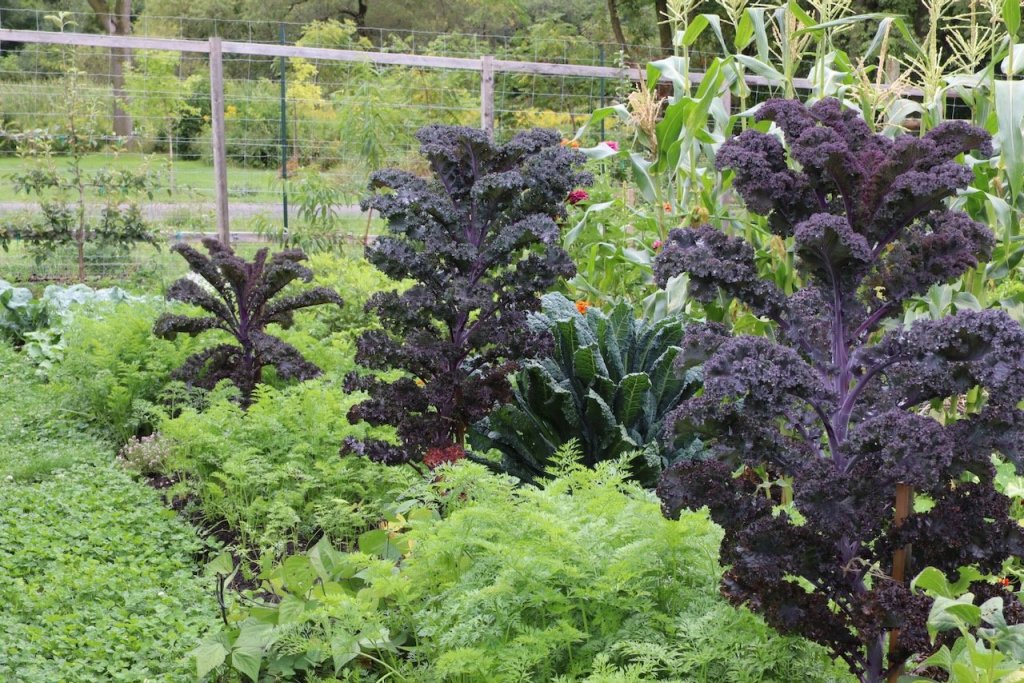
One of my favorite spring garden resets is my fall carrot garden after my earliest cabbages, broccoli, and bok choy.
I gave a talk earlier this winter locally and I tried to impress upon the audience that after your shelling peas are done you can drop kohlrabi, bok choy, napa cabbage, carrots, or watermelon radish seeds in after them. Then I asked the audience, what do you plant when your peas come out?
Dead silence.
Then one brave woman said with a sheepish giggle, “Spinach?”. I practically collapsed thinking of all these gardens that aren’t replanted after the peas come out!
Renewing the Summer Garden
I didn’t always enjoy the fall garden like I do now. For years our garden ended at first frost — and I was ready for it! But the more I strive to feed us for longer straight out of the garden, the more value I place on being very proactive with my garden in summer to renew spaces.
There are plenty of things you may have planted in the past month that will complete their life cycle in time for a fall planting. There won’t be enough time for Brussels sprouts or massive heads of cabbage, but there is pretty wide array of vegetables, particularly leafy greens and herbs that you can plant as late as mid-September in Minnesota (which is just a few weeks before our average first fall frost) and harvest in late fall (and spring, as some will overwinter).
Here are some examples of current summer garden plantings that will yield to a fall garden.
Pickling Cucumbers. I plant a LOT of pickling cucumbers so we can can for a few weeks and be done with that space. Bam! I just freed up an entire 4×8 raised bed for a fall garden. Maybe I’ll drop in watermelon radish or daikon radish seeds at that time in August, or perhaps I’ll put some kohlrabi seedlings I sowed around the 3rd week in July. Possibly I’d use it as a direct seeding bed for napa cabbage and bok choy, too. There are so many ways to replant the garden in about 8 weeks before your frost.

Out with the pickling cucumbers in mid-August and in with the daikon watermelon radish, and napa cabbages.
Determinate Tomatoes. I could do the same with my determinate tomatoes. I aim for those to be mature in late August to early September. That space could be planted right away in some late fall / early spring vegetables, including bunching onions, spinach, cilantro, and radishes.
Potatoes are another spacehog in my garden, and I admit I leave them in the ground until late in fall. If you are growing your potatoes largely for fresh eating, get those tubers lifted and replant that space with some greens for extended fall harvests — mustard greens, Asian greens, arugula, head lettuce, etc. Our potatoes are usually ready by the end of August but I leave them resting underground until October sometime when our passively cooled root cellar has moderated (it takes forever to drop temperature in autumn as it’s on a south-facing wall).
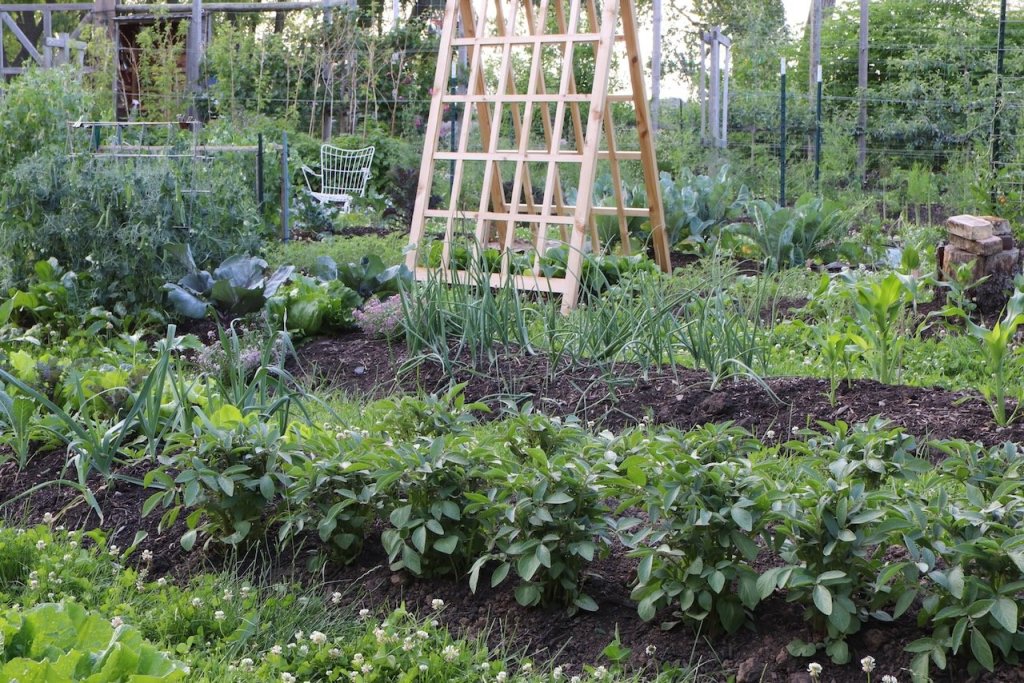
Potatoes are most often 70-90 day varieties, and that means they can be harvested and the space replanted — even if the space is a grow bag!
Summer squash is another favorite for ripping out prematurely. I have become more and more aggressive with this approach, especially in the last few years as I have seen squash vine borers in our gardens since 2019. They don’t usually devastate our plants, and in fact my kabocha survived their gnawing and went on to produce heftily. But, if I can do my part to disrupt their lifecycle and minimize the number of larvae that end up pupating overwinter in our soil, all the better. And by doing this, I open space for more veggies. I plant two distinct successions of summer squash annually. One is now, transplanted as seedlings. The other will go into the garden in late July again as seedlings, for late August and September production.
Onions and Garlic naturally mature about 8 weeks before our first fall frost here. This makes their space a premium for all kinds of vegetables. In my book, I created a visual diagram about what you can plant in summer depending on how many weeks before your frost. My intention with this was to make the information as zone-friendly as possible.
Strategically Interplanting
If space is really at premium and you want to add those extra successions, you can work on interplanting seedlings like kale, head lettuce, or bok choy under some of your vining crops come mid- to late summer, depending on your growing zone. They won’t thrive under the part shade of the overstory canopy, but once you carefully remove those plantings, those plants will be able to really take off.
Beets, carrots, and green onions are another potential strategic interplanting at the edges of vining crops. Maybe your tomatoes are diseased and tired in August. Perhaps your vertically grown winter squash is dying back. You could try putting a row of carrots and beets in front of the plants on the south side of the bed. Your tomato plants would need to be pruned for enough light to penetrate the soil at the edge, but if this is the case, this would be another great way to start the next succession while the main plants are still producing. When it comes time to remove the overstory/dominant plants, I recommend cutting the plants at the base and let the roots remain intact — they will decompose and it minimizes soil disturbance, which could cause some distress for any root veggie seedlings you may have growing nearby.
Planting a Fall Garden .. in Fall
This was an oddly wonderful discovery a few years ago — that I could plant seeds as late as the Autumnal Equinox and harvest food a few months later. Decreasing sunlight is our biggest threat for our fall garden, so timing all the vegetables I mentioned already is a delicate balance between planting early enough to reach 75% maturity before mid or late October and not too early to mature in say September. I have experienced too early and too late and each year some things excel and mature too early, but as we continue to push our later plantings and exploring even more fall garden companions like napa cabbage (crazy cold hardy and excellent keepers in storage, highly recommend!), we are creating a more elastic plan that will look and taste different every season.
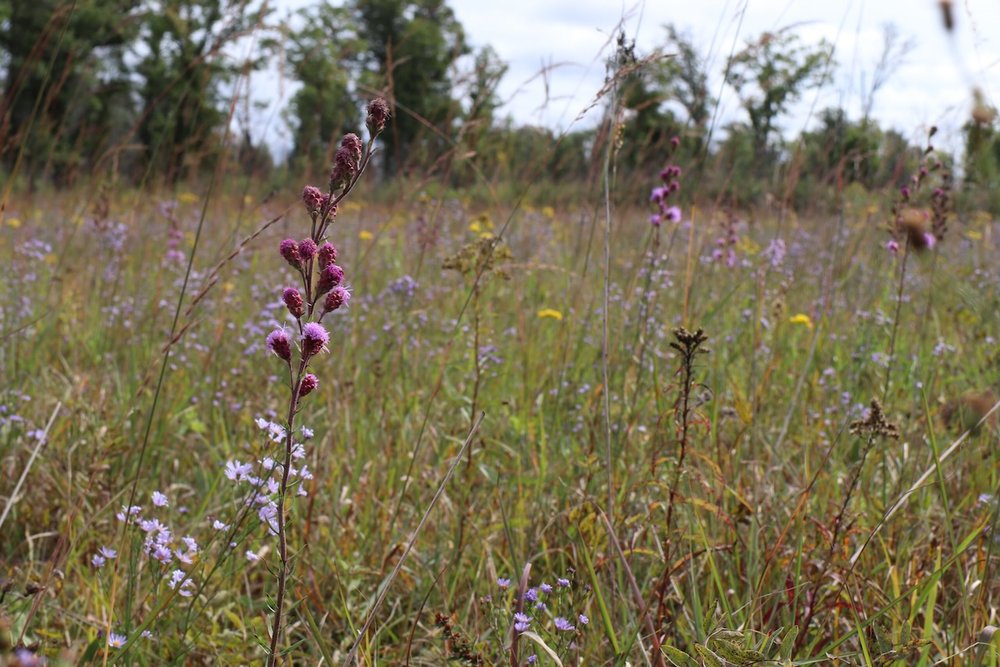
In the end, I hope you will take this concept to think like a natural ecosystem to heart. I am always in awe of our native prairies here, and how they flower from May until October, just like our gardens should be producing for us — and not just modestly, look at all this nectar in a fall garden! Truly inspirational.
In actual fall (late September), I direct seed spinach, cilantro, arugula, radishes, green onions, and garlic. If you like the texture of leaf lettuce, this would be a great time to sow those seeds too. Mustard greens, broccoli raab, and baby bok choy are worth adding to this list as they only take 40 days to mature and I think would work as well. I will take notes right now to sow those all on the equinox this year — will you join me?

The Late Fall Plantings
Garlic always gets planted in late October for me, which used to be 4 weeks after first frost but these days it’s more like 2 weeks after first frost. It’s all about getting them in the ground before it freezes for me — and that’s it. More on garlic as the season progresses.
These are all merely examples of my own favorite vegetables to interplant in summer for fall. Your seed choices might look quite different because of what you love to grow, and your timing. I hope this read sparked ideas for seeds you’d like to try in summer or fall this year to extend your harvests and feed yourself for longer.
You might also like:

Get updated by email whenever there’s a new post
Comments
If you’re a subscriber, you can discuss this post in the forums
Leave a Reply