
Your cart is currently empty!
May Monthly Task List

Get updated by email whenever there’s a new post
May is here, and that means a planting marathon is commencing. Whether you have your own plant starts or are picking some up at your local garden center, big box store, or your favorite farmers market, this is the month our hopes and dreams become beds planted in creative ways, complete with yearnings for a pest free summer while making the most of our limited space.
It’s the month we hopefully harvest something too, be it a pungent radish, some outer leaves off our bok choy, a bunch of cilantro, or if you’ve planned ahead, your asparagus is shooting up and demanding daily harvests.

Over the years, I’ve timed the seeding of many of my hot season crops to align with our last frost dates to both hasten productivity in early summer and get them established faster. Summer and winter squash, cucumbers, and melons of all kinds need really warm soils to germinate and establish — and a May garden in Minnesota does not provide those conditions. What does, however, are newspaper pots and a heat mat under grow lights. So that is a big focus of mid-May: getting ahead with summer crops by sowing them indoors in pots that work great for transplanting (these crops don’t enjoy being transplanted, but you can do it carefully).

Weeding + Top Dressing with Compost
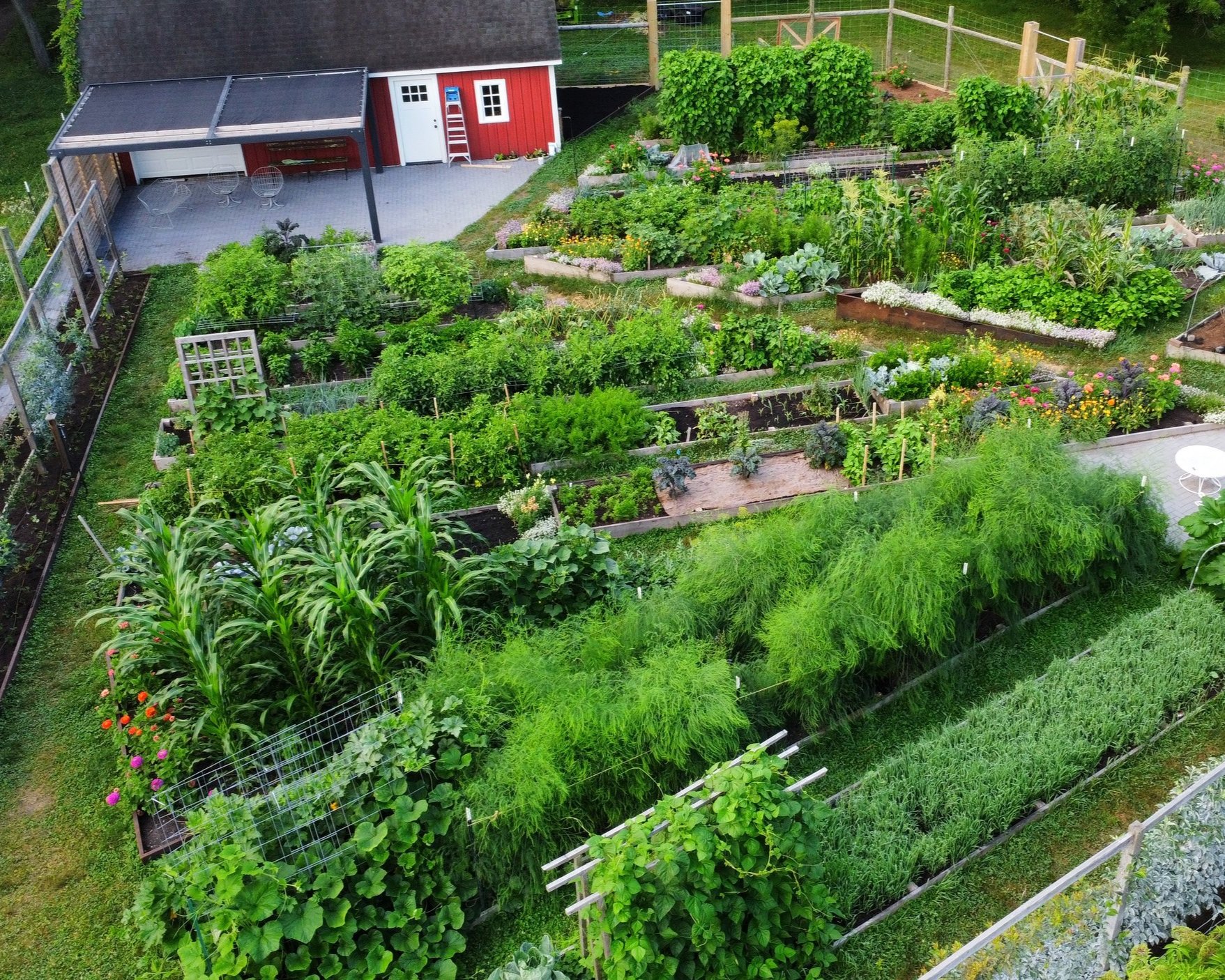
My age and fatigue is showing, and I’m living into it: we are still working to weed and top dress our final 2 beds down by the barn. Eight years ago we would have completed all of this before Thanksgiving, having broken our backs and worn ourselves thin, serving Costco pizza to the then tweens too many nights in a row to count. But eight years ago the garden was smaller too, so that’s surely a factor. Ever since we expanded the garden that extra 500 square feet, things have felt a little harder. Now we move with more intention, and in doing so, more slowly. And, remarkably, we realize that it will all be more than okay in the end. And so I weed a little, to preserve the health of my back.
The biggest weeding thug continues to be a perennial grass, quack grass, that has really established in many beds over the last few years. A bed I weeded a week ago already has more popping up, the remnants of the plants I missed first time around. It is a weekly task to gently maneuver a hand trowel deep enough to loosen the rhizome while not uprooting whatever seeds or plants are growing. this will be especially challenging in our carrot bed!
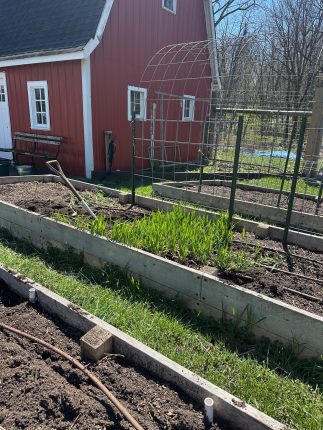
I’m not stressed about these bottom two beds because one of them will be our paste tomato bed, and they haven’t even germinated yet. (If you’re new, see my direct seeded experiment for more details!) These beds warm up the latest because they are in the lowest and shadiest part of the garden. (We always prep and plant from the top down).
Setting Up Trellises
I love to place my trellises where I want a crop to go ahead of the planting season. This gives me time to consider angles and ponder views. Growing food can and should be a beautiful endeavor, and I like to make our garden as visually appealing as they are tasty.
I’ve started taking some of the trellises out and put them into beds so I can see the future. This includes imagining my swaths of zinnia and blocks of sweet corn, too. It all has an impact on the feel of the garden. Each year takes on its own personality, while always nodding to seasons’ past in more than one way.
I’m also needing to trellis my spring pea plantings as well as get ready to trellis my first succession of bush green beans.
Orchard Pest Management
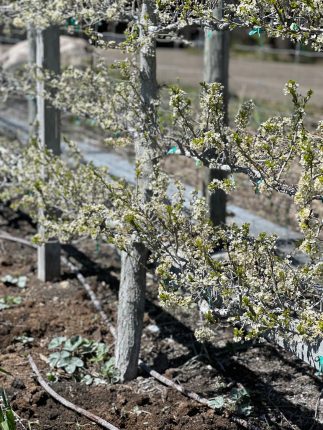
John has been spraying Cease (Bacillus subtilis, a fungicide) and Neem for a few weeks now, and has started adding in Surround (kaolin clay) to try and get a strong coating on the trees this year. These are foliar sprays that help ward off the nagging, perennial pest pressure that grows right alongside our orchard.
We continue to struggle with plum curculio and are hoping with this new method, combined with some strategic nematodes we will add later this year, will help knock the population back. Growing fruit is no joke around here!
Read about my recommended organic pesticides in this guide.
Hardening Off & Transplanting
Yes, it’s time! Be sure to take it easy with your indoor-started plants. I am finding the easiest way to ease my plants into the outdoors is to use a shade cloth for the first few days if it’s full sun. This way, you can leave them outside and not have to worry about them getting sunscald. On cloudy days, you can leave them exposed (many indoor light setups, including mine, are about the equivalent of a cloudy day …)
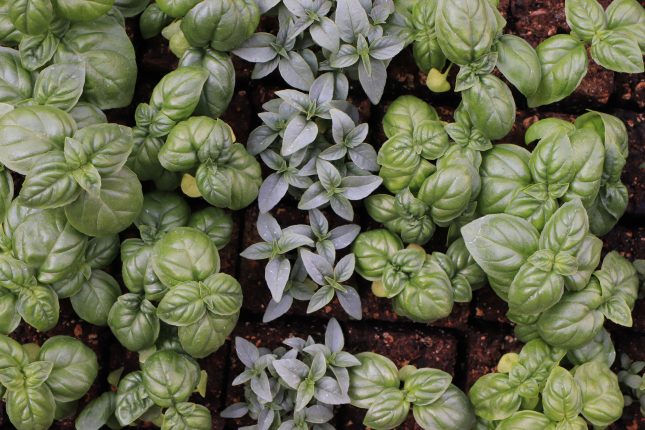
Taking the proper time to harden your seedlings off is vital to a smooth transplant. Be sure to follow my tips here. I’ve broken it down into an easy to follow set of steps.
Every indoor-started seedling needs transition time before going full-time in the blazing sunshine. We even just received 100 prairie seedlings and their instructions recommend a several-day hardening off before planting. Here’s what I’ve been hardening off ahead of transplanting right now:
- Tomatoes, peppers, and eggplants
- Onions, leeks, shallots
- Fennel
- Broccoli, cabbage, kohlrabi, bok choy, etc
- Zinnia, marigold, dahlia, gomphrena, cosmos, sesame
- Basil, thyme (not yet, but will need to be done this month)
Pest Pressure
Be on the lookout for pests this month. I now regularly see cabbage whites flying around in late April. (Yes, swear words are thrown their way when I see them.)
We are seeing a lot of pest pressure in our spring beds. I wonder if it was the mild winter or the lack of snow or the different compost I used.
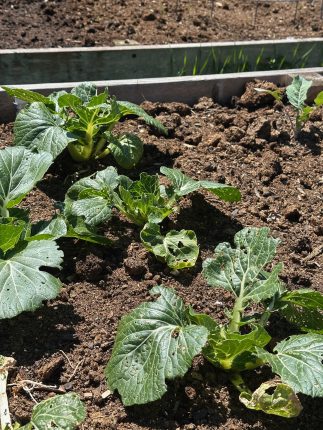
It’s an ugly mess out there! These are my chewed up bok choy, something I’ve never had an issue growing save some small flea beetle holes.
I am going on the offensive this spring and will soon order beneficial nematodes to get our flea beetle population in check. This application will also include applying nematodes to the asparagus bed, and while I’m at it I’ll treat the entire garden and buy two kinds, one that will attack caterpillar larvae which may dampen my cabbage looper population, and the other that focuses more on these soil dwelling beetles.
What to Sow Now
Last weeks for Cold Hardy Crops
This is our final call for fast-growing cold hardy crops. I will sow one more row of radishes (I’ve got 4 successions so far this spring), maybe two, over the next two consecutive weeks and then that’s it for the spring. That will give us fresh radishes to eat and share for most of May and June.
Arugula while cold tolerant can be sowed all summer. I like to transition to a slightly protected/shaded area when the heat kicks in and harvest it promptly. Boy does it go well in summer salads or in a quick weeknight crepes.
Direct Seed
- Radish*
- Salad turnips*
- Green onions
- Arugula
- Cilantro
- Bok Choy
- Broccoli
- Kohlrabi*
- Kale
- Head lettuce
- Parsnips*
- Beets
- Carrots
- Corn
- Beans
- Tomatoes (cherries or determinate paste) and Peppers (under a row cover for extra heat)
- Potatoes
- Wheat (our red fife wheat has germinated!)
* last chance to sow before the heat arrives
Indoor Sowing
- Heat tolerant lettuce (e.g. Jericho, Concept, Coastal Star)
- Cabbage for summer eating (red, green, savoy)
- Fennel (last chance, and maybe too late … I’m sowing some now so I’ll report back)
- Tomatoes (just direct seeded our determinate paste tomatoes in cold frame)
- Peanuts (in 3.25” newspaper pots)
- Brussels sprouts (first week of May)
- Celery (for fall) (now through end of May)
- Summer and winter squash
- Cucumber
- Melons (musk and watermelon)
Herbs
- Parsley
- Basil
I don’t have room to grow them but I am starting sweet potato slips again this spring from my saved sweet potatoes. Maybe I’ll squeeze one or two slips into the garden, or maybe I’ll give them away. It will take about 6 weeks to grow slips, which should time out perfectly for a June planting.
wait until Mid-May
I am not sowing any cucurbits just yet – watermelon, muskmelon, summer squash, zucchini, winter squash, and cucumbers all wait until around Mother’s Day and all get sowed into a 3.25” newspaper pot.
Lastly, I am holding off on a number of herbs, notably the ones I trialed last year and quickly learned direct seeding is likely a better route. This includes fenugreek, cumin, nigella, and mustard seed. I am thinking I will direct seed these later in May instead of indoor sowing and transplanting. And the space I want to use for this is a colder spot so will need this month to thoroughly warm the soils.

I hope this gives you lots of room to play and grow in your garden. Remember that gardening is a personal endeavor, one that is most meaningful the more personal you make it. We are now squarely in the hum and buzz of the garden. It’s our most frequented space besides the kitchen, and will be now until sometime in October! It’s good to be reunited with this dear old friend, weeds, pests, and all.
You might also like:

Get updated by email whenever there’s a new post
Comments
If you’re a subscriber, you can discuss this post in the forums
Leave a Reply