
Your cart is currently empty!
My Favorite Varieties: Peppers

Get updated by email whenever there’s a new post
It has taken us many years to learn to grow peppers well. Surely we’ve grown them every year of our nearly 25 years of growing food together, but not all years or varieties have fared well.
Jalapeños, bell peppers, and serranos were often annual traditions for many years. A small urban garden meant I had to grow in small proportions. We were content with the few colorful bell peppers we’d pluck in late summer plus the heat we’d add to fresh salsas and such.
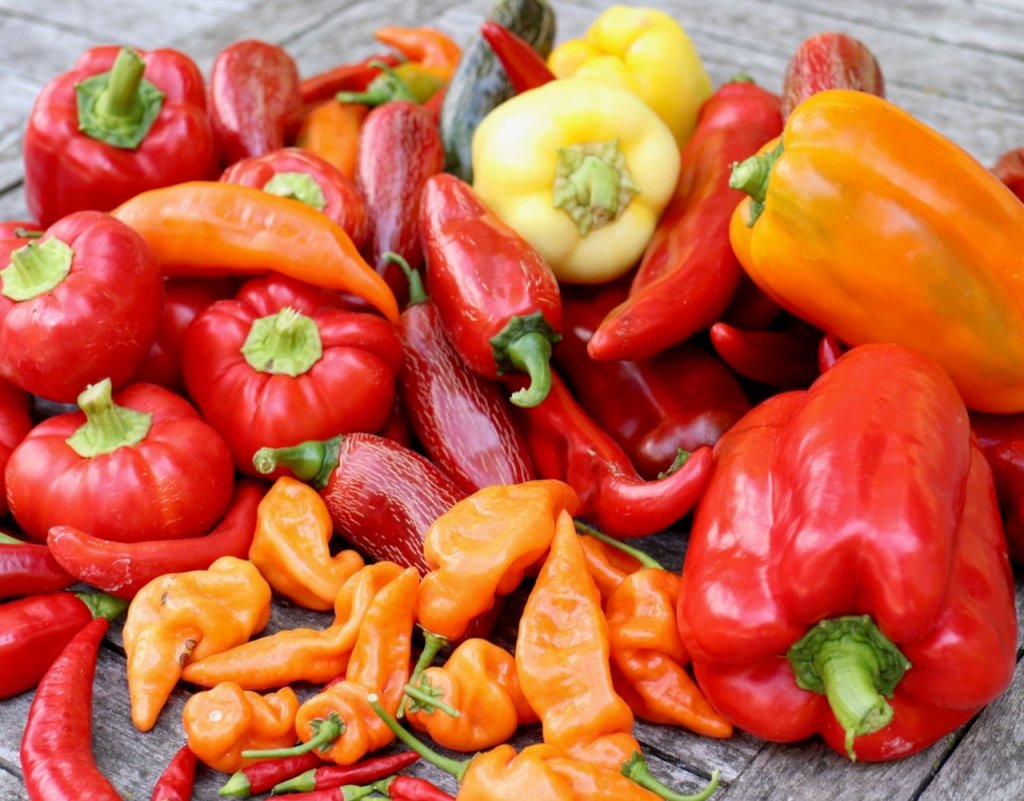
Like with much of our garden journey, transitioning to growing at the expansive scale of our current garden meant blowing open the doors of creativity and exploration. And peppers were as important in that seed search as any other vegetable or flower. So here’s a comprehensive list of all the peppers we’ve grown and which ones are my top picks for you.
Bell/Sweet Peppers
We’ve been growing Gourmet bell peppers since sometime in the ‘00s. It’s a thick-walled orange bell and as the years have passed, our pepper quality has definitely improved. If you’re new to growing peppers, keep at it. I find they are the hardest veggie to grow for me here, but they are so worth it. By and large, I only grow hybrid bell peppers but lean more toward open-pollinated for other pepper types.
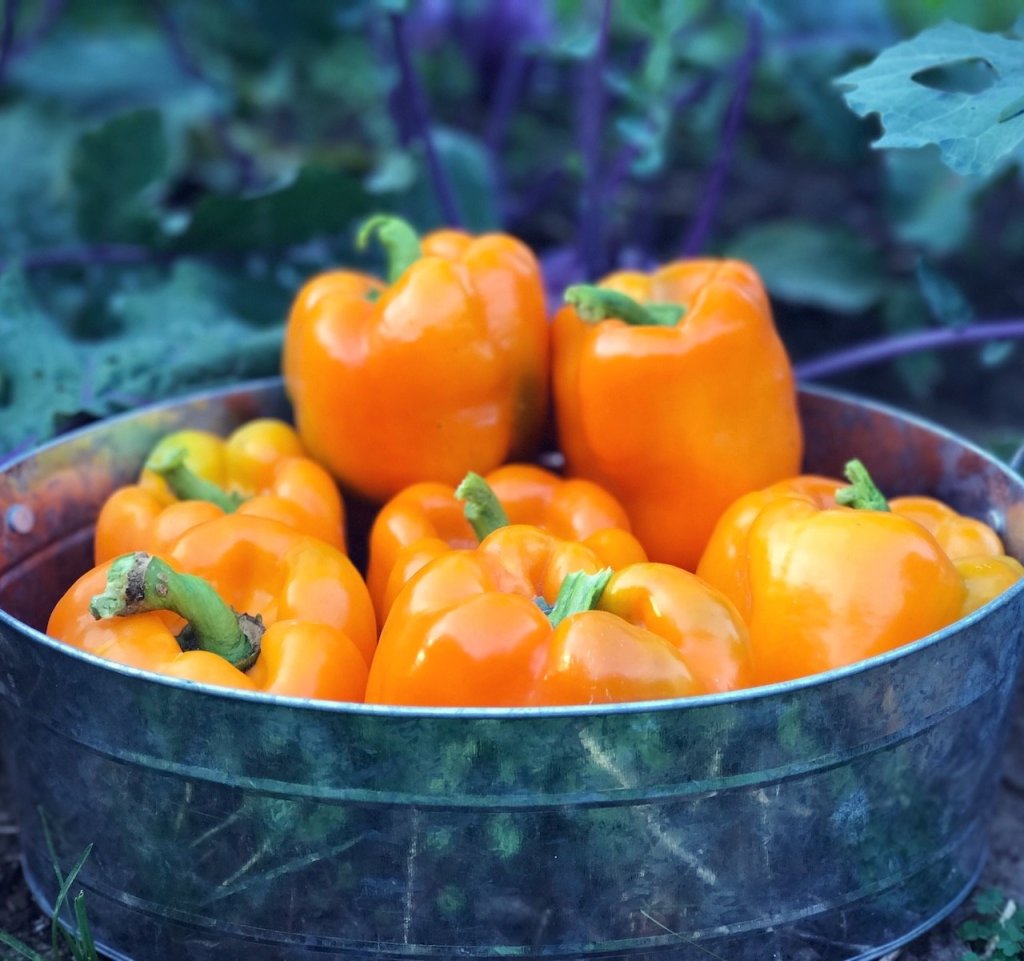
After year 1 of pepper failure here, our 2 Gourmet bell peppers went off the rails in 2018, just in time for packing school lunches.
Canary — A yellow bell pepper, we grew this a few years ago and it wasn’t very productive for me, which is a key attribute for growing again. This one quickly fell off my grow list. (Seeds from Baker Creek.)
Madonna — Another yellow variety, I found this pepper to be a bit better in productivity than Canary. The price difference in seeds these days is astonishing, and I just checked and 10 seeds cost $6.30 from High Mowing Seeds. Now, if you successfully grow 10 pepper plants, you will yield way more than $6.30 of peppers, more like $15/plant I’m guessing with 3-6 or more large peppers per plant.
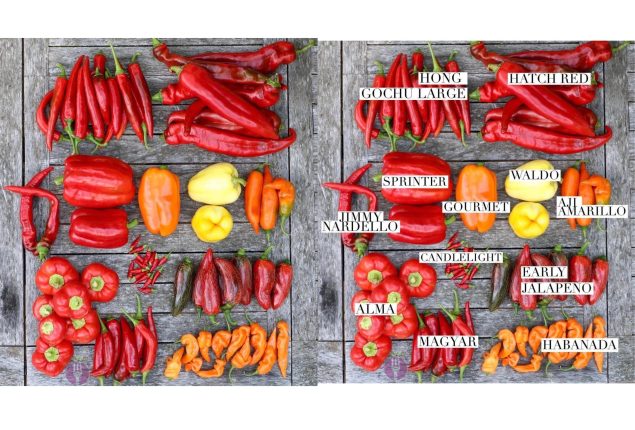
Gourmet — As mentioned above, this is our garden staple. If I only had room for one bell pepper, this would be it. It’s sweet and thick-walled and often produces abundantly for us, though this year it wasn’t very impressive. In fact, most of our bell peppers didn’t ripen on the vine — there were a lot of green bells before first frost. I heard from farmers this happened to them this summer too, so I know it wasn’t just me. This is why you grow more than one type of any vegetable to thwart these seasonal nuances. (Seeds from Johnny’s Seeds.)

Quite possibly the most “store bought perfect” veggie we grow is this Sprinter bell. Not necessarily a measure of success most of the time, but nothing beats a sweet, crunchy and thick-walled, sun-ripened bell pepper in late summer.
Sprinter — Another hybrid win is this newer to me variety of red bell pepper, Sprinter. Another High Mowing Seeds investment, I was skeptical a few years ago when I was sent 10 seeds for over $5. It was the most expensive seed I ever bought at that time. But this plant is all it is hyped up to be. As thick-walled as Gourmet, it’s flavor isn’t quite as sweet as Gourmet but it’s as essential in our pepper garden for the color and productivity it yields us. This was our best-producing bell pepper this year. Worth the investment.

Waldo — Trying to grow a rainbow of peppers (I’m not into purple peppers, so I stop at yellow) led me to this pale yellow variety. It grew okay for us, but I wasn’t into the flavor. What it added in meals and photographs didn’t compensate for its lack of sweetness, so we don’t grow this variety anymore.
King of the North — Spoiler, the seeds I bought for this (Baker Creek) did not grow true to seed. Actually, I stand corrected: one year. they grew well and then next they didn’t … so it was perhaps a case of a mislabeled soil block. However, Sprinter is so reliable for me I’m good sticking with it, though I should give this variety another try before I divorce it. I should give seeds from Seed Savers Exchange a try before I decide if this is a bell pepper worth the space in our home garden.

Sweet but suspcious-looking pretty much sums up the Habanada.
Habanada — I really loved this “grassy” flavor if this brainchild of Michael Mazourek of Cornell is a culinary experience you all should have in the coming years. It looks suspiciously hot but the heat has been bred out, and what’s left is a vegetal delight. One of our friends who tried them — we simply pan fried them like folks do with shishitos, a pepper fad we haven’t jumped on yet — said it tasted like ‘grass-fed beef’. And I think she’s right. I had intended to grow it again last year, and received seed from a gardening friend with whom I sometimes seed swap and her habanada seeds turned out to be Jimmy Nardellos instead, so I need to buy new seeds for this one to return to our gardens. (Seed from Botanical Interests and many others, including Row 7 Seeds, I believe where it was first introduced into the market.)
Jimmy Nardello — The very tastiest sweet pepper I’ve ever grown. I love giving one of these to folks and watching their experience unfold. I pan-roasted them as a pizza topping this summer when some friends came over, and they could not get over how delicious they were. They look suspiciously hot, too, but as so sweet, which can be confusing in your harvest basket if not managed properly, so take note and plan accordingly! Nothing worse than biting in a hot pepper you thought was sweet. I speak from experience. (Seeds from Seed Savers Exchange.)
Winners: Gourmet, Sprinter, Madonna, Jimmy Nardello
Losers: Waldo, Canary, Habanada
Neutral: King of the North
Paprika & Other Culinary Peppers
This is a huge area of focus still for me, finding food we use on a regular basis and growing it for our pantry. Paprika is maybe the most fun of all, because the smell of smoked, drying sweet paprika is a heavenly scent I’ll now forever link with autumn. Having a smoker is a very new thing for us as of August, and we are loving it!
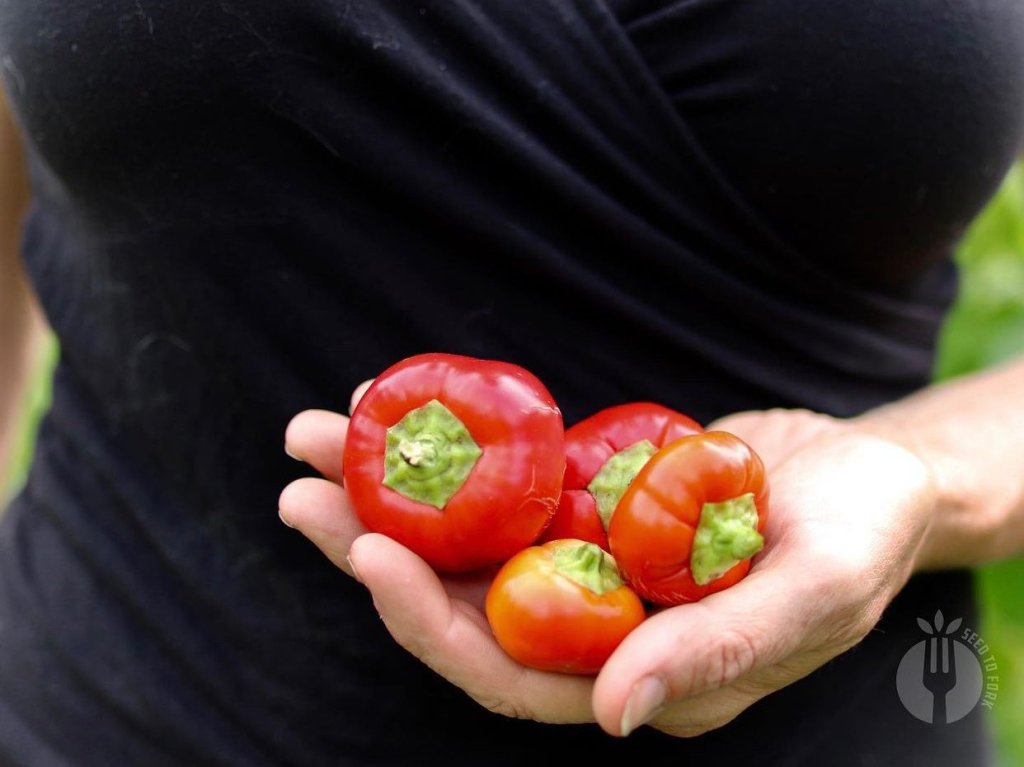
I really love the shape, thick walls, and versatility of Alma paprikas.
Alma — If you’re short on space or want a multi-purpose sweet pepper, this plant is for you! It can be stuffed, pickled, or dried for a sweet paprika. It’s small and thick-walled so naturally matures faster than larger bell peppers, making it suitable for short growing climates especially. A compact habit, it would do well as a border plant at the edge of a bed. They ripen from a pale yellow to a deep red and I harvest them at any stage depending on my needs. (Seeds from Seed Savers Exchange.)
Feher Ozon — Another paprika variety I tried during my first year growing them. Unlike Alma, this is a thinner-walled pepper. It was a beautiful plant but it’s not one that made a lasting impression on me. Because I only gave them one growing season, this will be a variety I’ll grow again to see how we like them. They are larger so like Alma, could be a nice multi-purpose sweet bell — they ripen from a cream to a red and can be picked at several stages. (Seeds from Seed Savers Exchange.)
Gernika — In my effort to continue to search for a wonderful paprika, I found this variety offered by a favorite small Oregon seed company called Adaptive Seeds and had to try it! Their varieties have largely done well for me, except their bush shelling beans whose productivity last year was mediocre and I didn’t grow again. But they’ve turned me on to open pollinated cabbages as well as the Gochu pepper listed below. I love that this one is thin-walled and produces a lot of peppers that ripen across several months. When needed, these are also a great stand-in for a sweet bell pepper. Gotta love this about paprika peppers.
Leutschauer — this is a hot paprika variety we grew and enjoyed it. I only grew it one year (it was highly productive) and we dehydrated enough to last us several years. It will return to our pepper grow list occasionally. (Seeds from Baker Creek.)
Magyar — The final reach across seed catalogs was this one I found through Renee’s Gardens. They claim they are the only ones with this seed source, and they might be right. I haven’t seen or grown any other paprikas that are as small as this one. It looks sort of like a hot pepper, but it’s another sweet variety. Because it’s small it’s also great in our short growing season because smaller peppers ripen faster in general.
Other Culinary Peppers
This is the second most important area of exploration for us as we try to utilize our garden space for specific culinary agendas.

Always a late season pepper, Aji Amarillos make an incredible sauce or dry pepper flake.
Aji Amarillo — The ultimate flavor in a culinary pepper, I am obsessed with this Peruvian pepper who’s name translates as “Yellow Pepper”. It’s packs a lot of heat but is so much more than that. It has a sweetness that balances out the heat on your palate and it’s my secret ingredient when I want to add a complex heat to a simple dish. Sadly, this year they also didn’t ripen on the vine and I’m hoping some do so in our root cellar as I pulled the whole plants out before our frost. These seeds were from my same friend with whom I trade initially, but I believe she got them by way of a California gardener via Fred Hempel at Bene Seeds (Formerly Artisan Seeds). I believe I grew Aji Amarillo Grande from his seed source this year, and my original seeds weren’t specified as Grande or not.
Hong Gochu Large — A medium-spicy pepper that we started growing for homegrown gochugaru, kimchi chili powder. It remains in our rotation and we use it not only for kimchi but also as a hot pepper as needed. I dehydrate all of them whole in our dehydrator and keep in a ziploc bag. It’s quite productive and the size and shape can be confused with sweet Magyars. (Seeds from Adaptive Seeds).
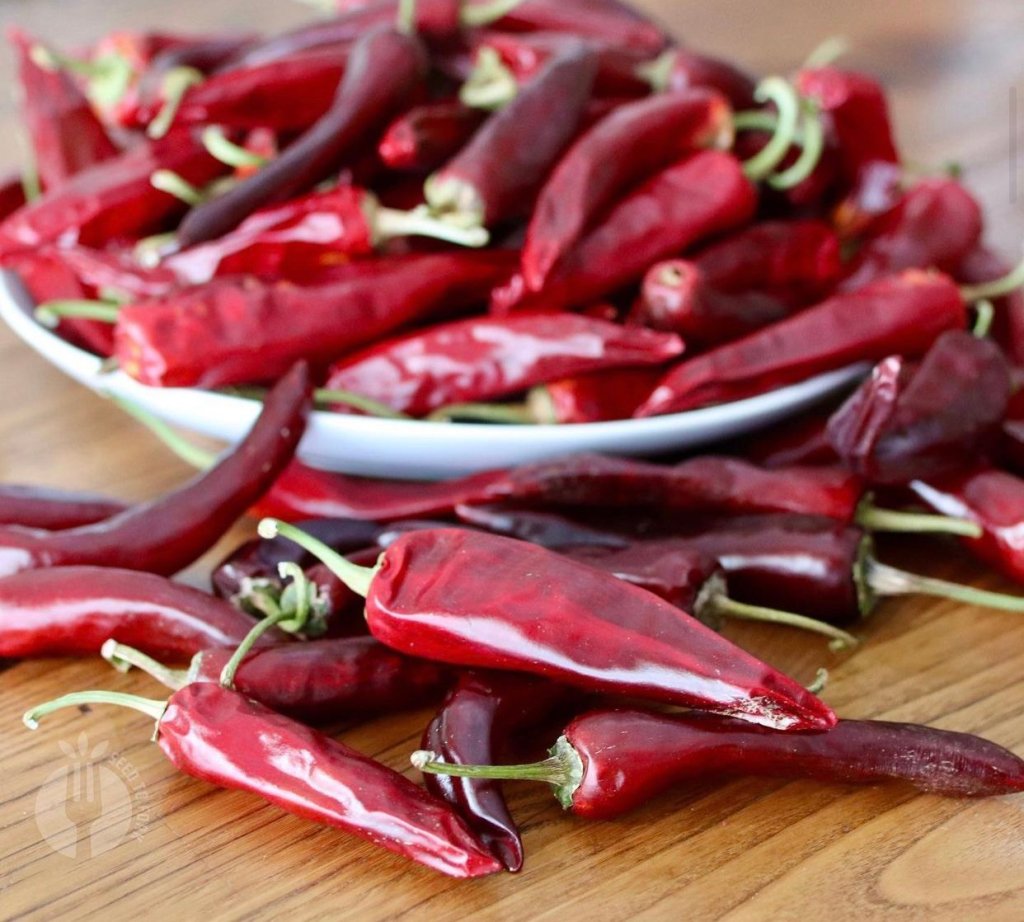
We dry our hot peppers whole, then they go into plastic storage bags usually with food-grade desiccant packs. These are Gochu’s.
Poblano — We loved this pepper last year as a stuffed pepper. It brought a twist to our often entrenched weeknight meals. I would saute onions, peppers, garlic, herbs, carrots, and any other veg I had around with rice and sometimes sausage and stuff the peppers and top with cheese. So delicious. Sometimes the peppers are hot, which makes eating them risky and fun because you don’t know what you’ll get. My poblanos didn’t germinate this year for me, but I’ll try again next year. (Seeds from Botanical Interests.)
Hatch — Another seed from the friend I’ve mentioned a few times, this cannot technically be called a Hatch chili because I don’t live in the Hatch Valley of New Mexico (just like Champagne being from a specific geographical region of France and all else deemed sparkling wine). However, this is another fantastic addition to your culinary pepper lineup if you enjoy Latin cuisine and delicious sauces. Next time I grow this, I’ll be purchasing seeds from Sandia Seeds.
Pasilla Bajio — I only gave this pepper a one season shot. And they start out really dark, almost black. Didn’t get a lot to turn colors and when I dehydrated them they looked, well, unappetizing to me. I don’t know, maybe I need to learn more but this was a pepper I was really excited to add to our homemade enchilada sauce lineup and I guess it fell short for me. But I think it has a lot of merit if you love cooking Mexican. (Seeds from Botanical Interests.)
Winners: Alma, Gernika, Hatch, Poblano, Aji Amarillo, Hong Gochu Large
Neutral: Pasilla Bajio, Feher Ozon, Magyar, Leutschauer
Hot Peppers
We don’t eat a ton of spicy food, and when we grow hot peppers most often I end up fermenting them into a hot sauce, dehydrating them and occasionally tossing one into our cooking beans or grinding up for a rub. But we usually grow too many hot peppers because I like to use them as endcaps for my garden beds, lining the main aisle with unique peppers and eggplants too.
Candlelight — a wonderful ornamental chili pepper for any landscape. I harvest a fraction of what grows, more love enjoying its form in the garden and then we compost it. (Seeds from High Mowing Seeds.)
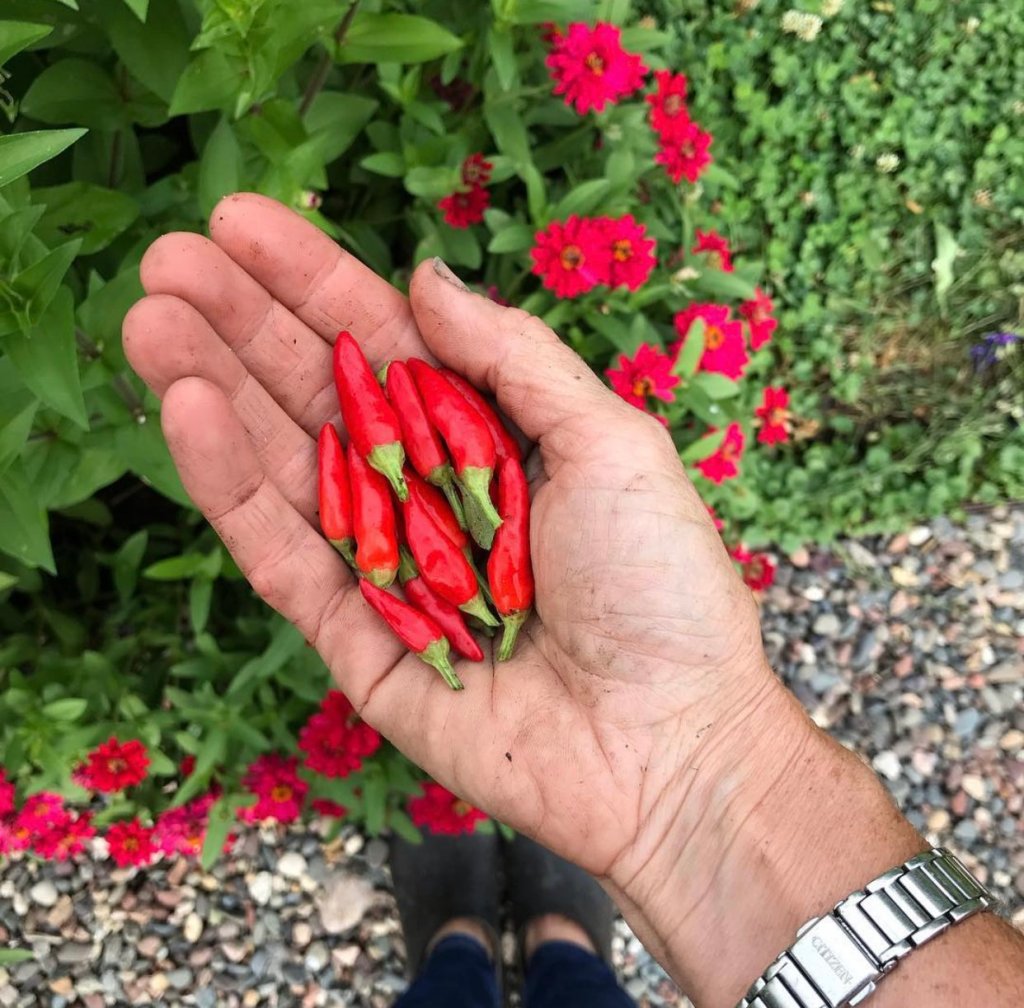
Cute candlelights, but don’t let their demure stature fool you, these are spicy!
Black Hungarian — Another pepper grown for my heritage, it was a fun pepper to grow, but the theme in this section is that I’ve grown a lot of hot peppers and we don’t always use them. This was one I enjoyed growing but we really didn’t make use of it well in our kitchens.
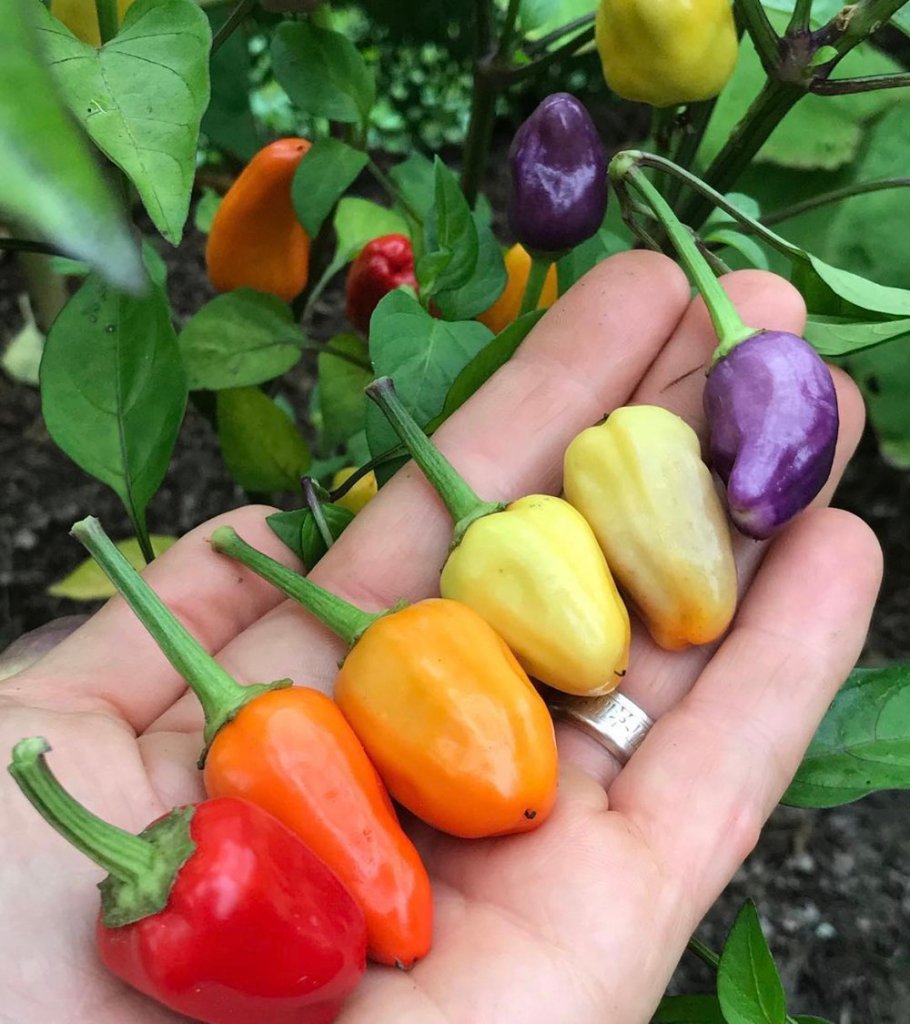
Chinese 5 Color — This is a super fun and quite hot pepper to grow. So if you only need a little bit of heat but want the fun of a rainbow, this is your pepper. We don’t have a palate for super hot foods, so this one is grown entirely for looks.
Early Jalapeño — Our go-to Jalapeńo, this usually ripens well for us starting in August. Alas, the theme this year was peppers that didn’t ripen well, and these were among the cohort that didn’t perform to our expectations. However, we really love this variety and will always grow it. (Seeds from Johnny’s Seeds.)
Fish Pepper — Sadly, this plant didn’t produce well for us. The plant struggled all year. I want to try again because I’m growing it for the variegated foliage more than the fruit! (Seeds from Seed Savers Exchange.)
Habanero — This pepper is too hot for us, so we don’t grow it anymore.
Hungarian Wax — How many different medium hot peppers does one garden need? That is what I ask myself when I start harvesting so many. Because I have Hungarian roots, I love growing these peppers, and hope to cook more traditional Hungarian meals with them. We mix them into our normal cuisine — salsas and chilis and such, and I’ve dried some too which I suppose could maybe be a stand-in for “hot paprika’“ for us this winter. If I had my wits about me, I may have thought to pepper some this summer. (Seeds from Johnny’s Seeds.)
Ralph Thompson — I honestly thought this was a mild, sweet pepper but it turns out it’s a medium hot pepper which reads for our family as a Habanero! Haha, such it was as my husband and oldest bit into an extraordinarily hot specimen on a pizza one night.
Rooster Spur — Similar to the Candelight in form, though it grows much taller and is purported to be up there on the Scoville scale. I’ve dehydrated some for “cayenne powder” this year. I will probably not grow this one again .. it was a but unruly for my gardening style, as I need these types of pepper to have a compact form .. this variety needed staking. (Seeds from Seed Savers Exchange.)
Serrano — A classic heat, but too hot for us.
Thai chili — I enjoy growing this pepper, but I honestly can’t taste too much of a difference between it and other hot peppers. If you’re a Thai cuisine enthusiast though, this pepper, like all hot peppers, was a prolific producer and they ripened well on the plants too. (Seeds from
Winners: Candlelight, Chinese Five Color, Early Jalapeño
Losers: Serrano, Habañero, Rooster Spur
Neutral: Black Hungarian, Hungarian Wax, Fish Pepper, Thai Chili, Ralph Thompson
Hope this roundup was informative and helpful. As I find more images of the peppers listed here, I’ll work to add more images to this post. (Surprise, my digital organizational skills are sorely lacking.) And remember, that our climates and soil impact how well plants do for us too, so just because things didn’t grow well for me doesn’t necessarily make them unsuitable for your garden.
You might also like:

Get updated by email whenever there’s a new post
Comments
If you’re a subscriber, you can discuss this post in the forums
Leave a Reply