
Your cart is currently empty!
November Monthly Task List

Get updated by email whenever there’s a new post
I’m still wishing for colder weather, because I’m ready to have all our food put up in the root cellar and all the beds as tidy as we can be until February when I will waltz into the space and ceremoniously shroud a low tunnel with greenhouse plastic to commence the beginning of our growing season, aka, let’s melt the snow and thaw the frozen raised bed already!
There is a very long list of tasks we need to complete before I can shut the gate for a few months. They include:
-
planting garlic! (see below)
-
harvesting carrots
-
harvesting daikon and watermelon radish
-
harvesting brussels sprouts
-
layering carrots and other roots in damp sawdust for winter storage in the root cellar
-
chipping the biomass for our annual compost pile
-
weeding the raised beds
-
adding compost to weeded raised beds
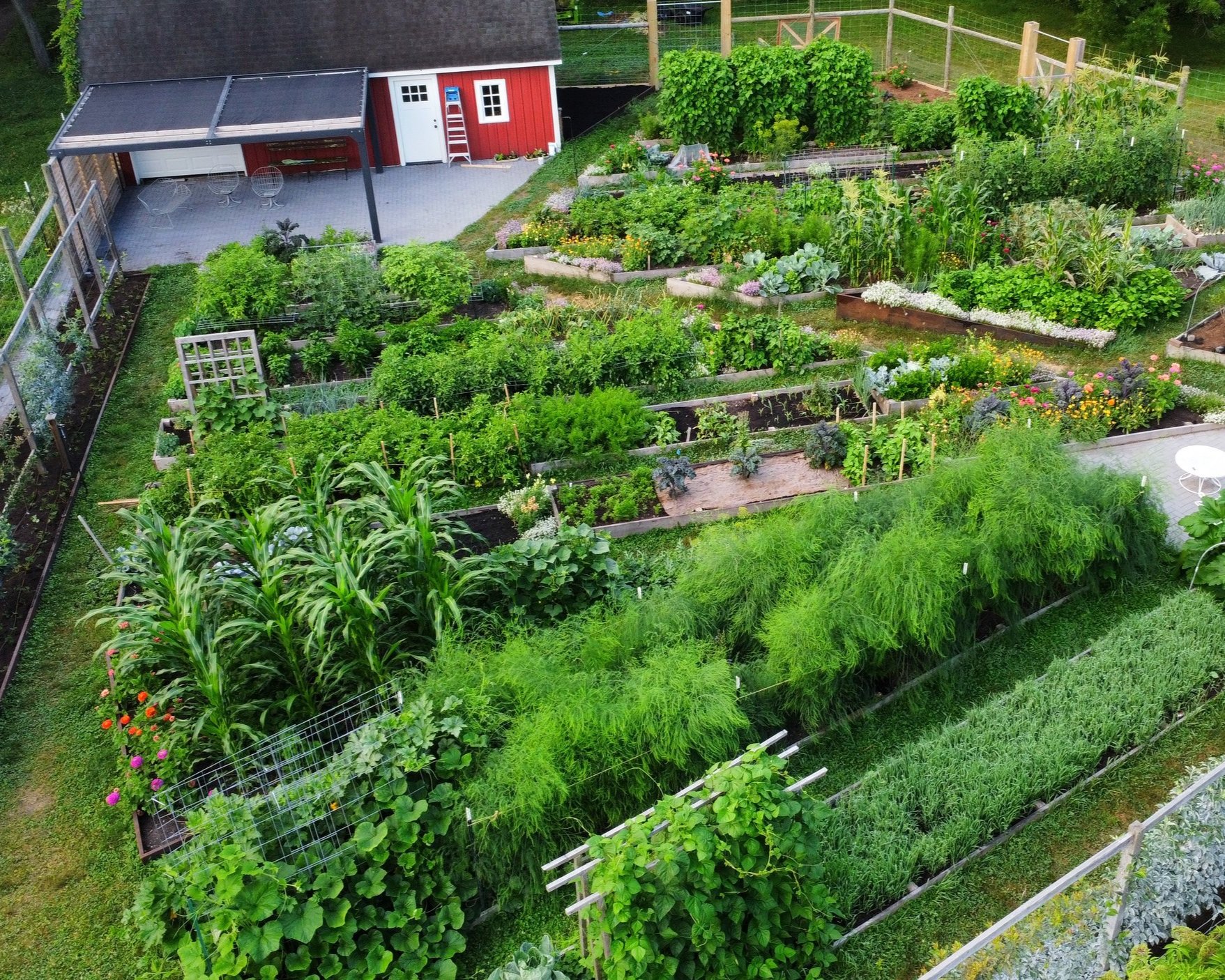
The weeding and compost is currently taking priority, along with the garlic planting. Of the 8 yards of compost we had delivered, we’ve maybe moved 2 of them so far. We don’t expect the 8 yards to fully cover the entire garden, but we hope to add a layer of compost onto: both triangle beds, the large asparagus bed, the honeyberry bed, and as many veggie raised beds as possible starting from the north side of the garden working down toward the barn. I don’t anticipate completing the weeding in all beds this fall, and full expect the perennial quackgrass to stare me down all winter and into spring as it continues to flourish where I have not consistently and relentlessly weeded it out.
At the end of the day, the weeds can wait. What we seem to be realizing and learning this year is that we are growing older. Our bodies aren’t able to handle as many loads of compost a day as they could 4 years ago. My back is still tender from when I harvested potatoes and then heaved compost last week. It’s not worse, but it’s also not improved much. It won’t improve until all the vegetables are harvested and put up, and the compost is all loaded and unloaded. This is just the way of this work. So we will take it day by day, work for an hour here and another hour there, employ our sprightly teenager to do the compost shoveling into the wheelbarrows and see how far we can get.
The weather outlook is promising for doing a bit of work each day for the next week and a half (highs in the 40s/50s with lows in the 30s). My hope is that we will be done with the compost at the end of next weekend, but like with most things I set out to do, I think that’s highly ambitious and destined for failure. I don’t see a real cold snap yet, and that’s why I hope to move compost daily, following behind our weeding, one bed at a time.
The other thing I’m really thinking about this month is seeds. I keep my empty seed packets in a binder clip in the kitchen all summer to help me remember what I need to re-order. I imagine like you, I’ve been getting emails with new varieties and 2025 catalog launches. And guess what? I’m not that interested in new, flashy varieties. Yes, I may want to try to find more brassicas to play with, but I’m good with most things. I’ve spent almost 10 years trying to diversify and keep up with the newest tomatoes, flashiest peppers, and I guess, to a varying extent, be an inspiration with interplanting flowers in your vegetable garden. But I’m satiated. I’m good. If I add more seeds to my stash, it will be an open-pollinated red cabbage, more open pollinated broccoli varieties, and more spices and herbs.
This feels like an alignment with my social media exit (temporary or not), inviting myself to pause and jump off the hamster wheel. It’s me realizing I have enough seeds to grow a garden. Let me reframe that: I already have enough seeds to grow a beautiful garden, even if I don’t spend a single dollar on seeds this fall. I do value small seed growers and like to support them, and I am hooked on some hybrid varieties like Plum Perfect and Sun Gold tomatoes and many hybrid green cabbages, but for many of the veggies we grow, we know what we like and it works. Maybe this is me getting older and tiring of the relentless hustle of capitalism throwing new and better at us, but I’m hoping it’s me getting sager and acknowledging that keeping up isn’t what life is all about.
All that being said, I am realizing that what I really need to focus on is the harvesting and putting up. We worked so hard to grow this food to feed us all winter, why am I so obsessed with the garden looking tidy this winter? It’s part aesthetic, but also, it makes spring easier. And yet, if I don’t get the food out at the right time, it won’t store as well. So, I think I’ll be taking in food every day this week, one or two baskets at a time, enough for a few hours of work and hopefully, as the bins accumulate, the root cellar temps and humidity will settle into their winter routine (temps in the mid-30s and humidity 95%). I’ll start with the daikon which are quick and easy, then move onto the carrots which are messier but a bigger lift. Finally, I’ll dig up some of the napa cabbage and brussels sprouts to replant into damp sawdust in the root cellar. I will share more about how I store veggies this month in my guide, which should arrive this coming weekend.
If You Haven’t ….
Plant your garlic NOW: zone 4 and 5 I’ve put it off long enough. The weather has been warm enough in October that I was not late. I wait to plant garlic until we’ve had at least 2 hard frosts (26F). By my count, we’ve had one so far, but with the daylength shortening even more, today is the day (November 9). This will also be the latest I’ve ever planted it, by about a week. If you’ve been following closely with my succession planting this year, many crops have been planted 1-2 weeks late without consequence, so perhaps I’m a quick study or, also possibly, my 2025 garlic crop is doomed.
Get Your Soil Tested Fall is prime time to get your soils tested, whether you’re about to build a new garden or have been growing for several years and want to see how your soils are doing. Your state university extension agency offers this service in the US.
Keep tearing down the Garden I’m a huge proponent of a full fall cleanup. Because having to cleanup in spring will only delay the start of the garden season. Cleaning up the diseased plants in particular will reduce disease pressure by removing spores in your soil as well as provide a welcome mental clarity that will be difficult to achieve otherwise. If I see hanging plants well after frost, it’s more nagging than an undone to do list, weighing my shoulders down until I face the quiet task of thanking my garden for a long season of beauty and nourishment. It’s not glorious work, but it’s grateful work.
Sterilize your trellises with Hydrogen Peroxide More heavy lifting in fall. You can wait to do this, but I find it easy to spray them and then take them down the next day or next week. We sterilized all trellises once they are empty, then take them down and store for winter. It’s one of my more grateful tasks in fall, to undo what we built, to deconstruct it back down to bare bones. To even take the bones out. There’s something hauntingly beautiful about the sparseness to come.
Top Dressing with Compost (now until the ground is frozen) I hope you all know by now that we love using compost as mulch. I don’t cover my soils in fall with a cover crop or leaf mulch or straw. Instead, I add a healthy layer — 1-2” of compost — atop each bed as my mulch. It will work its way in next spring, but for now it holds the active soil microbiome in place over winter, protects our garlic when planted, and helps suppress annual weeds too.
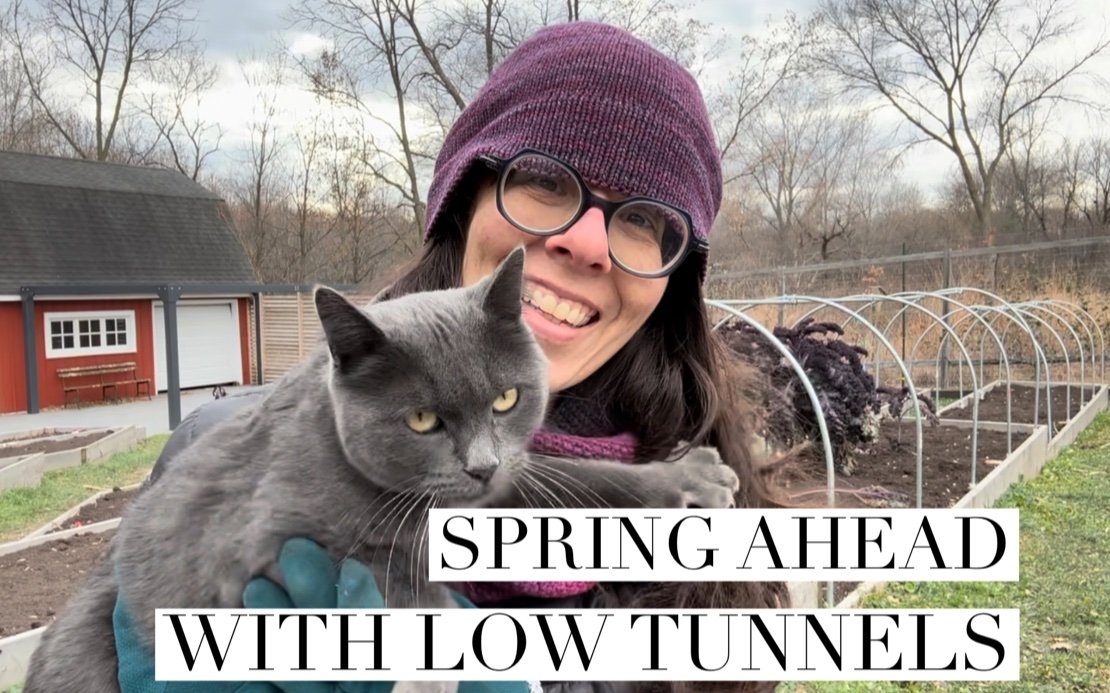
Set up low tunnels Once the compost is laid, the low tunnel hoops will get erected, ready for the poly in February. Follow my instructions in my Guide to Setting up a Low Tunnel: https://seedtofork.com/monthly-guides/low-tunnel-guide

Get updated by email whenever there’s a new post
Comments
If you’re a subscriber, you can discuss this post in the forums
Leave a Reply