
Your cart is currently empty!
Preserving Tomatoes
Get updated by email whenever there’s a new post
Tomatoes are one of the most productive plants in the garden and one of the key ingredients to so many delicious foods across numerous cuisines. But in the garden they can easily tip us over from excitement to overwhelm this time of year, and having multiple ways to use them fresh and store them is essential for our overall well being. It can be daunting to have so many tomatoes to use, give away, or process. So here are some of my top ways that we preserve our harvest for year-round use in the kitchen.
Dehydrating Tomatoes
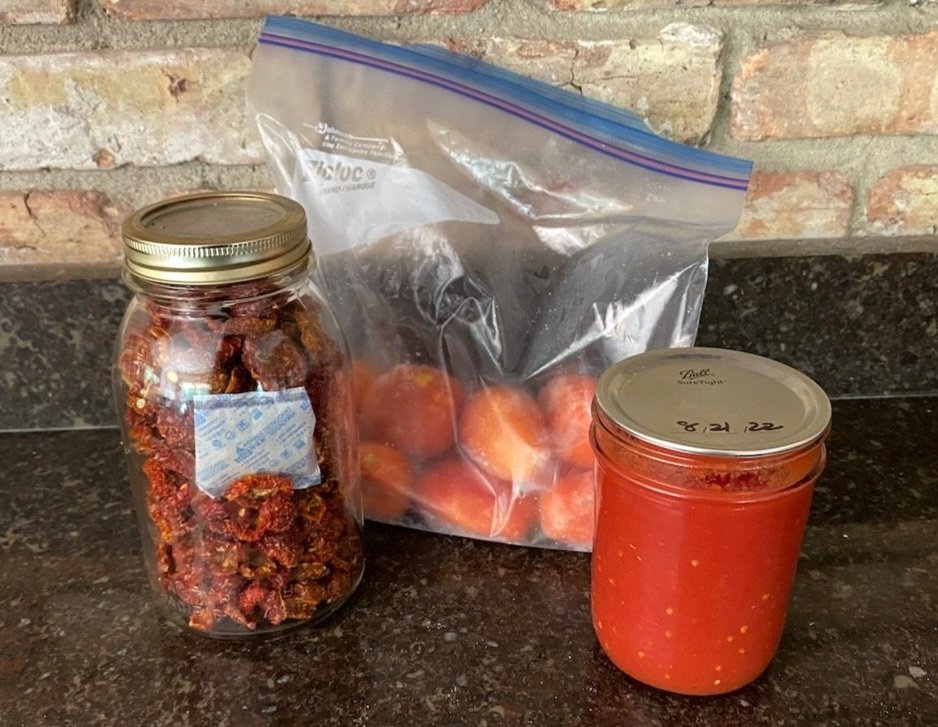
We preserve tomatoes several ways, depending on how many and what kinds we have. First, we dehydrate halved cherry tomatoes and use them ground as a sub for tomato paste. I love them so much and it’s a fantastic way to put those overflowing harvests to work in our winter kitchen. My method is here in an old recipe post.
Freeze Whole
The second way is to simply put whole, fresh tomatoes into a gallon Ziploc freezer bag and toss them into the freezer. This was our primary way of putting tomatoes by for winter or later enjoyment when we gardened on an urban lot because back then we didn’t grow a lot of ‘maters. Super easy and the skins slip right off after they’ve defrosted in a colander. The downside is the time you need to plan for the thawing; they aren’t as instant as a jar of roasted tomato sauce, however, some recipes do call for whole tomatoes so I always keep a few gallon bags of whole tomatoes in our freezer for those times I just need a little (and not an entire quart jar).
Oven Roasting
In recent years, I started oven roasting my tomatoes as a way to get the skins off and reduce moisture ahead of either freezing or canning. It brings out a rich flavor and is really delicious. My oven roasted tomato recipe is here.
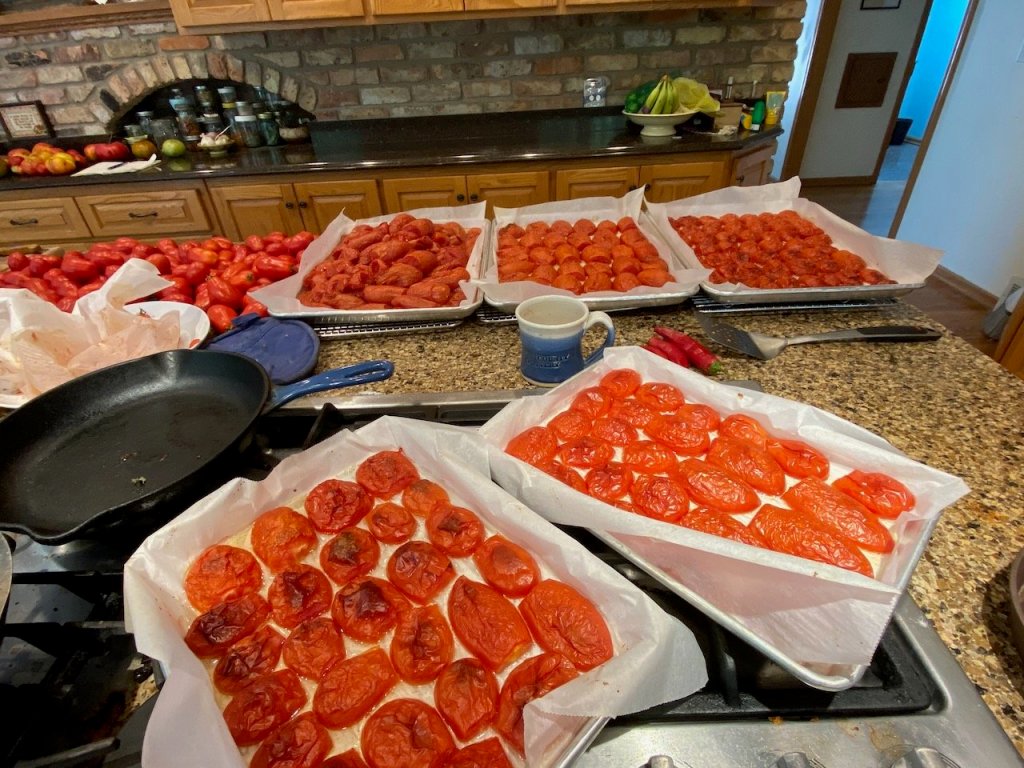
Oven roasting quickly became my precursor to canning too. It’s a tradeoff, to be sure: boil down your tomatoes into a sauce or oven roast first. For us, this is now the way we process and it has a rhythm and beauty to it that I’ve come to really lean into as a huge part of my late summer days.
If you want to just oven roast, and skip the canning, you can simply remove the skins and pack in a quart ziploc freezer bag and lay flat in your freezer. This way you can stack them neatly for storage in either a chest freezer or your main kitchen freezer. I am known to not always remember to flatten them first and then you’re left with a rigid, malformed rock solid mass of frozen veggies that is not a friend to limited freezer space. Be sure to label the bag with a sharpie with the date so you remember to use it up before next summer.
If you choose to only take on one new way with tomatoes this year, I highly recommend giving roasting and freezing them a try.
Canning: the ultimate preservation tool
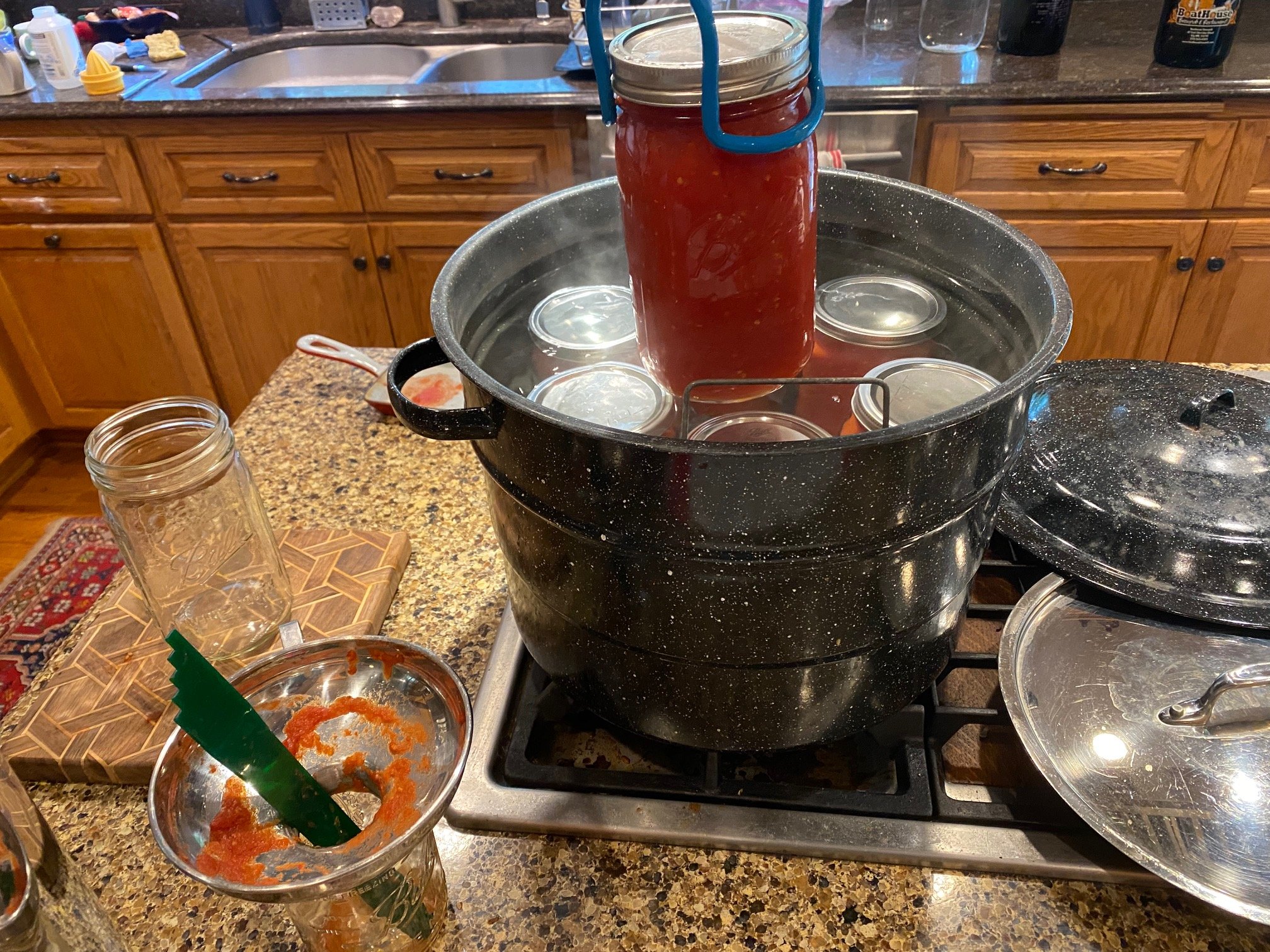
If you’ve never canned, it requires some equipment and a great level of care for what you’re doing. And I completely understand that it can feel scary and overwhelming and perhaps expensive too, to invest in the resources. The large canning pot we bought back as newlyweds over 20 years ago and it works as well as its first boil. So these are possibly one-time investments.
The upside to canning versus freezing is that they are ready to cook with immediately. I find this great for our busy lives, and I love that they are shelf-stable too. I just think that’s pretty awesome.
Official recipes are laboratory tested for acidity; you shouldn’t deviate from recipes because that can alter the pH and thus the safety of the food. I always follow the times and acidity additions from the National Center for Home Preservation. Here is a link to the USDA’s most up to date documentation: Complete Guide to Home Canning.
Here is a link to our current set of tools for canning at the scale with which we preserve tomatoes. The biggest investment was the extra large stainless steel stockpot we bought last year for my ketchup adventures, which can has a capacity of about 26-30 pounds of tomatoes.
Why Start with Tomatoes?
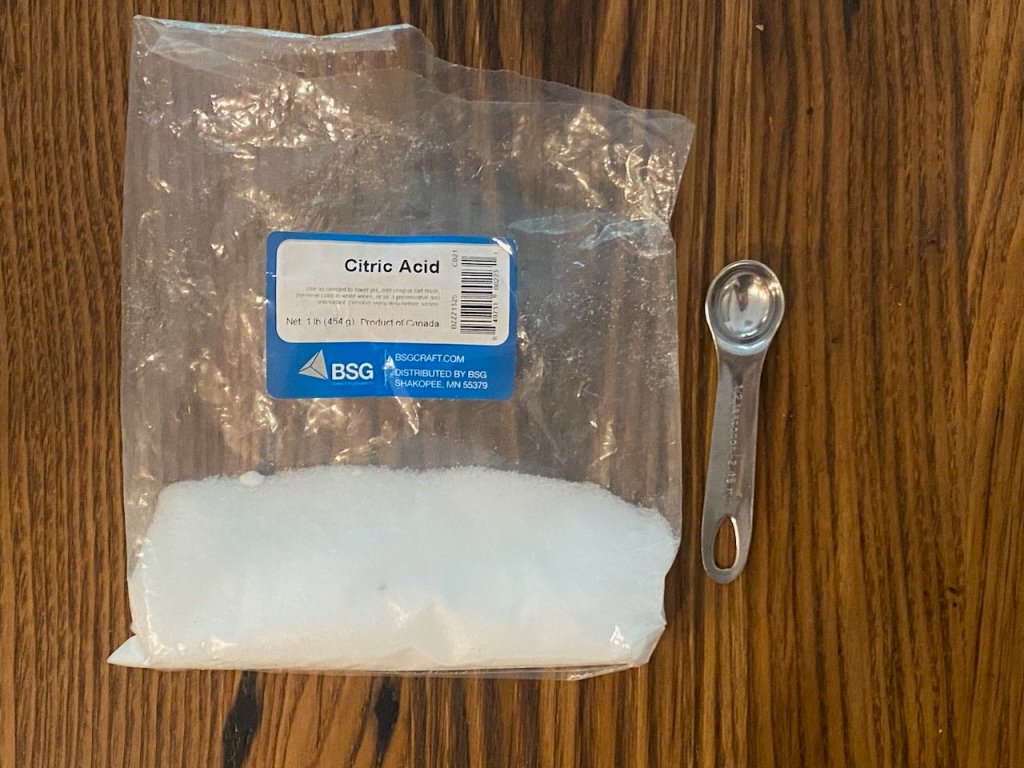
Tomatoes are one of the easiest things to can in my opinion. They just need a consistent addition of acid to ensure safety. There are two ways lower the pH for tomatoes: lemon juice or citric acid. We use the latter because we have it on-hand from other kitchen experiments. I like that it only takes a small amount of it and that it’s a dry addition.
The other thing I never do is salt my canned tomatoes. While it’s an option for recipes, I’d rather wait and salt my food as I’m cooking it. But most recipes offer salt as an option to add while you’re canning. It’s your call.
It’s also important to keep everything warm – namely, your jars and the sauce – so that when they go back into the canner they remain as close to a boil as possible. Reading up on current practices, I have changed the way I can this summer and now only take out 1 or 2 jars at a time, leaving the rest submerged in my hot water bath and fill individual jars and then place back into the canner. Previously, I would take them all out and fill them one by one and move them all back in at the same time, thus more variability in temperature of the sauce and jars.
Hot Water Bath or Pressure Can
Now there are two ways to safely can tomatoes: hot water bath and a pressure canner. I don’t have any experience with a pressure canner; it is a very different method (it uses pressure and the jars are not submerged in water). I hope to invest in a pressure canner next spring and will share as I learn and use it. The upside is it cuts down on processing time, and it is the only safe way to can vegetables (corn, tomatoes, green beans) as well as chicken broth or stock, so for my long-term self-sufficiency goals it is a tool that would be useful in our summer kitchen.
Best Practices
- Use blemish-free and ideally vine-ripened tomatoes
- Never can with tomatoes that were subjected to frost as they have a naturally lower acidity; use them fresh or freeze them
- For boiling your tomatoes, use a stainless steel pot and utensils because they are non-reactive
- Never re-use a canning lid unless they are the reusable kind (I don’t have any experience with them, though I’m interested in trying them); Ball and Kerr canning lids are a single-use though the rings can be reused as long as they remain in good condition.
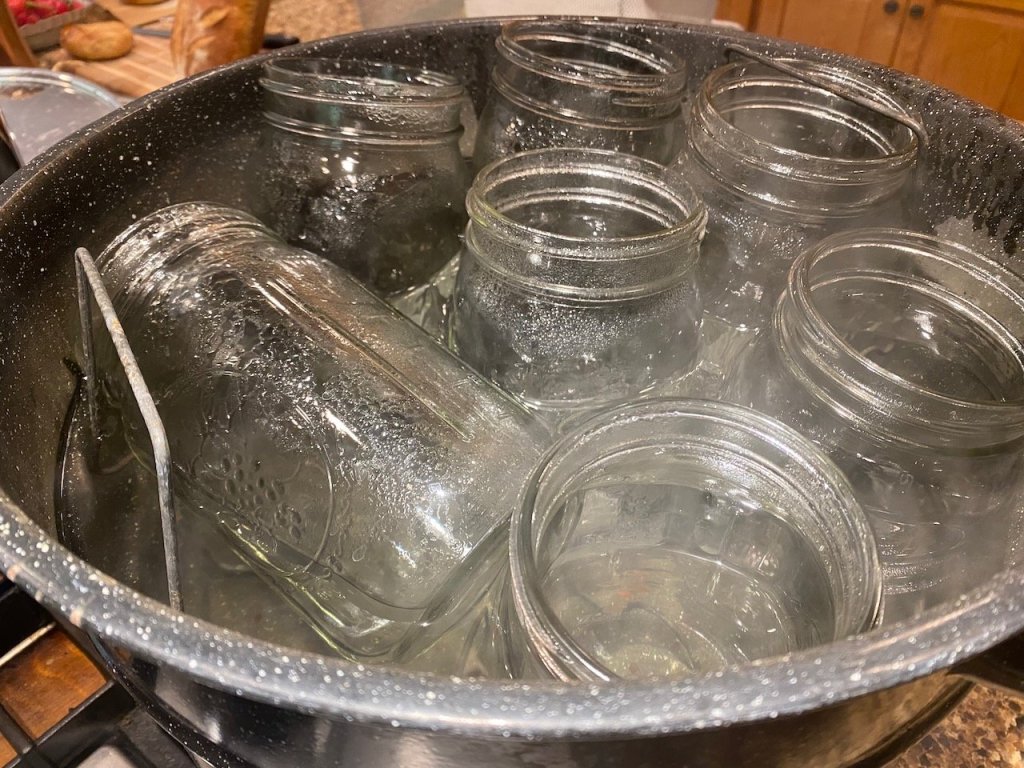
- Clean your jars, lids, and rings with soapy water and place your clean jars in the water bath as it comes to a boil.
- Boiling times for raw tomatoes is slightly longer than for tomato sauce, which is cooked down. Be sure to follow the boil times according to what product you’re making.
- Follow the boiling guidelines on the National Home Preservation Website here. These are updated by research-based data in cooperation with the USDA.


Get updated by email whenever there’s a new post
Comments
If you’re a subscriber, you can discuss this post in the forums
Leave a Reply