
Your cart is currently empty!
The First Gardening Task: Propagating Rosemary

Get updated by email whenever there’s a new post
Before the ginger is procured and soaked and the first onion and celery seeds are sowed there is the rosemary to think about. Rosemary is an indispensable culinary herb for us and one that doesn’t easily grow from seed. So we do what the vast majority of horticulturists do all the time: we propagate it via clones.
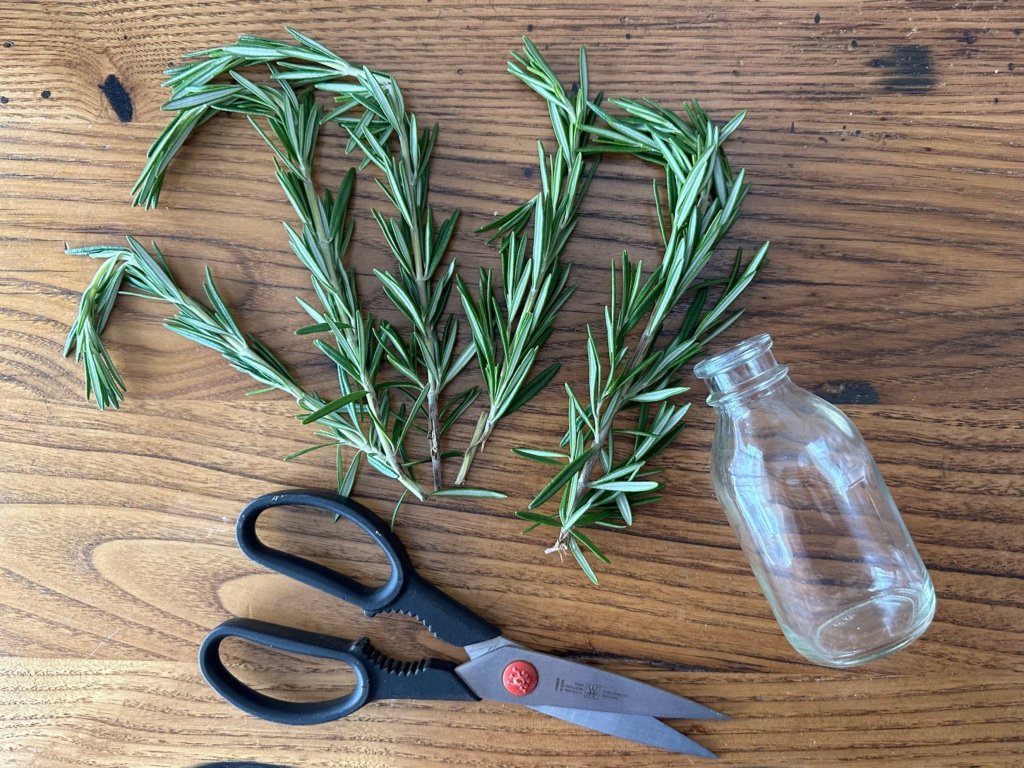
Just picked up a bunch of fresh rosemary at the grocery store. It’s time to start my 2023 herb garden.
Pretty much every single houseplant you’ve ever bought or been gifted has been clonally propagated. Perennials that can be clonally propagated surely are too. We’ve rooted our elderberry in new places around our property, for example. Tomato shoots will readily root from stem cuttings too, if you place them in water. This is a great way to grow extra plants for donating or to perhaps extend your tomato season.
Since I forgot to dig up our rosemary last fall before our first frost, it sadly perished. It was the second year in a row I’d forgotten. As a result, I don’t have a rosemary plant I’m overwintering indoors. And that means we’ve had to buy rosemary stems for holiday meals (gasp, the horror!). So I will either have to pick up new plants in spring or start my own. And I love giving this propagation a try in winter and now is a great time to think about it.
It can be a hit or miss process with the stems. I will have to remove some stems that start to decay rather than thrive, so I like to use a few different types of stems — the softer, more supple stems are usually the best for propagating rather than woody stems. But I do include more turgid (thick and strong) stems as well.
Here’s What to Do
Cut young rosemary stems to about 4-5” in length, or a length that works for your jar size. If you have a long, young stem, you can try to get several cut stems out of it for propagation. Try to cut them a few different lengths in terms of the maturity of the stem and see which ones work better for you.

Strip about 3/4 of the leaves.
Place cut stem in a jar of filtered water.
Save and dry removed leaves for your herb stash.
Keep them in a sunny windowsill.

Change the water at least once a week.
Don’t let any leaves sit in the water as that will promote rot. If you see a stem develop rot, remove from the jar.
If it’s going well, in about a month you will start to see root emerge from the stems. I wait until there are several roots from each stem before potting on into a 3” pot.
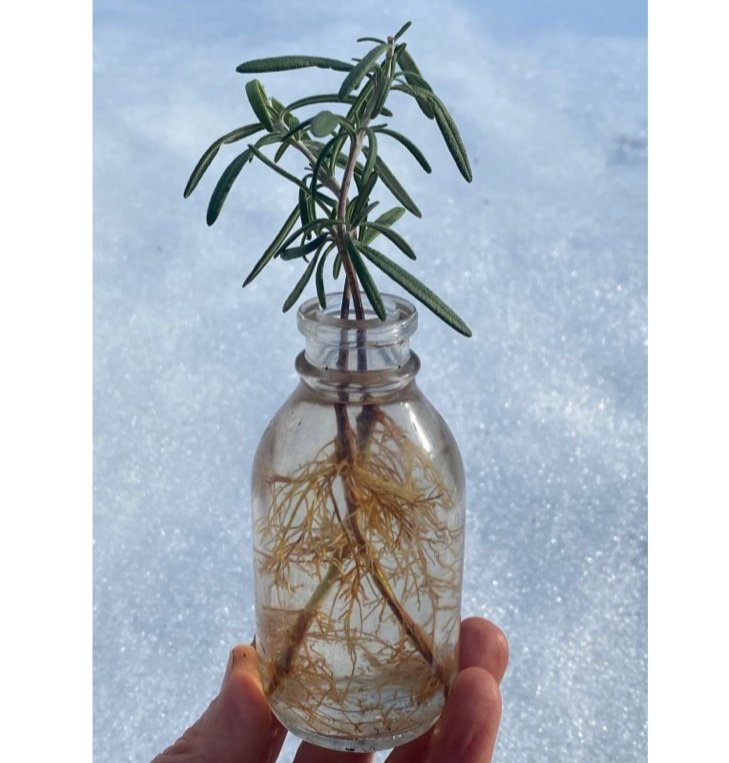
Rosemary thrives in drier conditions, so be careful to not overwater when you pot it up. I admit I’ve learned this the hard way, more than once!
You can use this same method to make new indoor house plants — your pothos, pilea, spider plants, and even philodendrons will all root in water that is refreshed weekly. Succulents make life even easier for us plant lovers: all you have to do is take a leaf and place it on the soil surface and it will root over time.


Get updated by email whenever there’s a new post
Comments
If you’re a subscriber, you can discuss this post in the forums
Leave a Reply