
Your cart is currently empty!
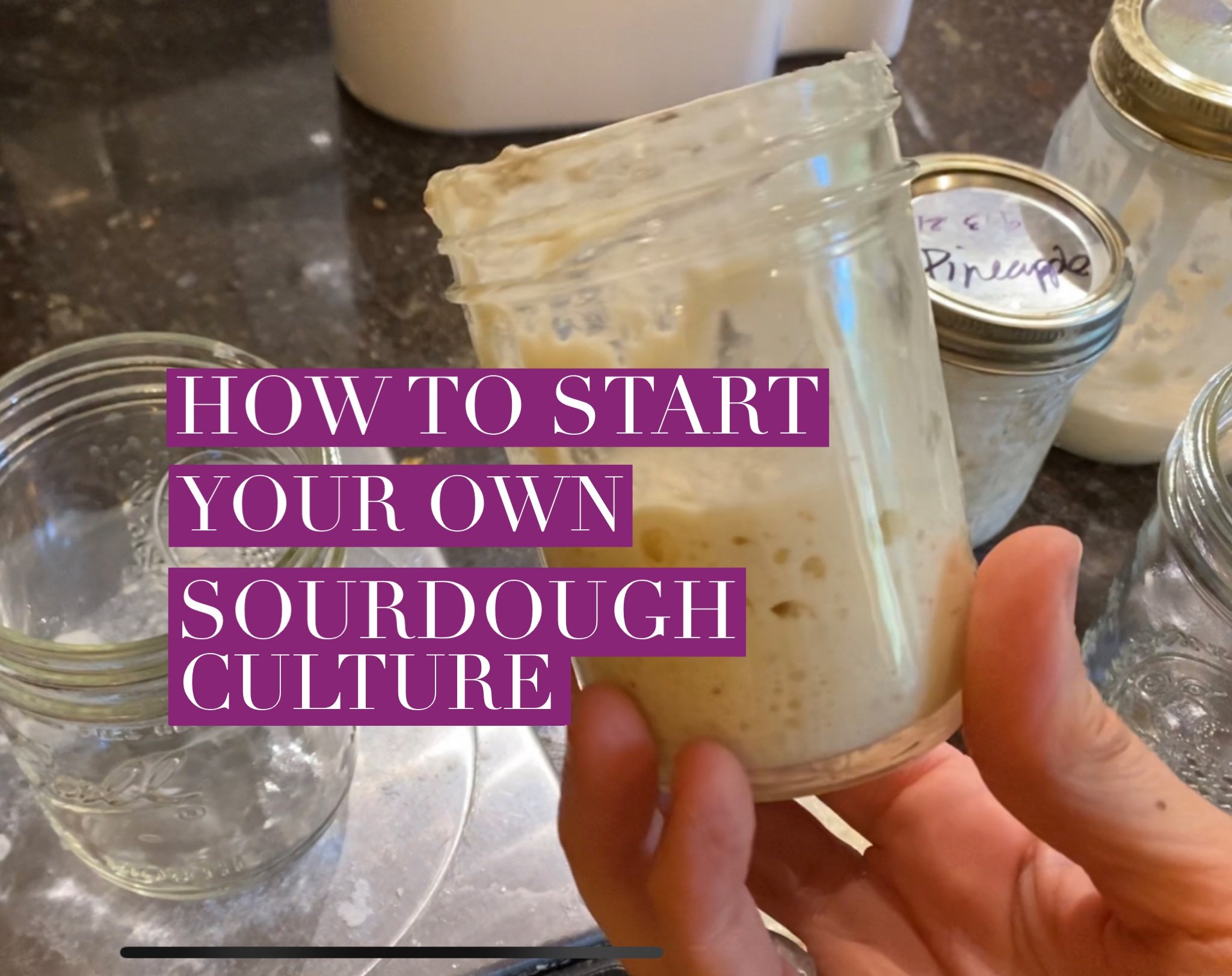
How to Start Your Own Sourdough
Get updated by email whenever there’s a new post
We’ve been growing sourdough cultures in our home for over 2 decades. It’s such an integral part of everyday life and our way of being I can’t imagine buying bread or bagels in a store, though we do still purchase buns, croissants, and such from time to time.
I have so many wonderful sourdough recipes to share with you this fall and winter and I can’t wait to dive in.
But first, for many of you, you need to create a starter. Sure, you could order one, but it’s a very simple method and I just spent the last week testing 3 different starters for you to give you the confidence you need to just go for it!
Truth be told, we invested in sourdough starters twice in the past 20 years, and we were given one from France called Popine. Alas, these starters proved not as robust as the ones we’ve started ourselves. Sadly, Popine perished, I think, during my postpartum depression after my second was born. It was a rough winter, to be sure.
In the past decade, we’ve started a few sourdoughs from scratch. One our son started, and he named it CeeCee, short for sourdough sourdough. If memory serves, he added a bit of brown sugar to water to jumpstart it. It worked, and it fed us well for years. When we moved here six years ago, John started another one using the method I’m sharing below which starts out with a high acid liquid to bypass the early bacteria phase (dominated by Leuconostoc species). This method was pioneered by Debra Wink.
Here’s an excerpt from Debra Wink’s article on The Pineapple Juice Solution, Part 1:
“…it was apparent that the shift in populations and activity are tied to changes in acidity. pH is a fundamental factor in microbial growth. Some like it neutral while others need more acidity or alkalinity, but each species has its own pH range. The reason that the starters had become quiet on day three was because the pH had fallen and the gas-producing bacteria were no longer growing.”
It was Debra’s experiments back in the late ‘00s that shifted many home bakers’ approach to starting their own sourdough. Spoiler: you don’t need to buy someone’s starter, you just need a few days, some OJ or pineapple juice (I used it strained from diced pineapples which are a frequent pizza topping here) and your bread flour. I want to empower each of you to then go on and share this with your friends and family. It’s accessible, it’s straightforward, and it’s delicious and rewarding!
How to Start Your Own Sourdough Culture
No Ratings
Below are both step-by-step photo instructions plus a 10-minute video diary of my first seven days creating these new cultures. I am currently attempting my first loaf of bread with each of my three starters so more updates to are forthcoming yet this week.
For now, I hope you’ll give a sourdough starter from scratch a try this month.
Ingredients
- Bread Flour
- Water
- Pineapple Juice
For Proofing
- Glass Jar
- Heat Mat
Instructions
 If you have apple cider vinegar or pineapple juice, you can substitute those as well.
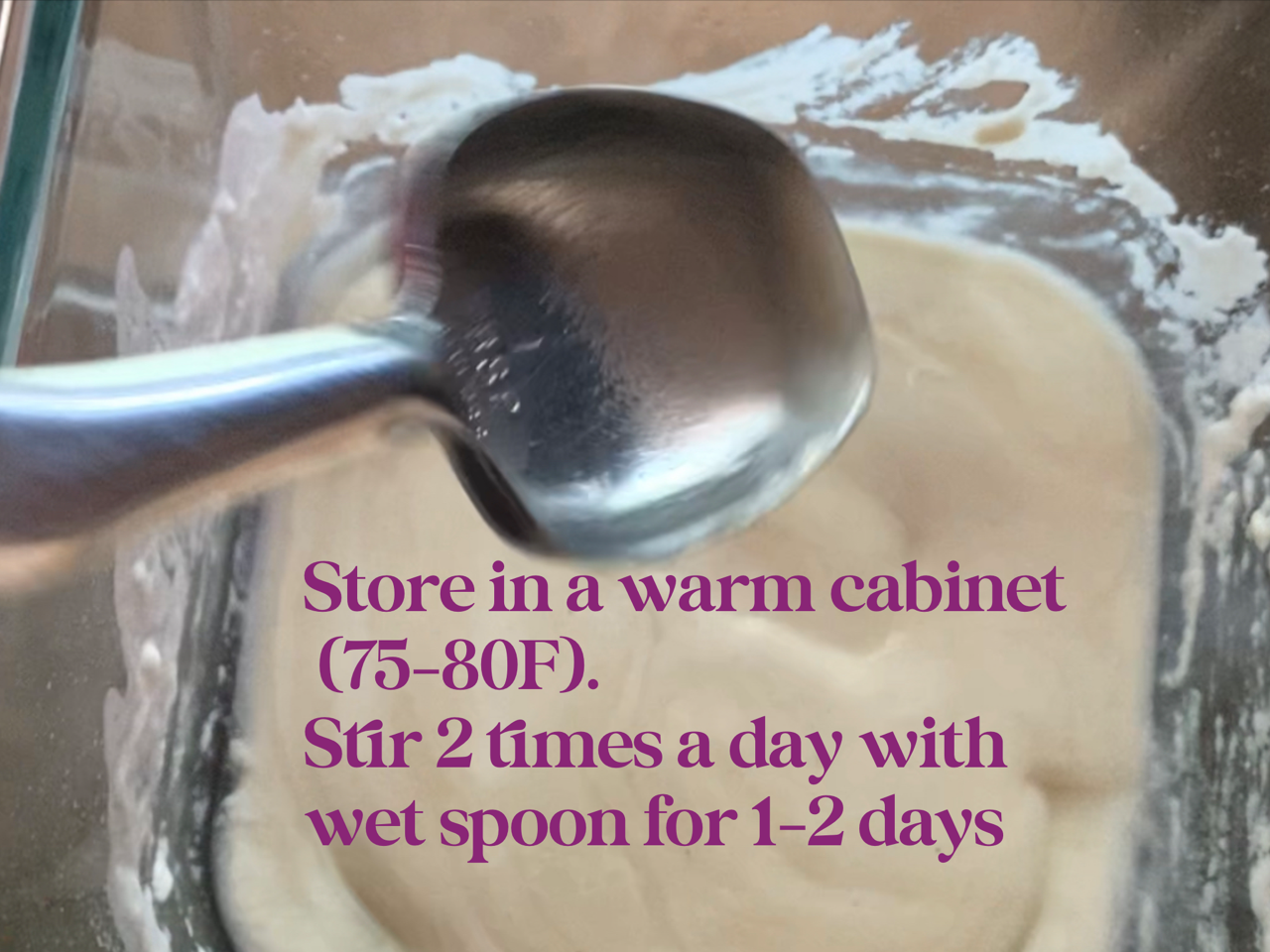 We keep ours on top of a seedling mat (with a thermostatic controller set to 85F) in a lower cabinet of our kitchen.
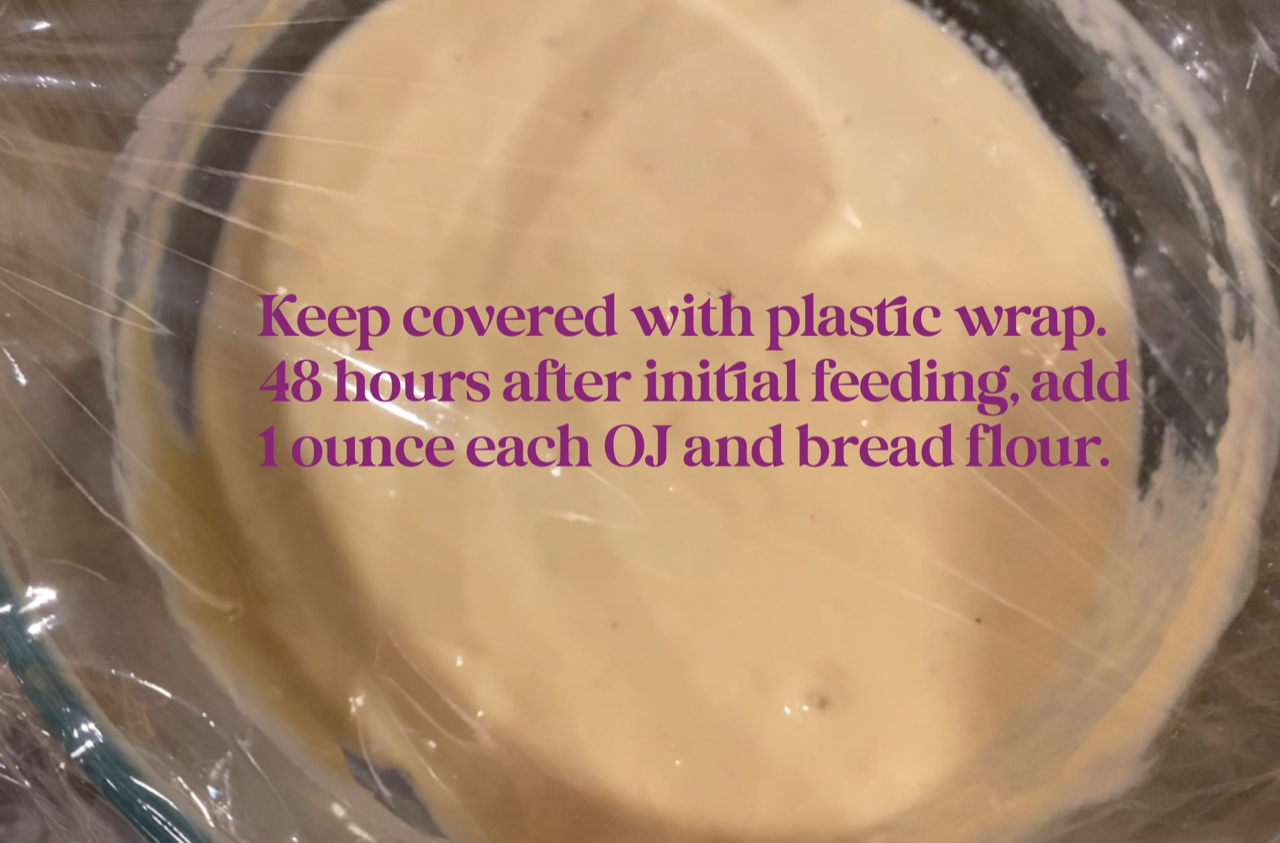 It will start to look active faster with the added heat; if you don’t have the extra heat, this will take more time to get started, but it will still work! Adjust your times accordingly (maybe add an extra 12-24 hours to stirring before this second feeding).
- Day 2-3: Time to transition to your “seed culture”. We are now switching to just water and flour!
 Pull 3/8 ounce (1-2 teaspoons) of the sourdough culture into a 1/2 pint or pint glass jar. Add 3/4 ounces filtered water and 1 ounce bread flour to this. This feeding is the base for EVERY single recipe I’ll ever share with you. This is our “wake up” feeding. Every time you feed your sourdough for something, you’ll want to set aside 3/8 ounces between your second and final feedings and place it back in the fridge until the next time you need it.
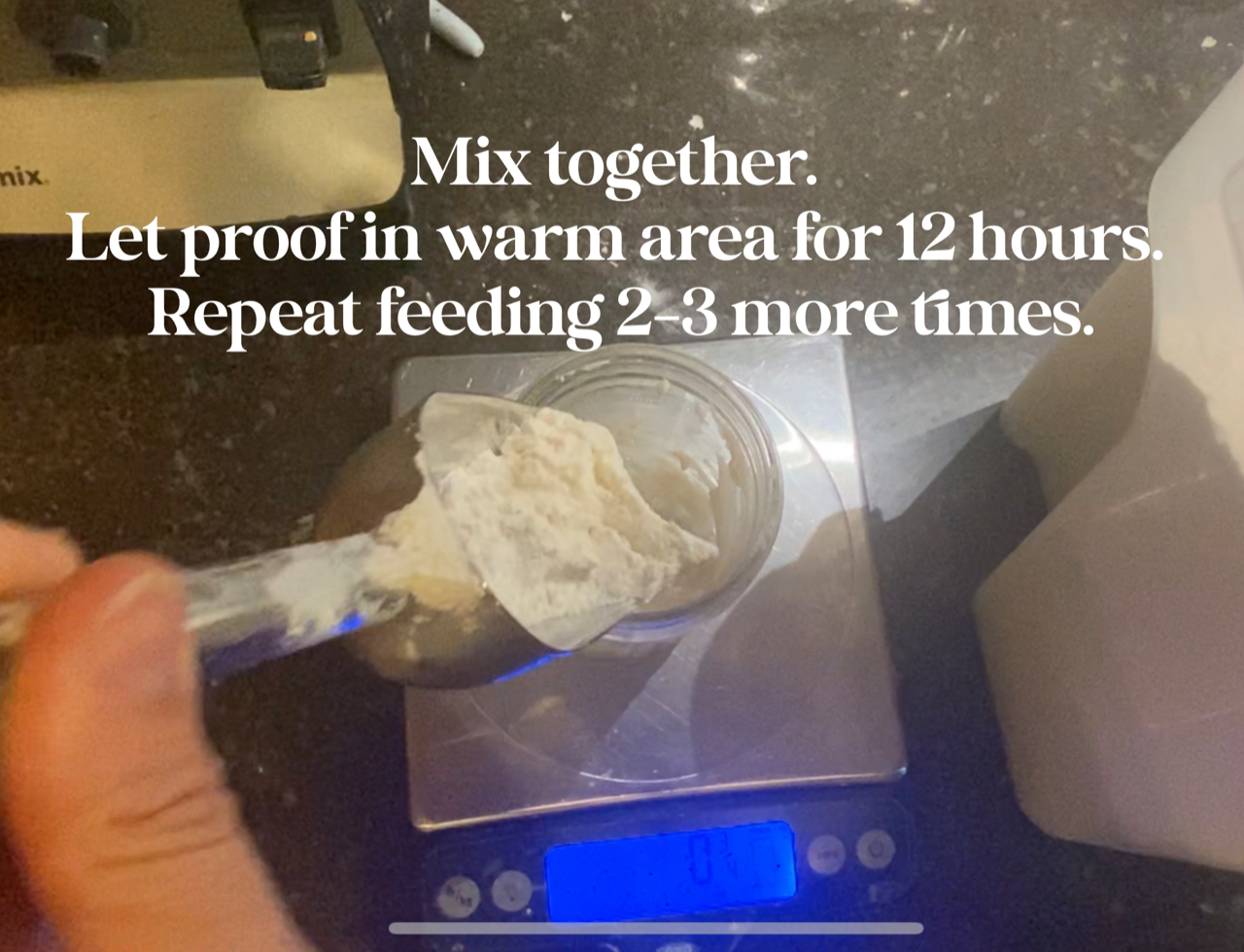 To get this brand new sourdough active and healthy, keep this feeding going for 2-3 days, pulling out a fresh 3/8 ounces and feeding it 3/4 ounces water and 1 ounce bread flour in the morning and evening. I kept these feedings on the countertop to slow the growth down a little (cooler temperatures).
Notes
NOTE: We use King Arthur’s restaurant bread flour called Sir Lancelot Hi-Gluten bread flour. We have found the best price is to order it in bulk from the Webstaurant Store.
We have gone upwards of 6 weeks between feeding our sourdough and it’s remained a healthy culture for many years.

Get updated by email whenever there’s a new post
Comments
If you’re a subscriber, you can discuss this post in the forums
Leave a Reply