
Your cart is currently empty!
Sesame Grow Guide

Get updated by email whenever there’s a new post
This was originally published in Northern Gardener Magazine, Winter 2024.
Want to harvest the most flavorful seed from your flower garden this summer?
Flower lovers, this one’s for you. Wait. Vegetable gardeners, here’s an uncommon edible plant to grow. Let’s not be confined by what type of grower we are. This is a plant for every garden, and every gardener.
And that’s exactly why I’ve fallen in love with growing sesame. And hope you do too.
I first learned about sesame from my friend Brie Arthur who gardens in North Carolina. She sows a beautiful direct-seeded bed that blooms into a gorgeous late spring and summer parade of colors, harvested for seeds and grains. When I saw her sesame in bloom, I immediately knew it was destined to become a mainstay of my food garden.
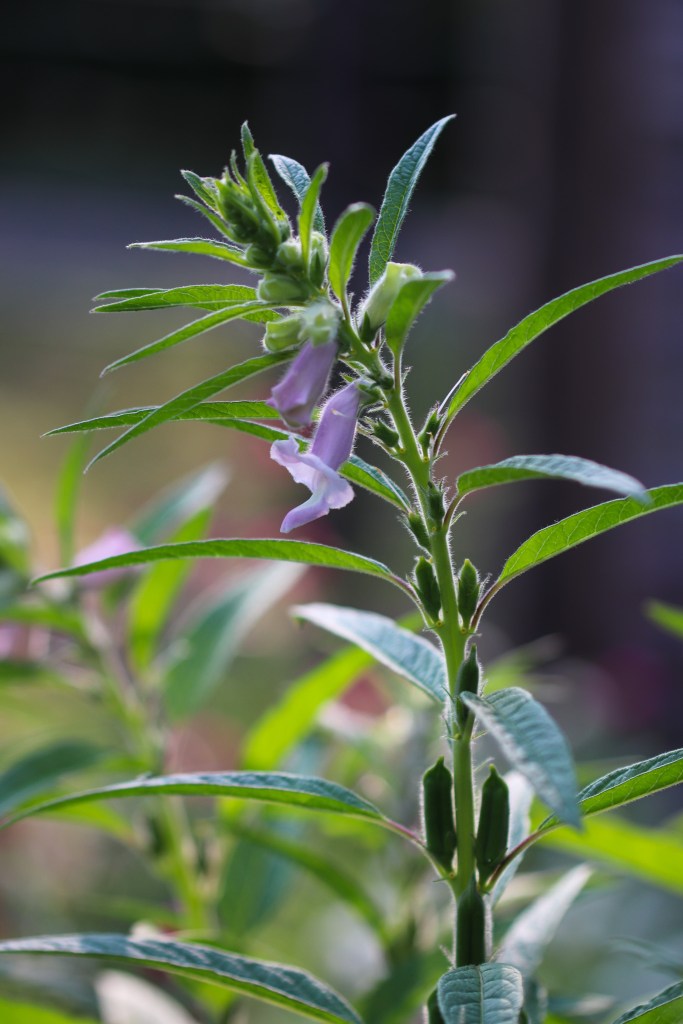
I was mesmerized by its hood-like, foxglove vibes. I was ecstatic that one of the flowers in my food garden could also produce food – and a novel food, no less. And I was curious to understand how well it would grow here in zone 4.
As it turns out, a wonderful small seed company in the Finger Lakes region of upstate New York, Fruition Seeds, sells sesame seeds adapted for cold climates. With their Black and Tan sesame seeds in hand, I embarked on my first attempt at growing sesame in Minnesota 3 years ago.
And my garden has never been the same.
The Seeds of Antiquity
Sesame heralds from Sub-Saharan Africa, and has been in cultivation for well over 4,000 years. It remains integral to many cultures, including India, southeast Asia, and tropical Africa. Heat and drought hardly dent its productivity, instead they can increase it. Studies showed it not only handles drought without crop losses, it produces amid monsoon season too. And it’s highly nutritious, can be made into a paste, oil, and eaten whole. Can a seed crop be any more endearing?
We owe a debt of gratitude to the enslaved people of African descent who courageously carried sesame seeds on their harrowing passage across the Atlantic. Sesame was cultivated and introduced into our culture thanks to their seed stewardship and tending.
It has deep cultural significance in the south, notably prominent in historical gardens such as Thomas Jefferson’s Monticello in Virginia where it was strategically planted as an ornamental border plant. Seeds are available today from several sources.
- Experimental Farm Network: Kurogama, Monticello White and Benne
- Southern Exposure Seed Exchange: Shirogama White, Black, and Benne
Sowing Tips
To produce an enviable crop that will floor your dinner guests, give sesame an indoor head start. Any seed company will encourage you to sow them indoors 4-6 weeks before your last frost. Some go further and recommend transplanting under cover until nights are well above 50F. Knowing this is a plant that is happiest in subtropical regions, I discredit that advice and instead aim for transplanting right when the heat will arrive, which lately seems to be in early June.
Sow sesame in a 2” soil block or pots at 1/8” deep. Be sure to use a seedling heat mat for this tropical plant. Thin to one plant per cell. Consider keeping them on heat for a few weeks after germination, and even after you pot them up a few weeks later. Pot up about 4 weeks from germination – or once several sets of true leaves have emerged — into a 3 or 4” pot.
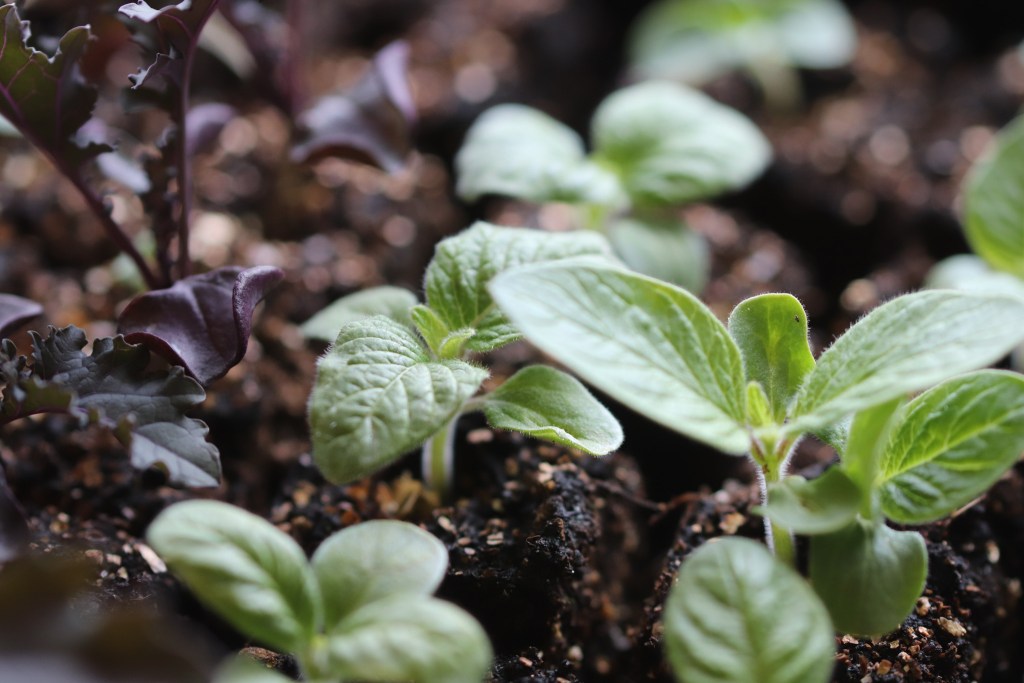
I’ve always wondered if I could sow them later and still get a decent crop. In warmer climates this plant is direct seeded, but we just don’t have enough warmth in September or October for the plants to reach their full potential. It could be a fun project for winter sowing, if that’s your preferred seed starting method. In fact, I might give that a try this season to compare side by side with my indoor sowed seedlings. Because gardeners are never done learning.
By mid-May, I pot them up into small newspaper pots. This gives them more legroom for their month ahead waiting for soils to warm. Pot bound seedlings is a common mistake for new gardeners who try indoor seed starting. So when in doubt, take the time and space to pot your seedlings up into larger pots.
Being a subtropical native, sesame will protest cool soils, so don’t even try to get them planted until your soils are in the 70s. A simple kitchen meat thermometer is all you need to probe your soil to know if the time is right. Early June is when I end up transplanting them into the garden.
Interplanting
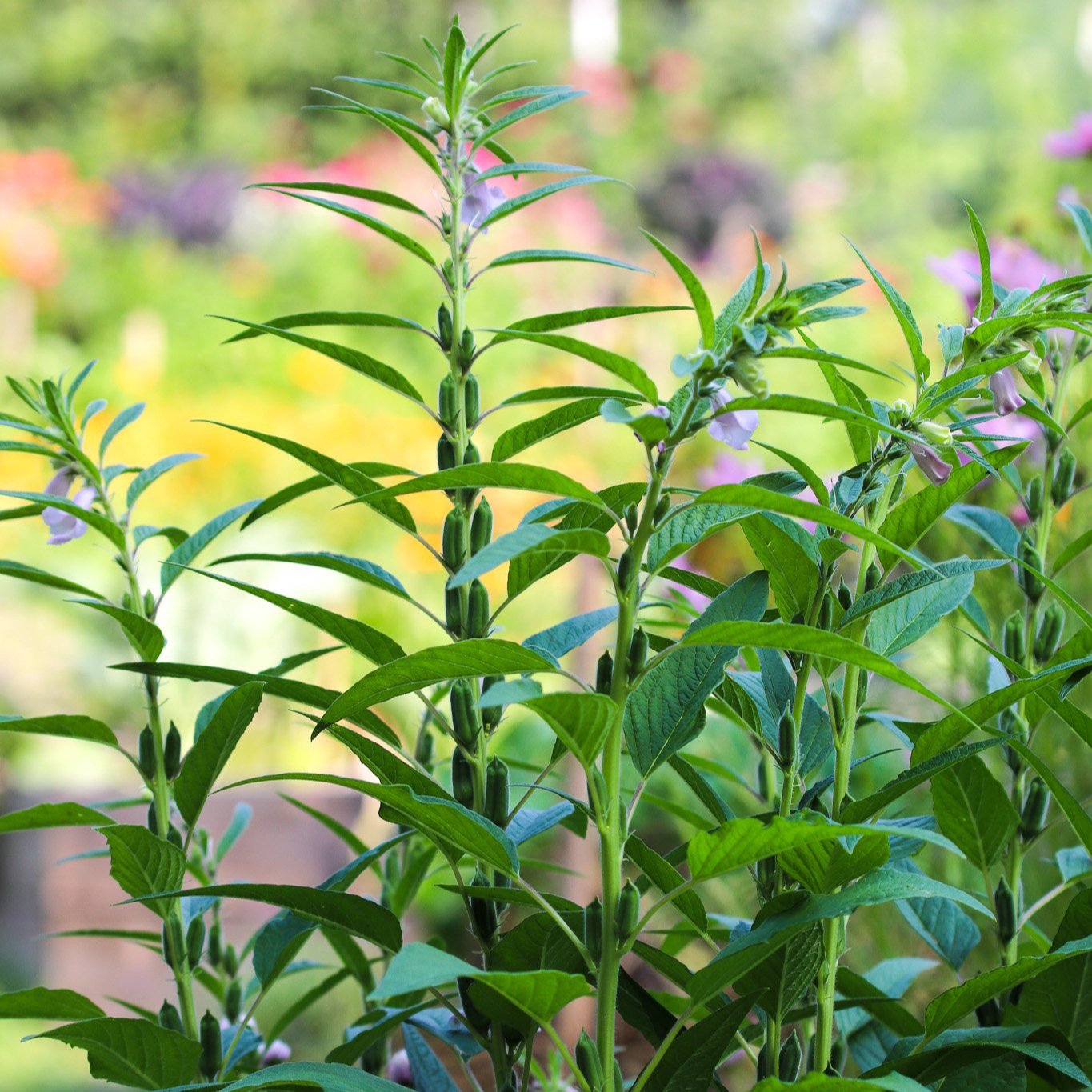
Sesame deserves a prominent home in the middle of a flower bed, anchoring the space with its spiky form. With its consistent yet modest flowering, summer blooms dot each stalk throughout summer. Plant them with at least 12” spacing.
By late August this plant commands long pauses to marvel at the accumulating pods that seem to be sending up prayers, their green, pubescent seed capsules clasped shut until the seed is ripe. And if that wasn’t enough, pause to admire the maneuvering bees who land, creep inside, pollinate, and eventually back out and carry about their busy days.

Not unlike the conditions needed for seedlings to thrive, be cognizant of your space and allow these beauties to sprawl a bit. They will send up multiple stems so I like to give these plants 18” between neighbors to account for the inevitable creeping that will happen.
If tidy is your aesthetic, staking them once they start sending up multiple stems will yield maximum vertical impact to your bed. I tend to be too busy succession planting and processing our produce so ours end up flopping over, giving it that cottage garden vibe by early September. And since I’ve embraced this destiny, I have grown to love this little bit of whimsy amid my whimsical rambling vegetables and flowers across the landscape.
Timing the Harvest
Just like the flowers, the seed capsules ripen from the bottom up. And like other indeterminate plants, it happens over many weeks throughout the growing season. By early September, start looking for brown pods that have just started to crack open at the tip. Gently twist these off – and you’ve just harvested your first sesame seeds.
I usually pull a few pods early like that, but as the weather starts to cool off, regardless of maturity, I’ll simply cut the stalk in 12” lengths, invert each piece into a garbage bag, and set in a cool dark closet until the capsules desiccate and the seeds fall out.
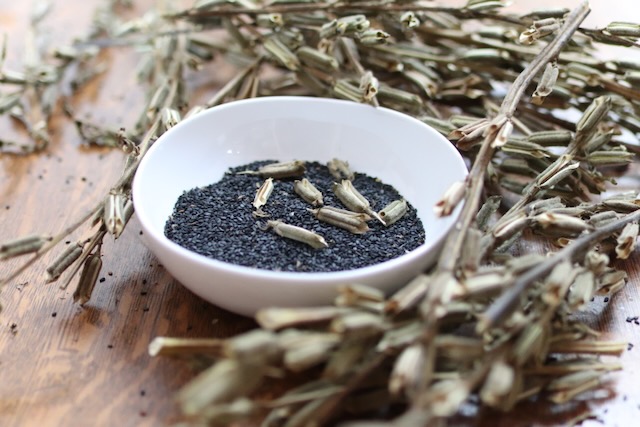
Sesame seeds mature about 90 days after transplant. The plant would happily continue to flower for us, but our seasons are short and they stop producing in September here.
If you think you love sesame seeds, you’re in for a delightful sensory awakening this fall. The flavor of homegrown toasted sesame seeds exposes store bought seeds’ long shelf life and staleness. Prepare to be blown away at the first-hand knowledge of what sesame really tastes like.
You might also like:
Get updated by email whenever there’s a new post
Comments
If you’re a subscriber, you can discuss this post in the forums
Leave a Reply