
Your cart is currently empty!
Smoking + Dehydrating Peppers

Get updated by email whenever there’s a new post
With every passing year, more and more of the peppers we grow are for spices. They are used nearly daily year-round in the kitchen. And it’s one of the most fun seed to fork projects we’ve added to our annual processing since growing on this scale.
This year we’re growing Early Jalapeño, Aji Amarillo, Baby Aji, 3 varieties of paprika (Feher ozon, Gernika, Magyar), Mareko Fana (berbere spice), Hong Gochu Large, and Poblanos, all for drying or smoking/drying.
We’re also growing hatch chilis, Ralph Thompson, and King of the North and Gourmet bell peppers.
In this post I’ll show you how we smoke and dehydrate both sweet (paprika) and hot (many types) or peppers. And I’ll also share which peppers we always smoke, and which ones we never do.
Paprika and Gochu were definitely the peppers that helped us turn this corner and see a whole new horizon ahead of us. Before about 2018, I hadn’t fallen off the pepper deep end, I guess. I grew habañeros and serranos and made fermented hot sauce, but other than that, those peppers were just too hot for us. (I know, it is a little hard to believe, but it’s true).
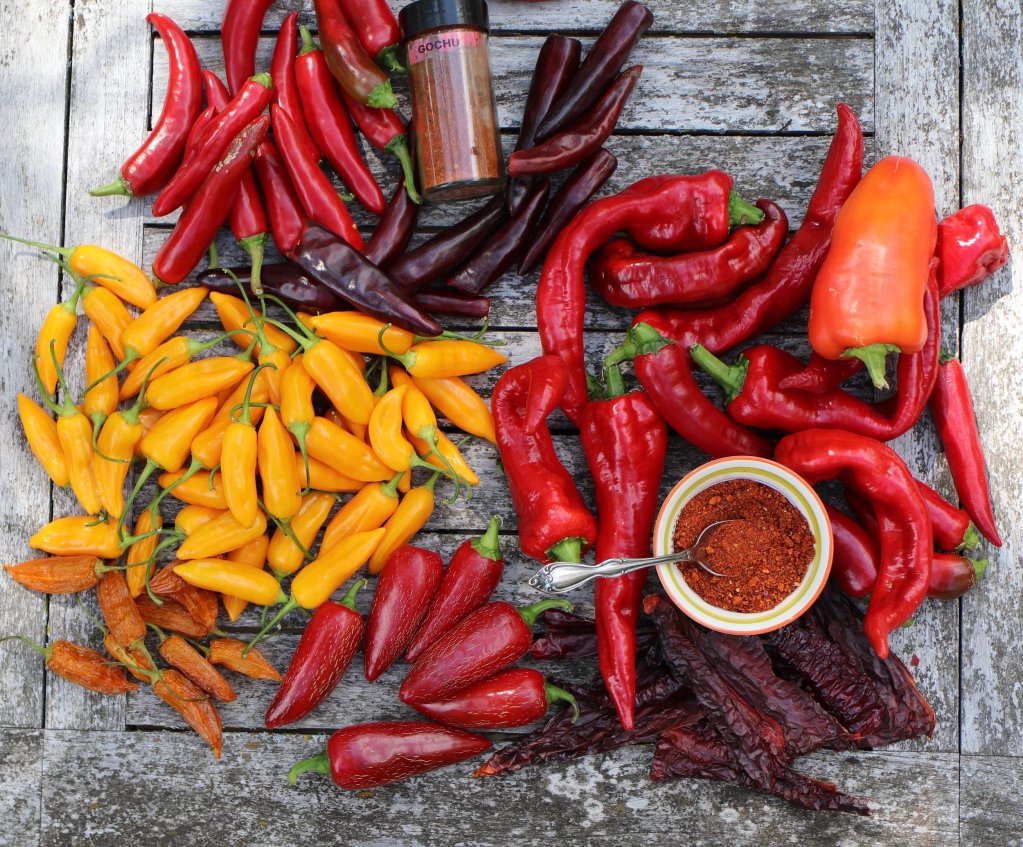
Equipment
For smoking — a new in 2022 possibility for us — we use our Camp Chef dual fuel (pellets & gas) grill.
For dehydrating, we use our very old and reliable American Harvest Dehydrator. There are much more expensive dehydrators out there, and every year I say to myself, I’m going to invest in a new one, and yet every year this old lightweight one does the job for us just fine.
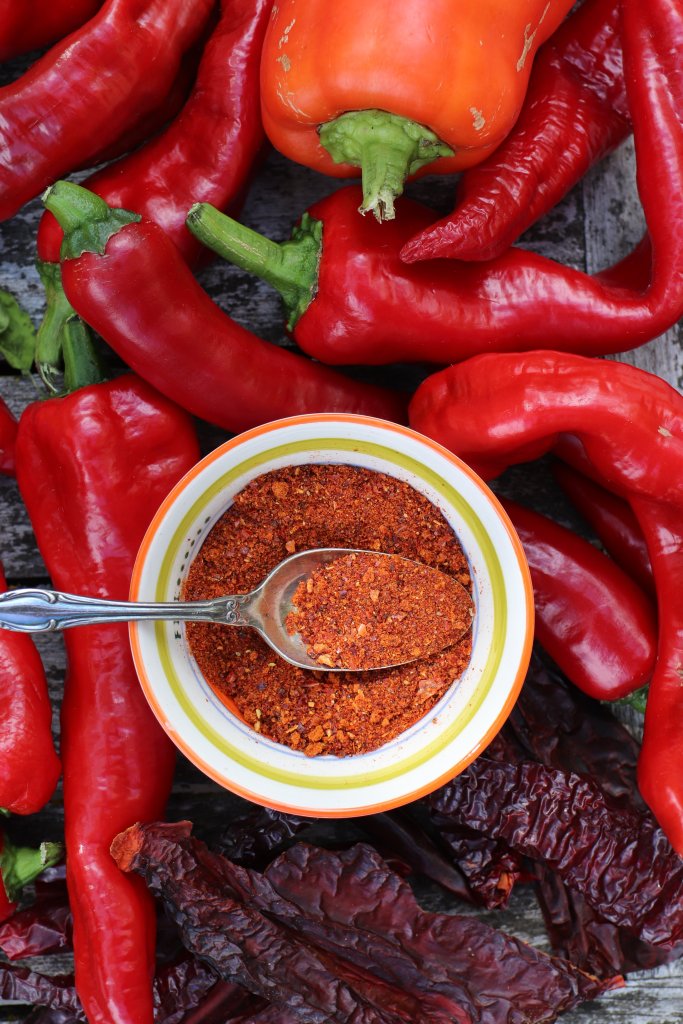
Smoked or not, homegrown paprika is so flavorful and fun to grow (and gift!).
We have been dehydrating paprikas for many years longer than smoking them was possible. But it definitely elevates the flavor. And – and! – smoking and dehydrating takes some household peppers and transforms them, such as jalapeños magically become chipotles and poblanos shrivel up into anchos. I find this all a bit confusing, but I’m learning.
When is a pepper ready to be dehydrated?
The question of ripeness should be addressed. Can you dehydrated any pepper? The answer is yes. But I prefer to wait for full ripeness to dehydrate. The full fruity flavor of a pepper doesn’t develop until it reaches its maturation. Sort of like the difference between a green bell pepper and a red bell pepper, two peppers, same plant. Very different flavor! (Could you imagine a green bell becoming paprika? The flavor just isn’t there.)
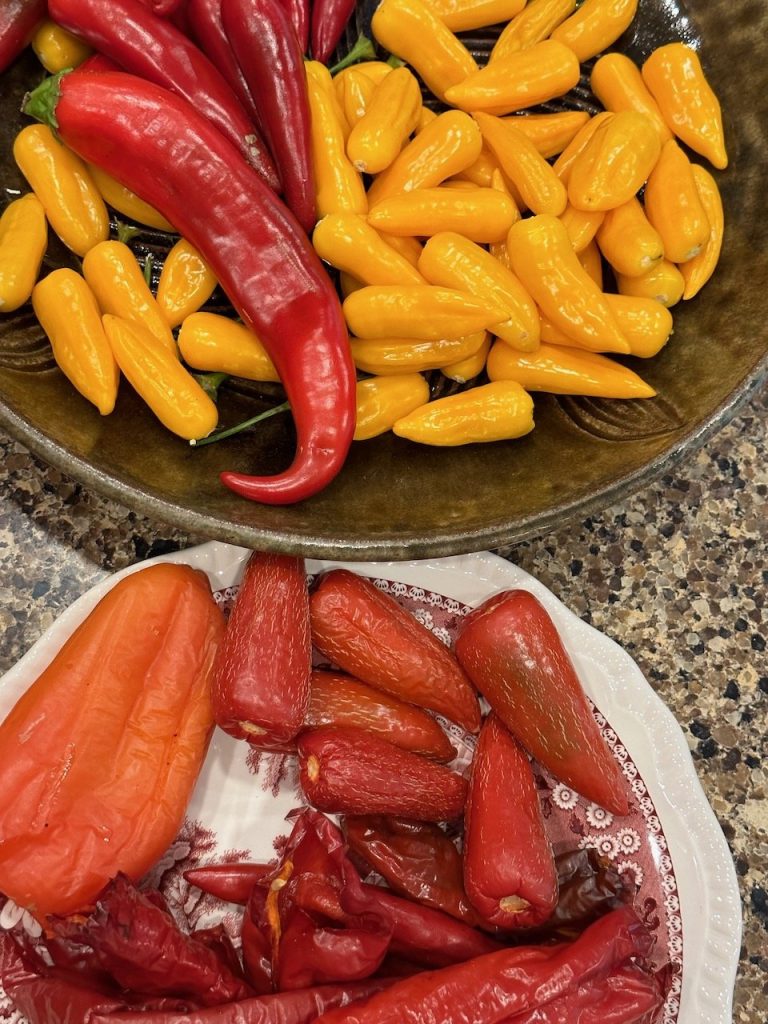
op: baby aji amarillos and a hatch pepper waiting to be dehydrated. Bottom: smoked peppers also waiting to be dehydrated.
Smoking is optional but really does add something special to the peppers. We mostly just smoke paprika and jalapeños, though John also tossed some gochus on the smoker last weekend as well just to see what they taste like.
Instructions
For Paprika and other sweet peppers you want to smoke and dehydrate, cut off stems and derib. Slice open. You only want to smoke and dehydrate the flesh. Get as many seeds out as possible too.
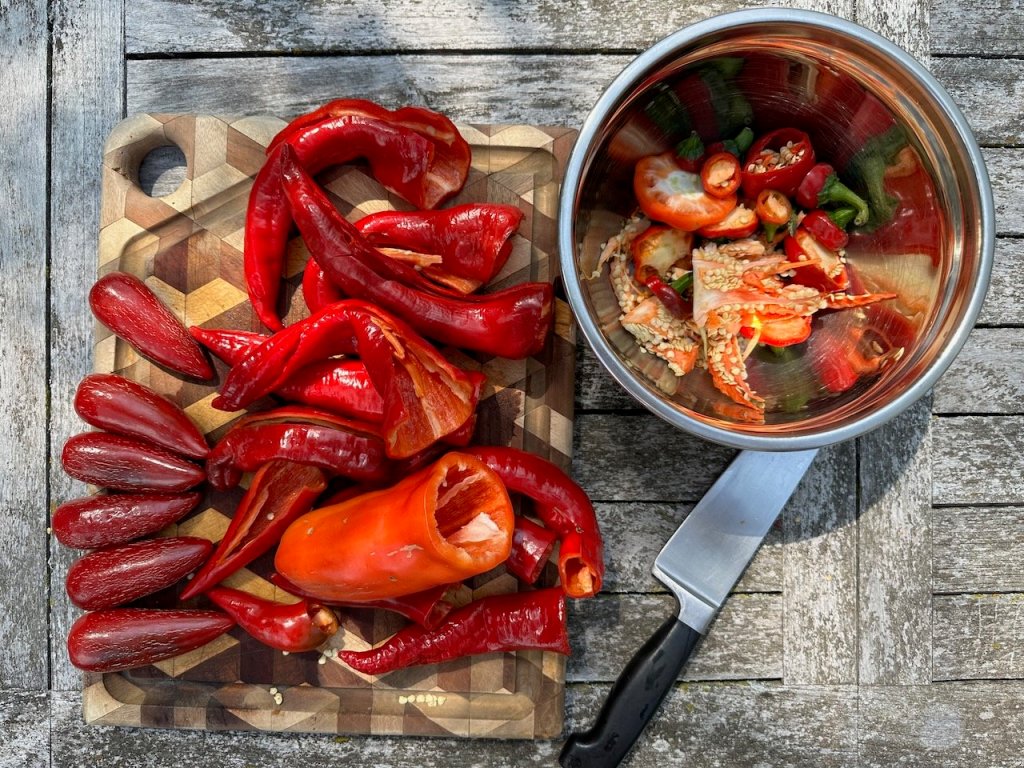
Stems, ribs, and seeds taken out of the paprika and stems cut off the jalapeños.
For hot peppers, you can take the top stem off but leave them whole, though this is optional. It just saves time when you’re ready to grind. Opposite as for the sweets, we want the ribs for all its capsaisin (heat) as well as the seeds too.
Smoke peppers at 160F for 3-5 hours in your smoker. Immediately transfer to your dehydrator (veggie/fruit setting, 135F) or oven set to the lowest temp possible (170 if possible). Some newer ovens have dehydrate settings, if you’re lucky.
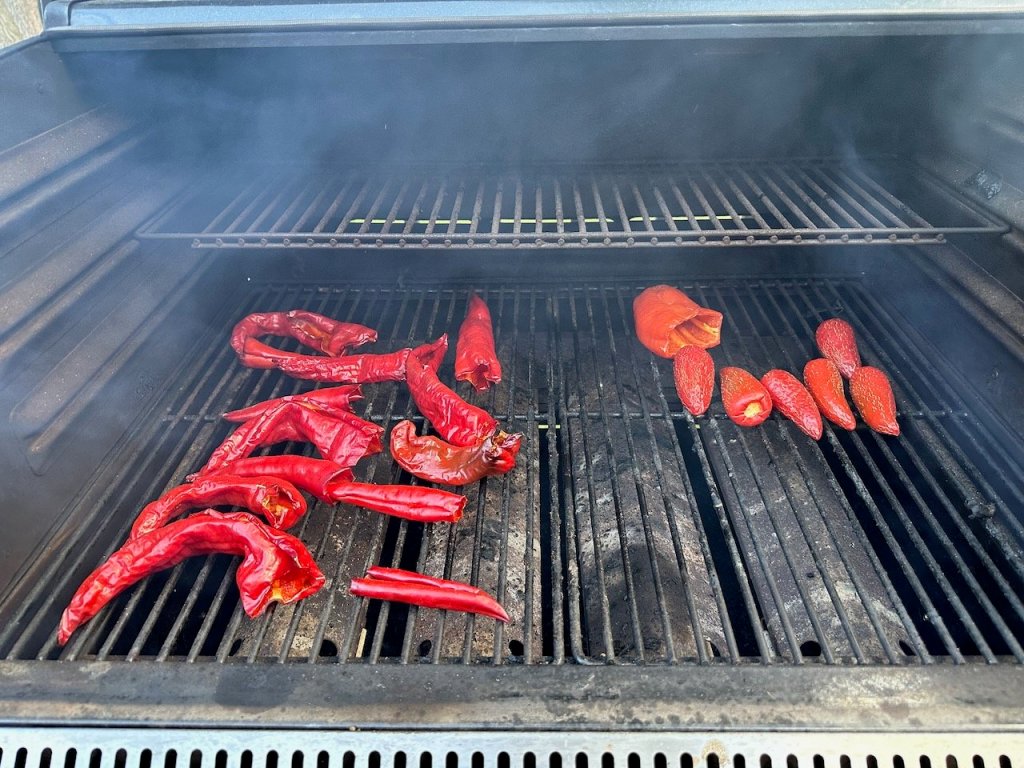
We go low and slow for the smoking. If this thing was full, he’d have no problem running it for more than 3 hours.
Note: all dehydrators will be slightly different. When set at 135F, this takes us longer than any time I’ve ever read. Some folks claim they are dry in 12-24 hours but I usually let mine go more like 48-72 hours.
Check for doneness in 24 hours.
Dehydrated peppers are done when they are brittle and crunchy to the touch. They should not bend but rather break. This is honestly the “official” dryness for them via food preserver courses I’ve taken, so … go figure! Haha.
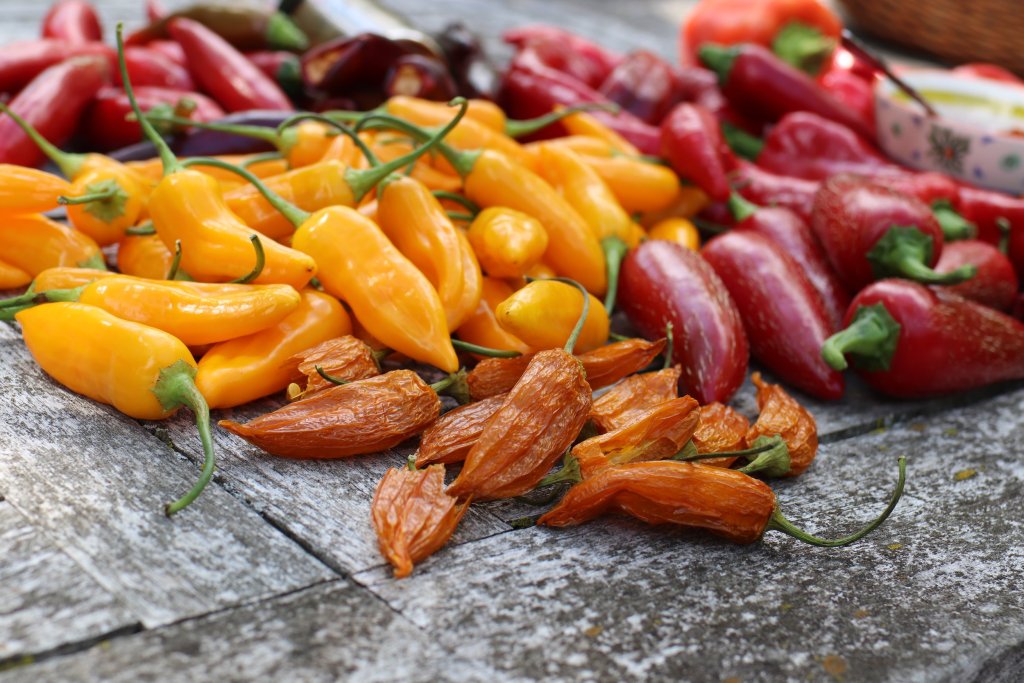
Baby Ajis: dry versus fresh.
OPTION: Dehydrate Only For either pepper, prepare as above as if to smoke, but instead just place in a single layer in your dehydrator on fruit/veggie setting (135F). Provide air space between peppers (they shouldn’t be touching).
Check for doneness in 24-36 hours.
Peppers are done and ready to be packaged when they are brittle and break apart. If they are bendy but don’t snap, leave them in for another 12 hours. When in doubt, I dry them for longer to drive more moisture out.
Storing, Grinding, and Using
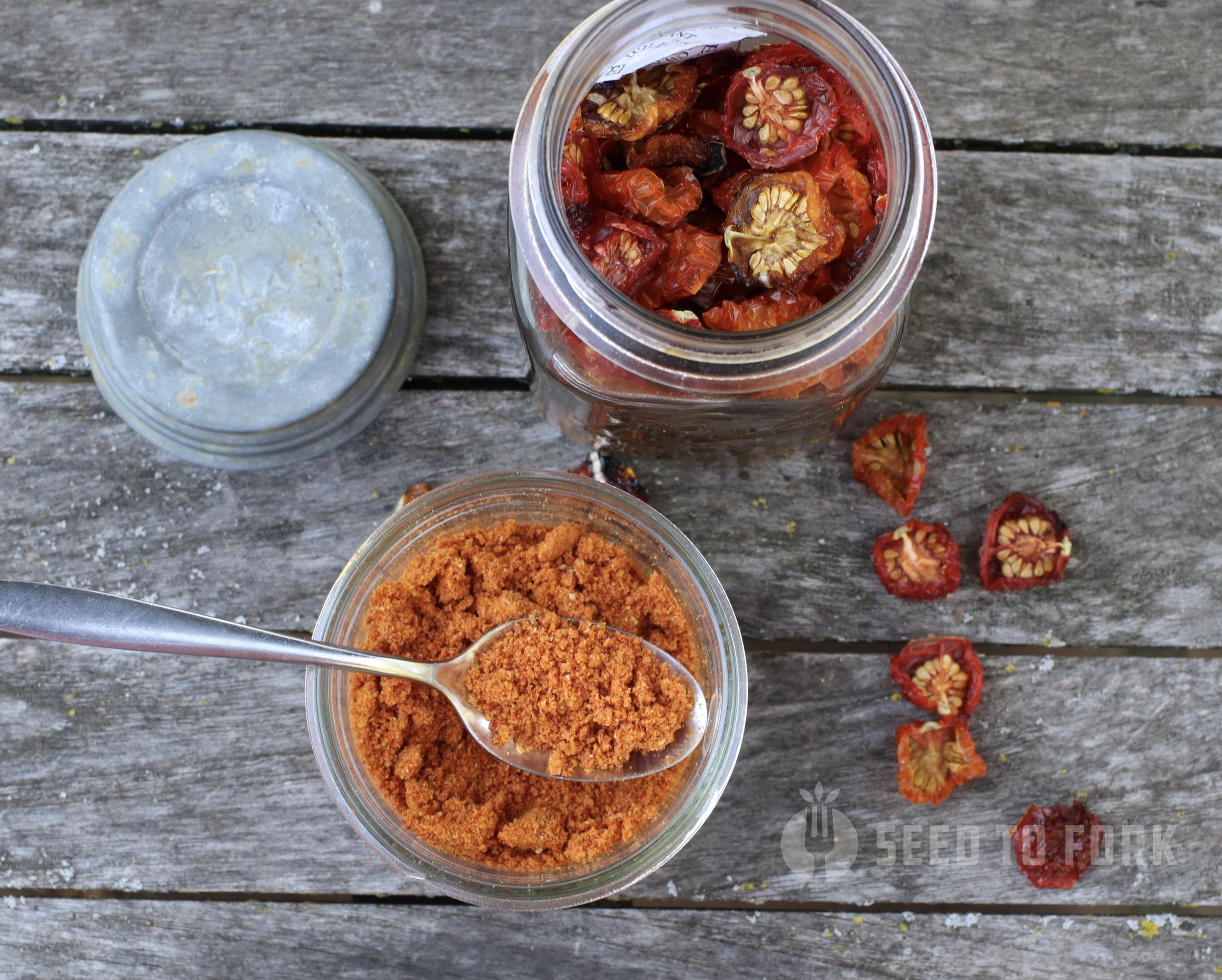
We like to store our dehydrated peppers whole and wait to grind them until needed. We simply put them in labeled ziploc bags and store them on an upper shelf in our pantry. A glass mason jar with a tight-fitting lid will also work. I do have some of our dried chilis in those too.
We will grind enough for a small spice jar full, and when it runs out, we will grind more fresh to use.
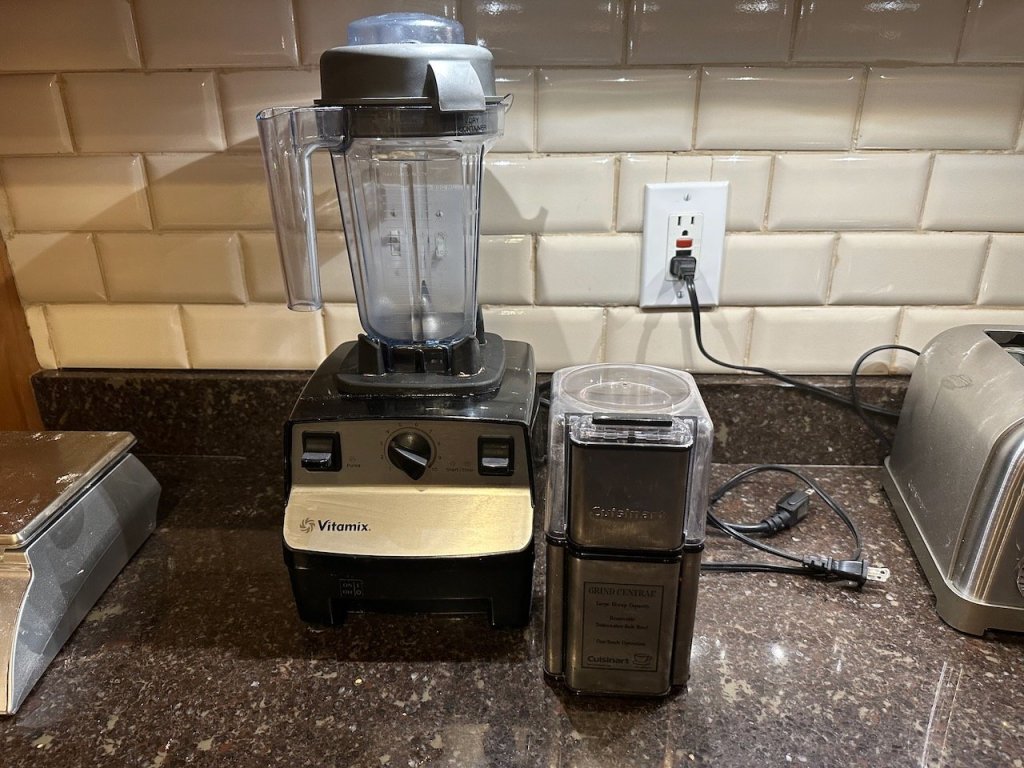
For grinding, we use 2 different kitchen gadgets, either our old coffee grinder that’s now only for spices or the dry mill on our vitamix (Affiliate Link). I highly recommend this dry mill base if you own a vitamix. I use it to grind corn into cornmeal too, and it will also grind flour for us if/when we ever grow some ourselves.
It is recommended that you consume dried peppers within 18 months of dehydrating them. (Fully confess, with some of our bone dry dried chilis, I haven’t done that. And I’m here to pen this post.)

Get updated by email whenever there’s a new post
Comments
If you’re a subscriber, you can discuss this post in the forums
Leave a Reply