Your cart is currently empty!
To Cover or Not to Cover

Get updated by email whenever there’s a new post
As we hover around our last frost here in zone 4 (it may have passed already, but I won’t call it for another couple weeks), the big question is what needs protection and what doesn’t. Is it safe to plant all the things right at last frost? What caution should I be taking and who can I set free?
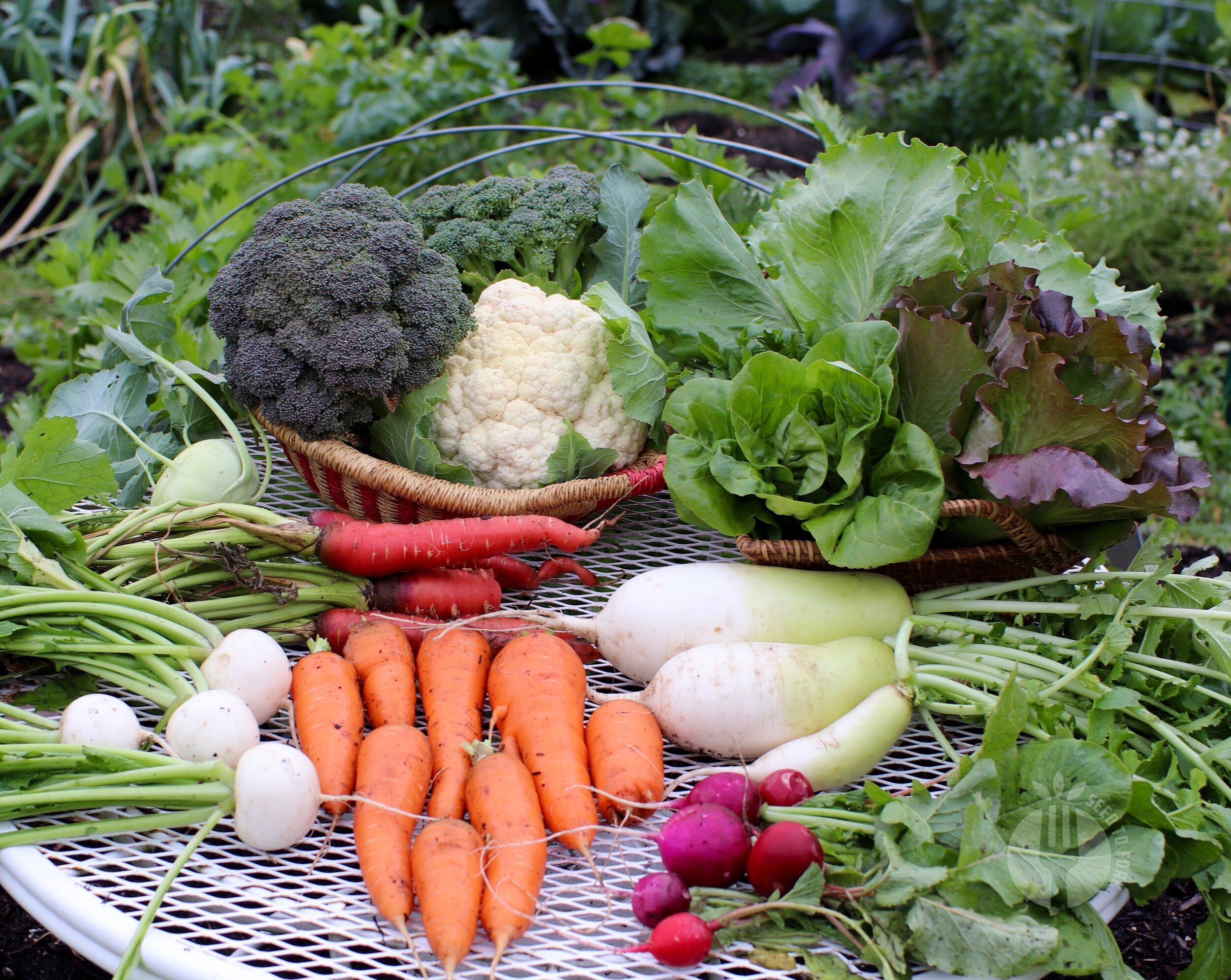
Let’s talk about this. I love to plant my garden little by little, starting with the most frost-friendly plants: broccoli, cabbage, kohlrabi, bok choy, kale, radishes, spinach, arugula, head lettuce, radishes, and others. For me, those go both under cover 4-6 weeks before last frost AND they get planted or seeded out 2 weeks before last frost uncovered. At that point in spring, I’m pretty confident we won’t get a 22F degree evening, one that would be damaging but not lethal to what’s outside. I don’t lose sleep over a frost of 28 degrees, uncovered, with my cold hardy crops, especially if they’ve been in the ground for a few weeks. It is a truly liberating time of early spring for me!
If you have seeds for these crops and want to sow them, you can confidently go ahead without any need for extra protection. The exception is I always grow my cabbages, broccoli, and kohlrabi from transplants. Everything else can safely be sowed now, along with carrots, beets, and even peas (mine are just getting going, another nod to this most sluggish warm up).
Celery, cold hardy flowers such as alyssum, snapdragon, poppies, and calendula can also go out during these 40-60 degree days with nights hovering in the low 40s. Artichokes also need a cold period (about a week and a half) to produce buds (cold vernalization is the term) and if hardened off, now would be a great time for me to transplant them.
Onions get transplanted without any protection about 2 weeks before our last frost. Because they are frost hardy, I’ve learned to get them in the ground a few weeks before my major flower and vegetable transplanting marathon. It spreads out the workload, and I appreciate them for this.
But just because we are beyond our last spring frost doesn’t mean the garden is ready to welcome summer crops — not by a long shot. Here is what I am not planting out yet, because soil temperatures and evenings remain too cool for them to be remotely happy: tomatoes, peppers, eggplants, summer squash, melons, cucumbers, cucamelons, and sweet potatoes. These plants need soils warmer than 65, ideally at least in the 70s, before they will happily go into the ground.
I am just starting to harden off my tomatoes this week. I hope to get a low tunnel up to expedite soil warmth for some of the tomatoes so we can get them in the ground in about a week’s time. I don’t anticipate the delay of a week will do much to hamper our earliest cherry tomatoes, so I am just rolling with it.
Many hot season crops I haven’t even seeded yet and won’t until at least next weekend: cucumbers, melons, summer and winter squash, and my first sunflowers. I like to sow these indoors in newspaper pots to get a jump start on summer production — not necessary but it’s a tradition. If I was going to plant peanuts, now is the time to sow those too! These all need really warm soils and I never transplant or direct seed them until after the first week of June. Even a mild cool off in June will really throw a wrench in these heat lovers establishment, and while I push the season with cold tolerant crops, I’ve learned I gain very little by trying to grow hot crops in less ideal soil temperatures.
If you have tomatoes and are hardening them off, pay close attention to your soil temperatures at depth. What I mean by that is stick that meat thermometer as deep as the plants’ roots will need to be buried and do not transplant until the soil is at least 60F. I’ll chronicle my tomato hardening off approach all week, and share my transplanting and support systems too.
There’s another group of seeds that can go out imminently, crops I didn’t used to consider for early spring but now know better: potatoes, beans, and corn. Farmers here sow their earliest corn in April, as soon as they can get into their fields. I rarely get to it that early, but this year I did plop some sweet corn into a bed on April 26, the earliest I’ve ever sowed it. I always plant a second, late summer succession of sweet corn too. And potatoes can be planted in early spring, even before last frost, though I tend to use them more as a late season crop. Like brassicas, lettuce, peas, carrots, beets and such, these also need zero extra protection at this point. My kind of garden companion, to be sure. Beans need minimum soil temps of 50F to germinate, and we’ve got that, so those are seeds I’ll also be sowing earlier than ever.
Are you braving the elements with cold hardy plants?
You might also like:
Get updated by email whenever there’s a new post
Comments
If you’re a subscriber, you can discuss this post in the forums
Leave a Reply