
Your cart is currently empty!
Selecting the Right Trellis
Get updated by email whenever there’s a new post
This direct message requesting a run through of why I choose what trellis for which crop felt like a great, timely blog post, so here it is!
We use a handful of different trellis methods for vining crops. Some are older methods and some newer. Some can be used for many different crops and others more limited due to their design.
Classic Twine with Cross-Bracing
This is our OG trellis system, dating all the way back to our first urban gardens in 2003 in Minneapolis. Simple and modular, we had many 8’ long boards that we cut with either a table saw or circular saw with a clamp to yield 2×2 vertical posts and one cross brace for the top. We screw them together after burying them a good 12” deep. Finally, add a second cross brace about 4” above the soil line to hold the twine in place.
We’ve used this for tomatoes and beans most of all, but cucumbers would be quite happy on these, as well as summer squash (vining types, which I think most are), as well as vining flowers such as climbing nasturtium or sweet peas. I would be a bit weary of growing butternut supported only by hemp twine, as well as watermelons or muskmelons.
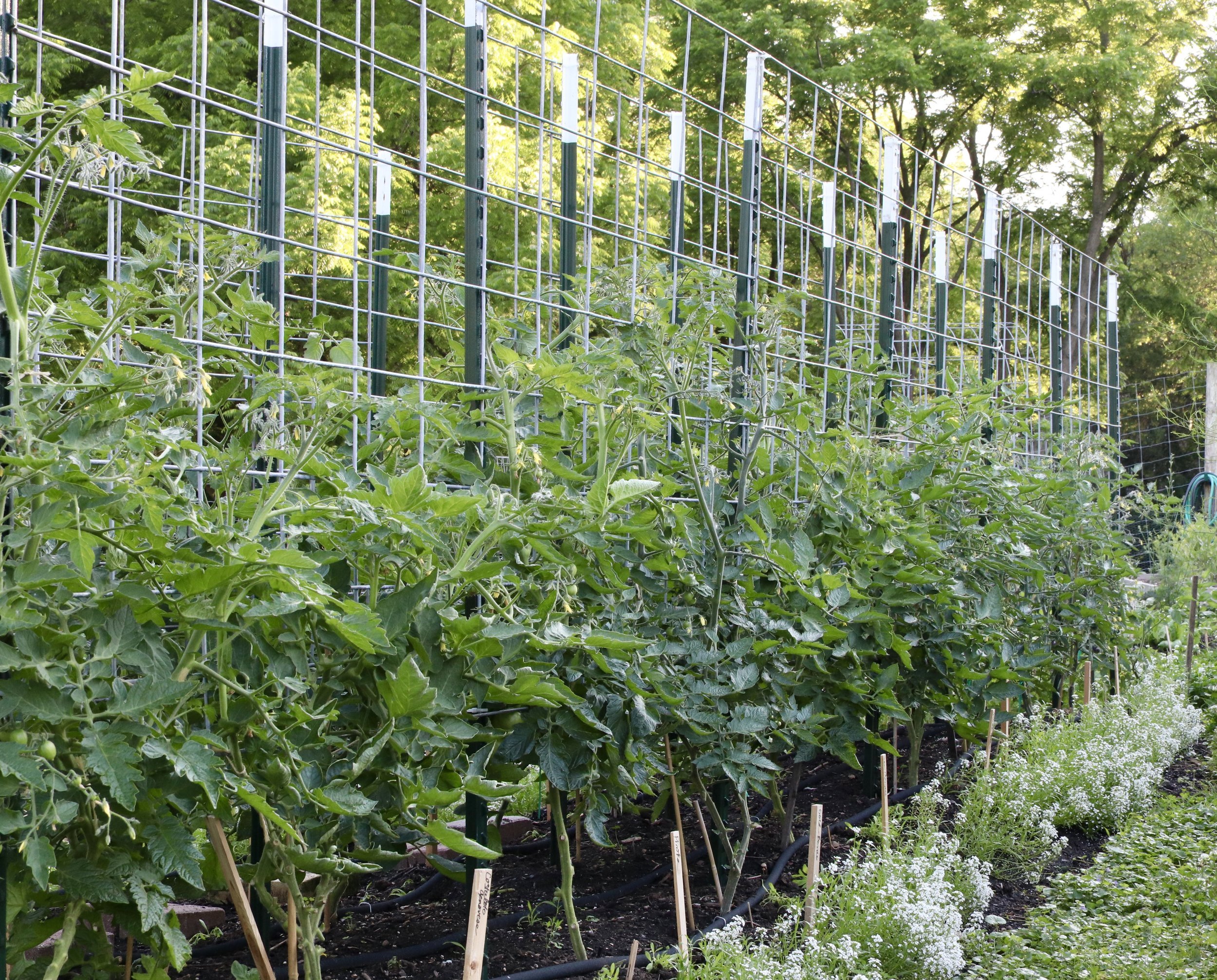
Cattle Panels
Cattle panels in any shape are the most versatile type of trellis system. In addition to being durable, they can hold any and every vining crop we grow from winter squash to beans, from watermelon to cucumbers. Tomatoes, when tied up to them, also grow happily and appreciate the added support.
And as many of you know, I’ve also started turning them horizontal (parallel with the ground) as a flat trellis for bush type crops like determinate tomatoes, tomatillos, and more. I’ll be trying this with my bell peppers this year, too!
If you want easy, I highly recommend these.
Here’s a blog post to how we built our cattle panel archway: DIY Cattle Panel
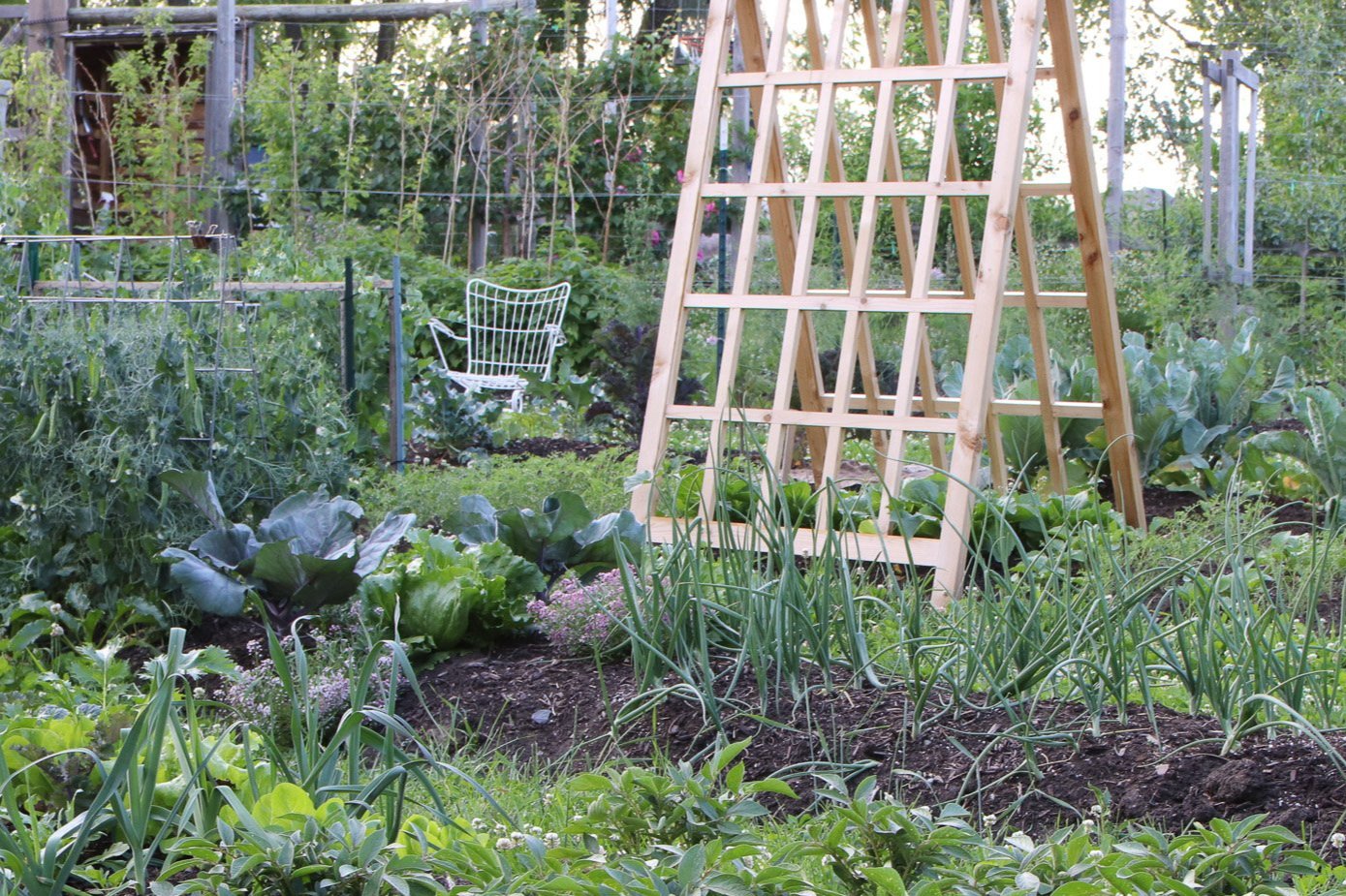
Wooden trellises
Beauty over function is the best description for this trellis. We use this trellis solely for cucumbers — I grow 4 slicing type cucumbers on this trellis every year. It’s gorgeous but a bit too thick for beans to cling to. I’ve never considered tomatoes on these, but with having to tie them up, they might work on this.
This one was also quite expensive and time-intensive to build considering the cost of lumber these days.
Horizontal Stringing
This is best used for crops like peas and beans, legumes that claim to be bush but in reality are easier to manage and harvest if supported up off the ground. I also use this method for containing floppy crops like my potatoes that would otherwise fully obscure their paths come late summer.
Freyr Trellis
This is the only not DIY trellis in our garden. I couldn’t pass up an offer to try one and give feedback for free. These trellises cost several hundred dollars. Made from powder coated aluminum, they’re lightweight and ingeniously designed as a modular system.
Last year I used them at 5’ tall for my half-runner dry beans, Tiger’s Eye. This year we went for 7’ tall and I’m training several tomatoes on it, going back to my single leader days. I plan to try cucumbers on it next year and will continue trialing different crops for many years to come.
It would work best if you had 4×8 beds and could screw the base to the side of your beds. I installed these completely level but they still bent over winter with heaving and are no longer plumb. I won’t be bothered by it once the tomatoes fill in.
Here’s a video where I covered each of these trellises:
You might also like:
Get updated by email whenever there’s a new post
Comments
If you’re a subscriber, you can discuss this post in the forums
Leave a Reply