
Your cart is currently empty!
Welcome to Meg’s Blog
-
Nourish Your Roots
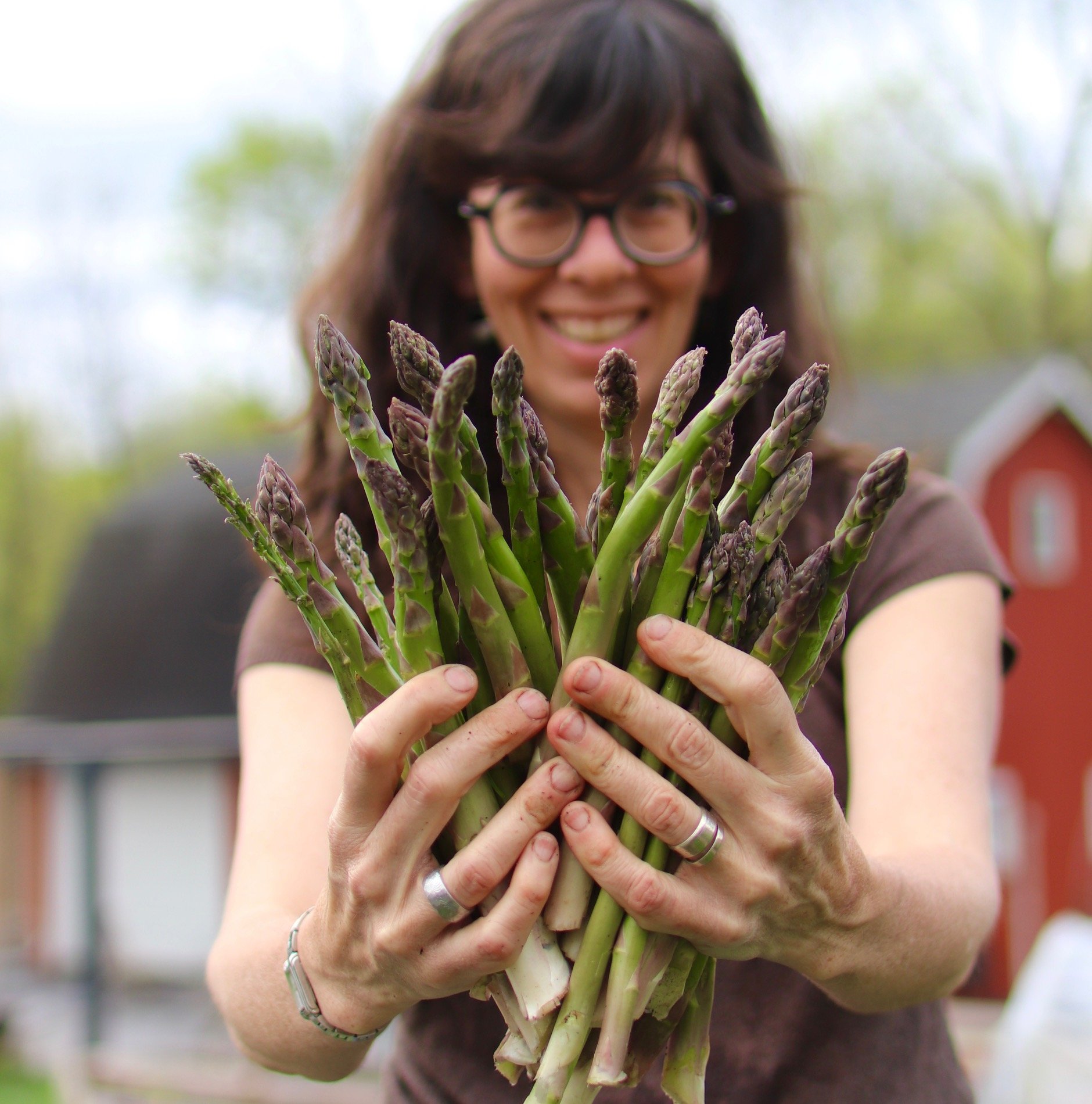
I never tire of the garden metaphors. Asparagus season has me thinking. Watching the spears bust through the compost, growing inches by the day, they say so much in their actions. There’s no hiding the health and vigor of their roots as they begin their incessant emerging from now until first hard frost. They wear their hearts on their sleeves.
The fatter the stem, the stronger the root. That’s the way with asparagus. Within that is the caveat that female plants tend to produce slimmer stalks than male plants (I know, gender binary stereotypes maybe even the asparagus doesn’t want.) But ours is about 99% male plants by design — because they won’t drop fertile seeds and compete with the vigor of the initial planting — so we really are talking about a wide range of root health.
They shoot up and plead with me daily: Meg, are you feeding your own roots? Do I want to grow a spindly spear, or do I want to be sure to take the time and energy to restore myself so I can show up in my life and for my friends and colleagues with my tank full?
It’s pretty clear with asparagus who’s done the best job of tending to their roots, who has taken enough of their energy and invested it in themselves. It’s not quite as easy to tell with humans, generally, but what’s the point in pretending you’ve got more reserves than you actually do?
With spending more than half its life in a state of rest, asparagus really makes the most of the life it’s given. It reminds me of how easy it is to be completely explosive with our own state of being in spring and summer, bending our lives to the extended sunshine and aliveness all around us. But we don’t rest in winter like the plants. I mean, not as much as we would like. (Or wait, is that just me?)
So rest needs to be included in every growing season, too. It’s something I’m slowly learning, and maybe it’s because all my chronic pain and fatigue is building a taller wall that’s not as easy to just hop over. I am trying to accept it as a gift of hard won balance instead of a sign of weakness or failure. It’s a daily battle, but I may be coming to acceptance.
My Plea for More Asparagus Grown from Seed
As many of you know, I am a huge fan of growing asparagus from seed. I believe, and maybe I’m the only one, that asparagus is one of those things that most people can grow from seed easily, but there’s this massive misconception that you will get a faster harvest from crowns. Not true!
If done correctly, you can harvest your first yields off asparagus seedlings at about 18 months after germination. This equates to the exact same time you’d be planting one year old crowns, the ubiquitous pathway to homegrown asparagus. Saute that in some olive oil and sea salt, and make a plan for January 2023.
Our asparagus bed is largely five years old; there are a few plants that we started from saved seed in 2017 or ‘18 and planted again to replace some female plants. We are growing a male dominant hybrid, Jersey Knight. We have probably 1/3 too many plants, but an easy, early season food is nothing to underestimate and we are eating it nearly daily now and will through the end of June.
If asparagus is something you’d like to add to your garden, take the time to locate a permanent home for it and I highly recommend sowing it from seed. It takes a few weeks to break dormancy like celery, cape gooseberry, and the like, but by potting it up and then planting it really deep, you’ll have a head start on any crowns you waltz past in home improvement or garden centers.
And remember to watch your garden carefully for lessons about self care. Because these plants are most often our most fervent and open teachers in our lives. Maybe we’d even call them our best friends. Do you need permission to nourish your roots? I am here to give that to you. Go ahead, take the very best care of yourself today, and always.
-
The Benefits of a Late Spring
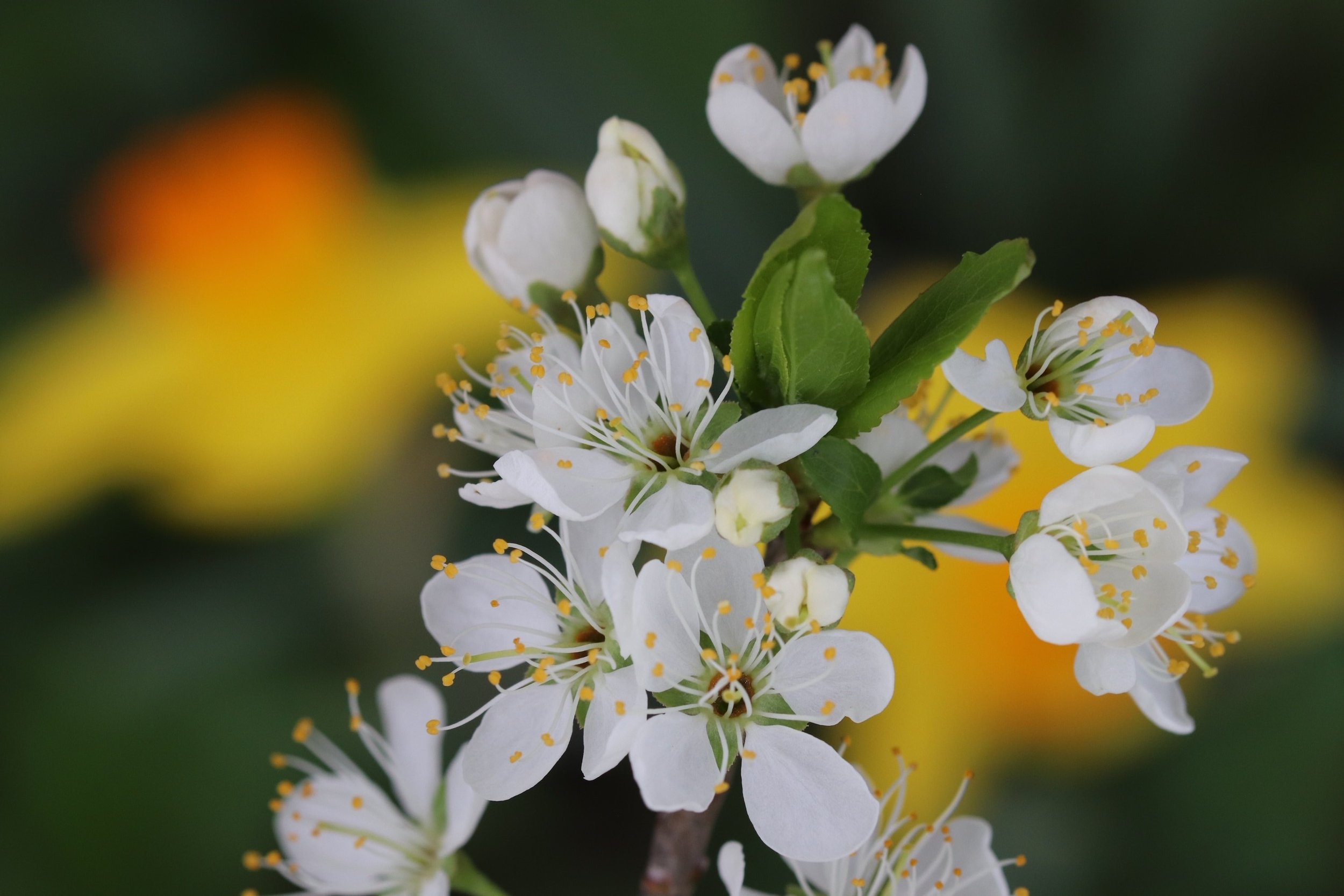
For the past 2-3 years, we have had early warm ups here. They are truly wonderful after a cold and dark winter, allow my earliest cold hardy crops to go into the ground before April, hasten our first harvest which has historically also been in April, and generally felt like a real upside to climate change for those of us in the stranglehold of a cold climate.
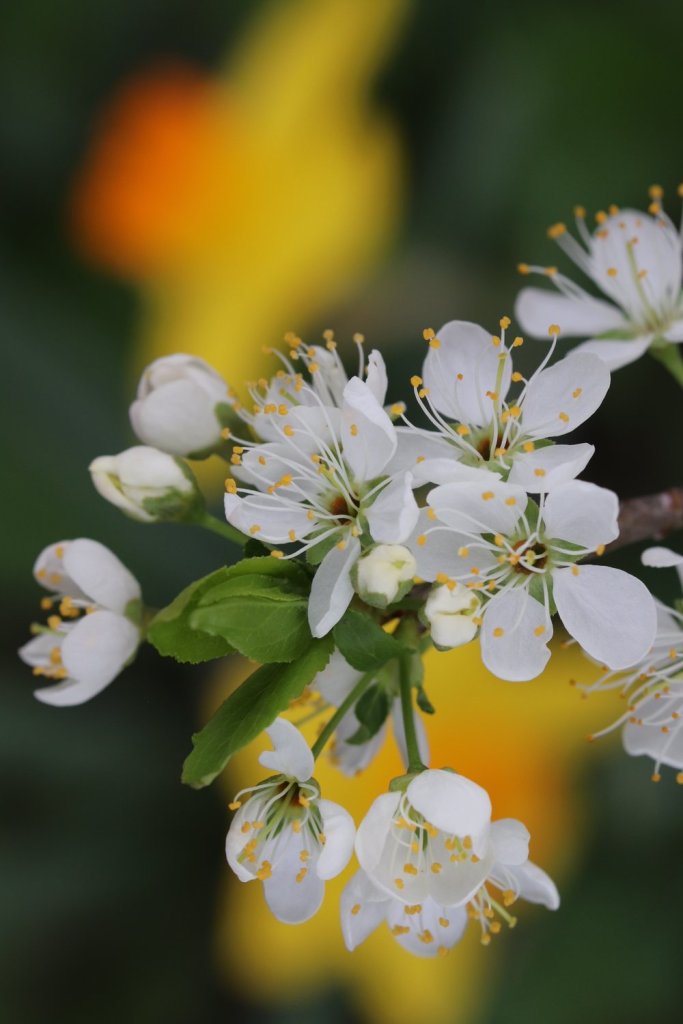
But there are as many downsides to an early spring as there are upsides. These tradeoffs crystalize most notably in our perennial garden, namely our fruit trees, shrubs, and berries. When we get stretches of warmth coupled by zero snow cover in March and early April, it emulates what late April is (or was), and irreversibly invites the fruit trees to bloom a little too early. We had frost damage to our apple and plum trees last year, though the plums were definitely more cold hardy than the apples and fared quite well. (However, the plum curculio ended up sneaking into the fruit and ruining our harvest.)
Additionally, our strawberries have been hit by a “late frost” before May 10 over the last several years, decimating our king berries. You know them as the barely-fit-in-your-mouth strawberries you end up fighting over when the bowl or container drops at the center of the table. I yield to littler fingers and prepare to battle with a fellow adult, but maybe that’s just me. The first flowers of June bearing strawberries are the largest, and the rest are diminished in size.
It’s looking like a very king berry kind of June is on the horizon, and that will make for some very content and satisfying bowlfuls in June and July. In contrast to many seasons where we had strawberries flowering in April, our strawberries are JUST starting to flower. This means zero will be lost to frost which hopefully also means a return to our epic 170 lb harvest of 2019, which produced plenty to enjoy fresh, share, make jelly, and freeze for smoothies. We have a very big strawberry habit and we are hoping it’s a big year.
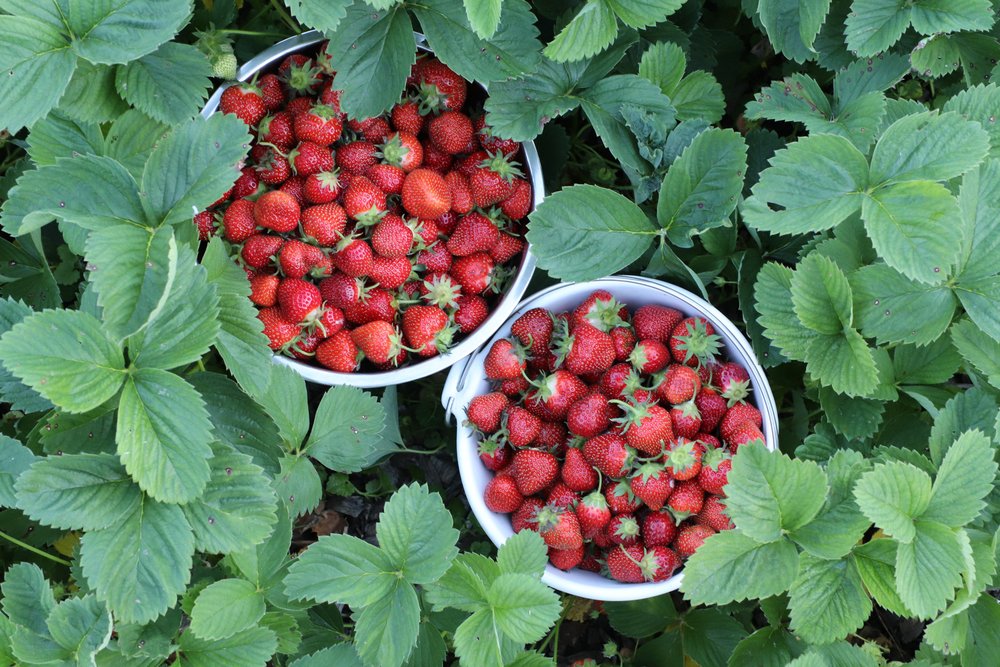
There are not a lot of king berries in these bowls from last summer because of the late frosts. These are the intensifying challenges we face as gardeners, how to navigate growing what we love while considering the more volatile climate that we each grow alongside. We could spend our precious hours trying to protect such flowers during inclement weather, and probably if I were still gardening on our small city lot with just a few fruit trees, I may seriously consider such measures.
But gardening on the borderline “farming” scale we do makes it unrealistic, especially because it’s mostly just me doing this kind of work. So we take our king berry years as bonuses, as we won’t be covering the crops with floating row cover if late frost is expected.
On top of sheer luck, we also plan and plant perennial fruits now that are more cold hardy than we used to, focusing on zone 3 hardy plants instead of zone 4. The hardier the plants, the later they will flower — or that is our hope. We’ve added pears, apricots, honeyberries, lingonberries, and apples to our perennial food orchard in the past year, all hardier than our growing zone.
What silver lining of a late spring are you able to appreciate in your growing zone? Have you begun to evaluate your growing zone and climate change?
-

Timing Your Hot Season Crops
Last frost does not mean the day — or even week — to plant the garden in full. A sage and seasoned gardener knows this. But this is particularly true and crucial for truly hot season crops that will downright revolt in soils that are not warm enough. Trust me. I’ve tried time and again to push the season with them, with appalling results.
I used to sow my cucumbers directly into the garden in early June. At this property even, for the first year, I gave it a try. We had zero cucumbers that first season; they all died a terrible and early death now that I remember it. I can’t recall what it was, but in hindsight our tomatoes also did terribly too. And one possible culprit could have been the remaining roots and juglone that remained in the soil where the black walnut stood right next to the barn door. I digress.
If you rush these very fast growing, heat loving plants, you gain nothing. And yes, waiting can be painful, especially if these are some of your most favorite things to grow in summer. So this is why I started to fold newspaper pots and sow them indoors a few weeks ahead of transplanting.
Now, instead of sowing seeds directly into the ground in early June, a time of year here than can either be very summery or very damp and springlike, I have hardy and happy transplants that will be ready for the perfect long-term forecast to acclimate into the garden. I sow my heat loving cucurbits and my first round of sunflowers right around mid-May, which is just about one week after our average last frost date here in my zone.
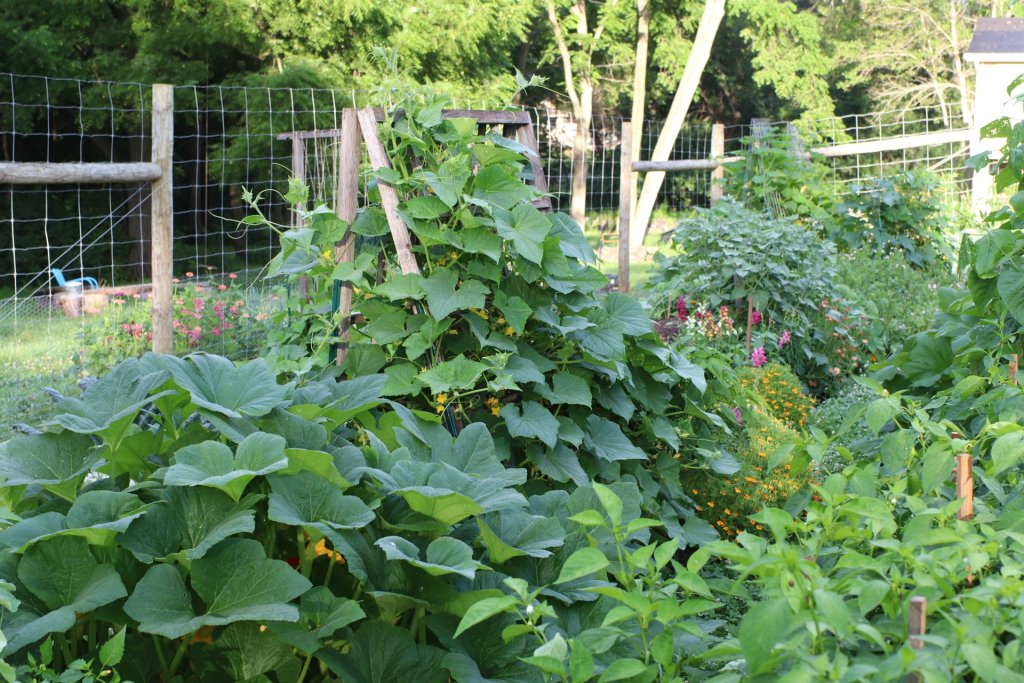
There’s no need to rush planting the true heat lovers because they won’t flourish until the heat descends. Trust me, wait and marvel at how fast they establish. It’s worth the thrill. Even with this extra start, I am still looking for soil temperatures at depth to be in the 70s for transplanting. Sowing these crops indoors is never a must-do, not by a long shot. But I really have come to rely on these seasonal rituals that coalesce and bring so much meaning to my spring weeks that I cannot imagine ever going back to direct seeding these crops. If you prefer to direct seed them, really make sure you have warm soil and a really great, warm forecast to give them their very best start in your summer garden.
I’ll be folding more newspaper pots this weekend and sowing these seeds early next week. Honestly, with the cooler air returning here and what has been a very unseasonably cool spring, I feel little rush to start these too soon this spring, so I may even wait until next weekend. Although a juicy, warm, garden-ripe cucumber in early July is haunting my taste buds this morning so the promise of July’s heat is probably going to win me over — maybe I should sow them in 4” pots to give me an extra week indoors. Oh the things we do for our summer garden.
-

Celery Grow Guide
Celery was always an enigma for me. At least, for the first 18 years of growing food. I didn’t so much as ponder growing it. And I don’t think it was because I thought it was hard to grow, it was probably because I didn’t see a lot of photos or varieties in our seed catalog highlighting it. But I sure am glad we found our way with it, because like the garden tomato, homegrown celery is a transformative experience.
So let’s dig into how to grow 94% water in your garden … with a crop that is very nutrient demanding!
Celery Varieties
There is not as wide a variety for celery as there is for tomatoes or cucumbers or beans, and this list is by no means exhaustive, but these are four celery varieties I’ve grown over the past three growing seasons.
Utah Tall
This variety didn’t perform well for me in the garden. It had a hollow stem, which literature assigns to uneven watering, however grown side by side with Ventura under the same conditions, this was the only variety to have this issue.
Chinese Pink
It’s pretty, and that’s about it for me. If I were to grow a “pink garden” some year, which is sort of a really cool idea, I would definitely want this mixed in among my flowers and sesame, and the like, but in the kitchen it was tougher, narrower, and more bitter than traditional green celery. I no longer grow this variety — it was a one-time experience for me, but you may need to grow it to see if you’d like it or not. I’m not here to prescribe varieties, just share my experiences honestly.
Tango
We’ve been growing this variety for the past 3 years with consistent results. It makes some really great heads and can be used as a cutting celery too.
Ventura
This is a new variety for us as of last summer, and as mentioned above it grew really well here too. We had a hot and dry summer and they championed through it. I’m growing this variety as a spring and early summer variety in the garden right now.
Culture
Celery, a relative of carrots, dill, parsnips, fennel, and parsley is a very heavy feeder, which is ironic given that it is vastly just a vehicle for water. (Ponders the meaning of life…) Like most vegetables, it grows best in slightly acidic soil (pH 6.0 – 7.0). Knowing your soil pH is super helpful and can be achieved with a soil test performed for a nominal fee at your local agricultural university. If you have alkaline soils, be sure to amend your soil well before transplanting for vigorous growth. Adjusting pH in soils is a slow process that takes months to achieve.
Because it’s a very slow-growing vegetable, you will need to fertilize both upon transplanting and then a second time about 1-2 months after transplanting.
Celery thrives in less extreme temperatures, which is why it is a crop most often grown in the temperate climate of the California coast where temperatures tend to hover below 80s but above 50 for most of the year. Literature cites that exposure to repeated lows for more than a week at below 50F/10C will cause it to bolt prematurely. I continue to transplant it along with my earliest brassicas and it hasn’t bolted on me yet, so I’m not sure what to say about that. However, extreme summer heat isn’t its best friend either. I grow it in full sun in the early season, but try to position it in part shade for the fall crop to give it a little bit of moderated temperatures during the brunt of our summer heat.
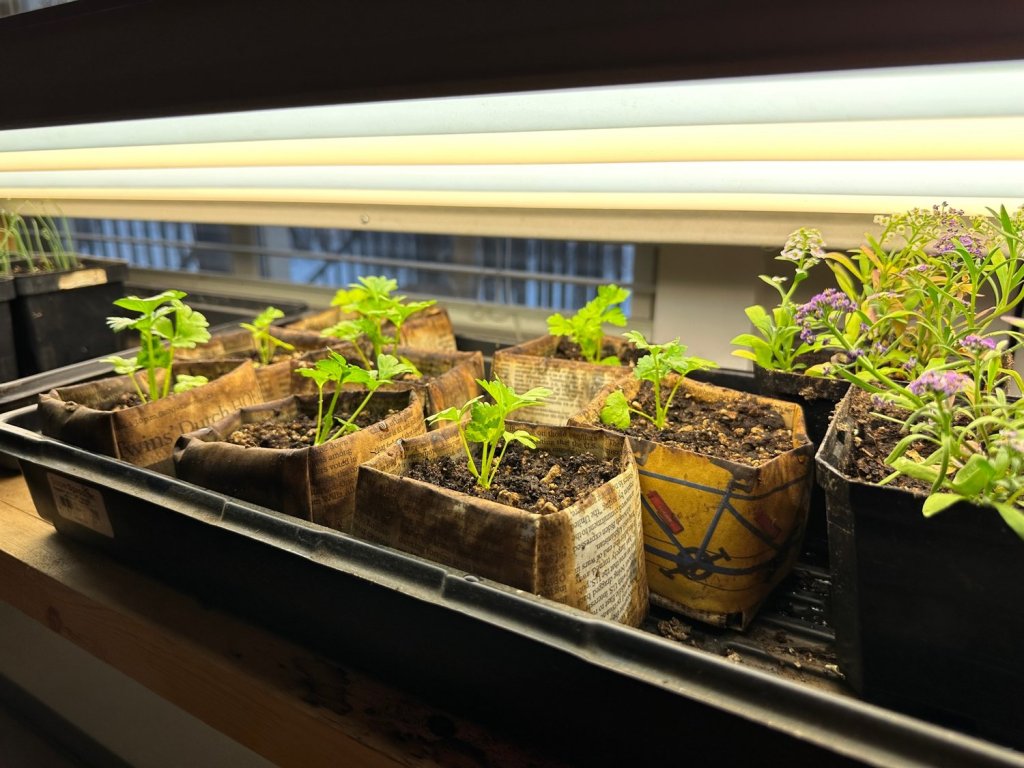
Potted up celery seedlings biding time before spring fulls arrives. Finally, celery takes a full season to mature, which I define as more than four months. Sowed in early February, I will harvest my first celery bunch hopefully in mid-June, a full four months later. To achieve this feat, you really need to give the seeds plenty of time to germinate and establish indoors before hardening off and transplanting.
Timing a Fall Celery Garden
Let’s talk timing. I sow my spring and early summer celery in February for an April-May transplanting. With this timing, the plants in 3” pots are vigorous and ready to thrive in the garden. They enjoy the cooler weeks of late spring in which to really establish and take off.
The general rule of thumb from seed companies is to sow celery is 10-12 weeks before frost (either spring or fall). I sow my spring celery 13-14 weeks before last frost. And for fall, my experience has demonstrated that this is a little too late, so I recommend sowing it 18-20 weeks before last frost. Yeah, I know, for some of us, that’s right around our last frost date! This is succession planting at its finest. For those in warmer and milder climates, I think you could get away with closer to 12 weeks before your first fall frost, but I’d still recommend at least 14 weeks just to buffer what can be slow germination rates for some.
For fall, I’ve tried sowing celery in mid-July (12 weeks before frost), then late June (10 weeks), and last year around June 10 (16 weeks before frost). While we grew harvestable celery with the June sowings, it definitely would have been larger and more mature if sowed earlier. I now sow my fall celery the third week of May. I plan to transplant it after the Fourth of July, around the same time I transplant my June sowed fall cabbages and cauliflower.
Keys to Germination
Water
Let’s grow water. That’s pretty much what we’re after, a crunchy and refreshing vegetable. In order to grow a watery vegetable, you have to provide it with lots of water. And it starts with the seeds. In my research for this guide, I read in a few sources that soaking the seeds overnight can help hasten germination. While I’ve never tried this, if you find celery takes forever to germinate for you, definitely consider this option to add to your sowing schedule for celery.
In addition to potentially soaking the seeds, be sure your potting soil medium is moist before sowing. And retain high moisture by covering with a germination dome, plastic wrap, or other transparent cover on top once you’ve pressed the seeds lightly into the soil.
Light
Small seeds almost always require light for germination. And conversely, large seeds most often need darkness and thus are planted deeper. Celery seeds should be planted on the soil surface. Do not cover the seeds!
Heat
Even though I will be sowing my fall celery indoors in what will be a home above 70F, I will still use a heat mat for germination. It ensures an ideal microclimate to encourage speedy germination. If you don’t yet use a heating mat, you can pick one up online (Disclosure: I am an Amazon affiliate, and may receive a very small commission from sales through this link).
Keep the heat mat on until germination is complete. Once you are satisfied with germination results you can unplug the heat mat. I usually keep it on for 1 week post-germination, even in warmer months.
Thinning & Potting Up
Because celery takes so long to establish, it is a vegetable that requires potting up before transplanting. One way to get more time out of your pot or soil block is to really be careful when sowing the seeds and only sow 3 per pot. If you sow more — and truly it’s almost impossible not to — it just means you need to take more time with the seedlings to tease them apart and clip the extra ones off at the base. I don’t try to pull them out because they are shallow rooted plants and you will disturb the roots of the primary celery you want to keep.
About 3-4 weeks after germination, your plants should have several sets of true leaves and you should thin them out at that time. Snacking on the seedlings is highly encouraged, a wonderful sensory experience to be sure. Such a bold and bright flavor!
Additionally, beginning a fertilizing routine at this point is also important. I have begun to use a once a week soluble seaweed fertilizer for my seedlings in addition to the compost tea.
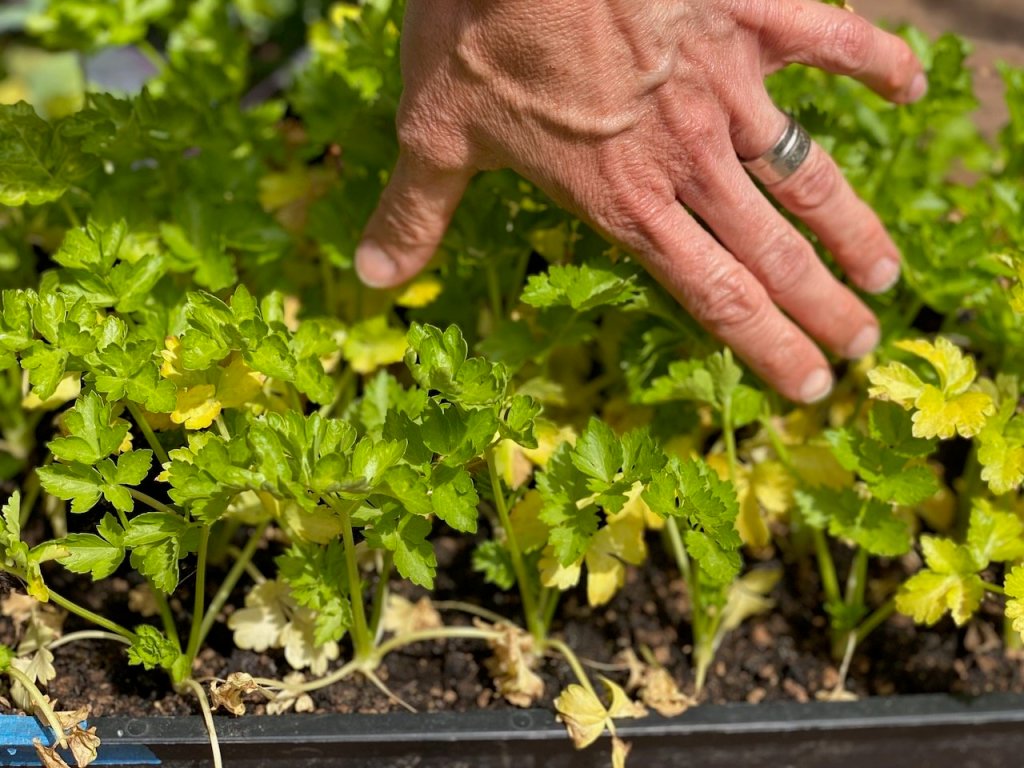
These celery are suffering from being overplanted and under-fertilized, as noted by the lower leaves yellowing and dying off. This is a sign of nitrogen deficiencies. While not ideal, it’s a short-term issue that will be remedied upon transplanting the strongest plants into a well-fertilized planting hole. I grow my celery in 2” soil blocks and thin to one plant per soil block at thinning. I have also had success teasing plants apart and transplanting into a second soil block tray that was empty, although the process required breaking each soil block in half, dropping the seedling in, and then smooshing the soil block back up. It worked. It’s maybe not ideal, but as the plant set roots, it worked to hold the shape of the soil block. The result is a lot of vegetable starts I can donate to the local nonprofit in town who grows for 100% donation!
Once they are looking quite large in the 2” soil blocks, about 5 weeks post-germination, I pot them up into 3.25” soil blocks for their final month or so indoors and their hardening off process. At this point, I am okay growing them on in cooler conditions, and actually had great luck growing them in our basement where temperatures in winter are around 55 degrees. It will be cooler down there in summer too, though not as cool as that, though I plan to grow them out downstairs as well (it’s also where our Roleadro LED 60W full spectrum light is).
Hardening Off
Hardening off requirements for celery are the same as anything else. We are looking to increase stem turgidity by exposing the plants to variable winds, slowly allow the plant cells to acclimate to real sunlight, and toughen the roots up to the outdoor conditions as well by pulling back a little on water and nutrients at this time. More information on hardening off can be found in this blog post.
Who’s growing celery with me this summer? Let me know in the comments!
-
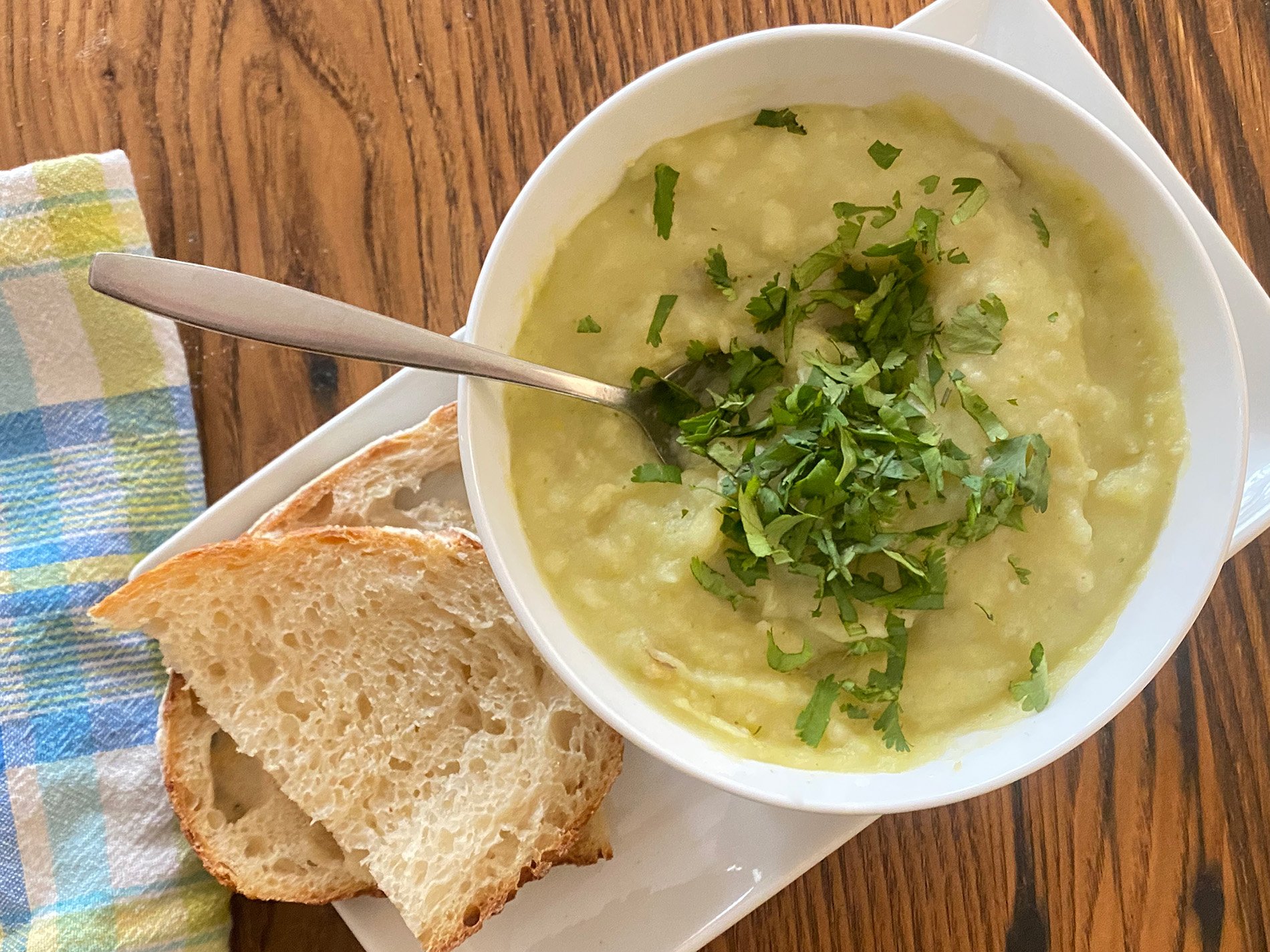
Sopa de Papas
While in grad school, as newlyweds, we enjoyed a strong community within my husband’s food science department. Soon we were enjoying weekly lunches, taking turns cooking for each other. Giovana, who ran the sensory lab, was from Honduras and this recipe is inspired by her delicious soup I ate over 20 years ago.
The fresh cilantro boiled with the potatoes is key, and while her recipe initially called for half a green pepper, I didn’t feel like driving to the grocery store so I used 1/4 yellow bell and 1 pasilla bajio. It worked great. I think the vegetal flavors of an unripe green pepper are critical, and if you like it hot, skip the bells altogether. I’m thinking a hatch would be delicious too in this recipe.
Basically, it’s your choice on the pepper, but if you want to be traditional, go for 1/2 green bell pepper.
Sopa de Papas
Ingredients
- 3 lb russet potatoes, peeled and cubed
- 3 cups chicken broth
- 4 T butter
- I bunch cilantro stems, bundled
For Blender
- 1 medium onion (about ¾ cup)
- ½ green bell (or sub) – I used ¼ yellow and I pasilla bajio, what was on-hand
- 1 cup milk
- 1 cup chicken broth
- ½ tsp cumin
- Salt, to taste
Instructions
- Peel potatoes and just cover with chicken broth (or broth of your choice). You may need more broth – I like my soups really thick, so adjust to your liking (you can also add more broth at the end if it’s too thick). Tip: the smaller you dice your potatoes, the faster they will cook.
- While potatoes are cooking, chop onion and peppers and place into a blender (we love our vitamix we bought refurbished in 2015). Add milk, 1 cup broth, and cumin and blend until well pureed.
- When potatoes are good and soft, mash with a potato masher or hand mixer. (Do not blend potatoes in a blender as they will become elastic. It’s cool, but trust me, the texture is all wrong; I’ve done it more than once.)
- Add the pureed ingredients and cook for 5-10 minutes until thickened.
- Salt to taste.
-

Threading the Seasons
I keep finding myself yearning for sentimental things these days.
I’m currently wearing a few pieces of jewelry that are old and treasured. The first I stumbled upon while looking for something else. Instead, I found an even more precious something: the promise ring my then-boyfriend-now-husband and I exchanged a year before we got engaged — and right before I left to do a study abroad in Argentina my senior year of college. His promise ring slipped off his ring finger some tiring graveyard shift while he was digging in the bales of hops for his brewery job at Deschutes Brewery; it was never found and probably ended up in their water recycling plant. I’ve slipped mine underneath my wedding ring, stacking our story together for a new chapter. It felt simple yet significant, honoring our story, and I may wear them like this for the rest of my life. It just felt right.
The other treasure I’m wearing is that of my paternal grandfather. You see, I am having my favorite watch repaired, and the only other functional watch I have is my grandfather’s watch, it’s an old fashioned, battery-free wind up kind. It keeps time as well as my iPhone. There’s a lesson there.
At first I thought I was holding onto the past, these parts of my life that aren’t ever going to return. However, I realized today I am delicately and intentionally threading the years together, weaving them into my very being right now. I visualize it as an embroidery needle reaching back to pick up these important moments and people and experiences of my past and traveling through time along that very thread to carry them here, stitching their love into my present life so I can carry them close at heart.
Their visual presence honors and accepts my past, while recognizing the person I am today, and the person I am becoming still. It’s not unlike my relationship with plants.
The garden does this too, in so many ways. Each year the tapestry grows ever more intricate, with the past year’s life experiences composting and flourishing anew with each passing season. Grief melds into joy and remembrance. Arduous times may root down, delicately and humbly flower in inconspicuous ways. The garden holds our heart, our hopes, our dreams, our joy, and our deepest grief. It all grows there.
Each season I spend with a plant is imbued with the experiences of that season. I revisit them year over year like dear family, and our shared experiences entwine and become richer and more meaningful. Last year was the first year I grew sesame and the first year I lost my father. My mother-in-law loved blue and we had an incredible green darner dragonfly land on a larkspur that completely delighted her, one of the final joyful garden memories I ever shared with her before she passed. Larkspur remain a self-sowing summer flower and they honor her legacy. Spending time in my garden with my thoughts, heartaches, dreams, favorite people, and mundane moments all adds beautiful layers of continuity to my life. It’s almost like another succession within the garden.
Perhaps my life is the succession, and as I learn and grow, I see the garden and plants and space with new possibility.
I can’t wait to see what this season brings to life, as the space remains so still and quiet.
-

1.5” vs 2” soil blocks
We invested in a second soil block size this winter, because I wanted to use it for sowing flowers instead of my larger capacity 128-plug trays that always end up with extremely root bound seedlings that become extremely thirsty little things.
Turns out smaller soil blocks are just as challenging as the 128-plug tray at keeping things from drying out. I think part of the reason is that unlike the 2” blocker which I can get pretty much tight in a seed block tray (at 5 rows of 10), there is always a gap for the 1.5” blocks and thus more opportunity for water to evaporate and desiccate quicker.
I lost several fennel seedlings due to drying out. Those 1.5” soil blocks are unforgiving relative to the 2” blocks. Learning as I grow, it’s the best part even and especially when it comes with hard won lessons such as this. Now that I know this and only lost a few fennel, I am much more vigilant with checking those daily for water levels and dryness and I’m even watering those from above as often as refreshing the bottom watering tray.

The other phenomenon that sometimes happens with my soil block trays is the middle dries out faster, as seen here with this gap. I am learning that each size has value. I will continue to use this smaller blocker for flowers, which I already crammed into even smaller pots in years past. This includes flower that establish quickly such as calendula, sweet alyssum, marigolds, cosmos, and zinnia. I will also continue to use the smaller blocker for beets and lettuce, things that I just like to give a brief head start to and then into the garden they go.
The 2” blocker has a lot of advantages and we really thought long and hard when we researched these back in 2017 before investing in one as to which size to purchase. At $40, we delayed this purchase for many seasons, especially when we had a tiny urban garden because the cost seemed excessive. And, we wanted to invest in just one universal size. And it really is an amazing and utilitarian size — the only downside is that you can only have 100 seedlings under our lights.

128-plug tray means more babysitting once their roots establish. But as I thought about reducing plastic consumption and the downsides of those 128-plug trays drying out so fast during the hardening off process, it made me so curious to see the difference in plant vigor if I gave them a little more room. So I invested in the smaller blocker last month. It’s actually a significant decrease in the number of plants I can sow per tray, but I think the quality of the plants (78 blocks vs 128 plug tray) is worth the added space.
If I were to sell tomato seedlings, I bet I would use this 1.5” blocker to start 78 seedlings and then pot up quicker into 3.25” pots (in 3 weeks instead of 4-5 weeks in the 2” soil block I currently use). Or in the summer if I wanted to have a fall plant sale, same thing — it would be a fast way to get a lot of plants going. But this begs the question: how many of us need to start 78 plants for our garden? I’ll share more on the topic of how to plan for what to start in each tray next.
If you are thinking about invested in a soil blocker and have a smaller garden, I would recommend the 2” soil blocker over the 1.5” blocker — but 72-plug trays are also awesome resources and what we used for our first 16 years of gardening on smaller plots of land.
-
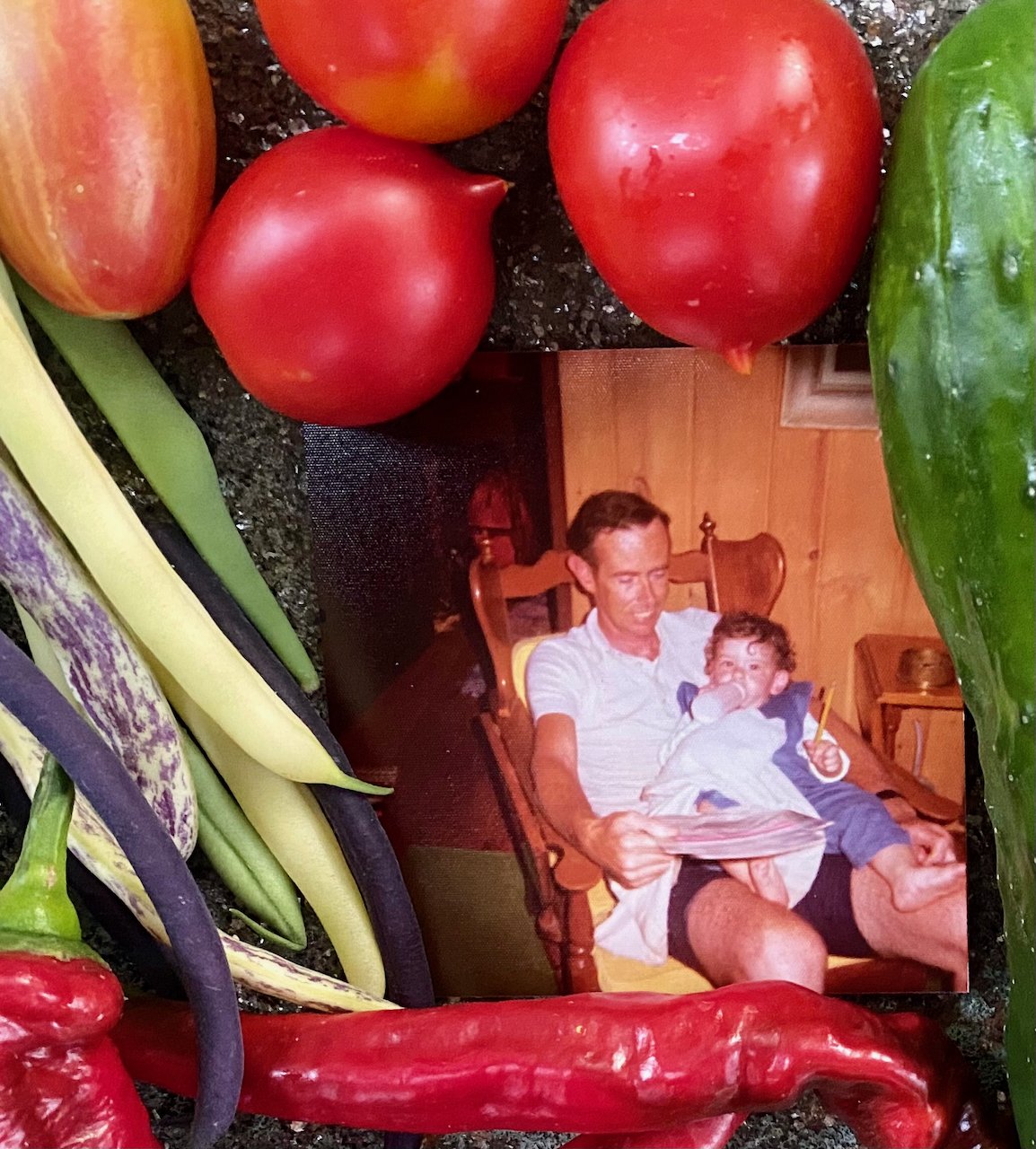
Gardening through Grief
t’s back with a fire. Or maybe it never left. I am feeling so many pangs of sadness and grief, and even just watching these words materialize across my screen has my eyes welling up with big fat tears of loss. I really miss my dad these days.
This is my first spring without him. I had 47 years of his grounding presence. It was not always easy and we worked hard to find common ground between our very different belief systems. It was worth every ounce of grit and pain, because as we learned to respect each other’s differences, our relationship deepened. He was the best listener, and I miss dialing the home number that is no more knowing he’d always pick up on the second ring if he was in his basement office, smoking his pipe, listening to talk radio or classical music.
One year ago, he was fighting and losing a battle to two very aggressive cancers in a terribly frail body. It was heartbreaking, and yet even with his pain and suffering (those are my words, not his as he claimed to not be in pain until the very end), he was here with us. We were able to try to comfort him. We had time to say the words we needed to say. He clung to those months as he internally and bravely faced his mortality. We shared his hope, yet I quickly and quietly came to terms with how terminal his diagnosis was and how quickly he would slip away. Unfortunately, we had already lost another parent to a much less aggressive cancer a year earlier so I knew his was a much dire situation.
I have days where he feels so close. I wake some mornings having spent time with him at various stages of life. I scroll through my phone for old garden photos and find the many near the end last summer as I cared for him in his final hours.
I wish I could call him. He’s not here for my big events this week, like speaking live in front of hundreds of people or being able to hear my interview on Minnesota Public Radio yesterday. He doesn’t know that my book went into a second printing 3 days after it released. He also knew he wouldn’t be here for these things.
The garden has and will continue to embed these life experiences among its paths and plants. The garden is our life story. It’s definitely my life story. Many of the most important and difficult pieces of news have been received there, because, well, it’s where we live for half the year. And its in this bittersweet beauty that the garden becomes. It becomes a sacred space where life is intimately experienced. It’s where I went to aimlessly piece together life after losing a parent, and its with the bitter awareness that he won’t be here this spring or summer that I return, but this time grateful he is no longer suffering.
The uncertainty that surrounds us these days is exhausting (or is it just me?). But when I lean into the wisdom of plants and let their intrinsic rhythms guide my seasons, all is well. I am settling into this late spring with renewed optimism for a beautiful and storied garden season that has already made me appreciate her even more.
-

A Medley of Successions
April is the month of intense succession planting from start to finish for me. Each week is a new season of seeds begging to be pressed into soil either indoors or directly into the earth. It’s a month full of planted seeds that we will eat both in mere weeks and in a year from now, from radishes to canned tomatoes. It’s the height of sowing flowers for me right now too — I am about 4-5 weeks before my last frost here. This year it’s probably gonna be 6 weeks with our luck.
It’s a wild mess inside my head, but I have come to lean heavily on my online spreadsheets I can reference year over year to know what I sowed when the previous year. Even with the spreadsheets, I often feel like a deer in headlights some days, paralyzed by possibility. There are so many possible ways I could spend my time, how do I choose what gets my attention?
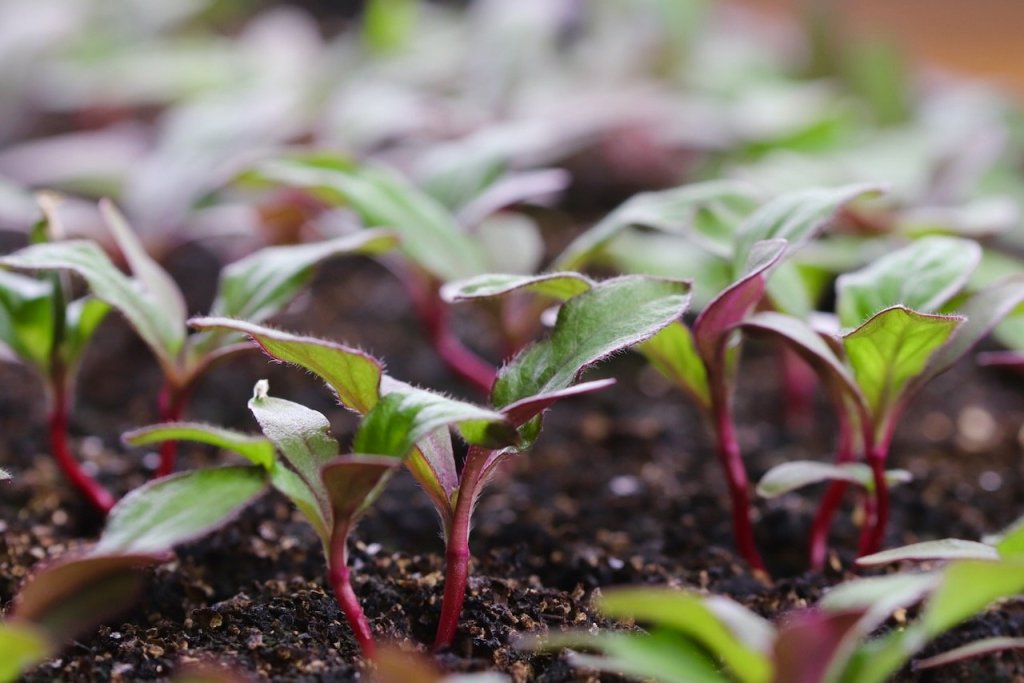
I tend to really enjoy building a garden from scratch, and so in some ways my annual seed sowing is part ritual and part adventure. I lean into my past spreadsheets as a bridge between anxiety and adventure, between overwhelm and curiosity. Many days I find myself firmly planted in the middle of the bridge, unsure of which direction I’m going. I choose this beautiful and deeply present lifestyle because what grows from it literally and proverbially is immeasurably joyful and delicious.
I try to focus on things that have a tighter sowing window, successions who have a niche season in which to thrive. So right now, that’s game on for the tomato seeds — it’s truly now or never for them in zone 4. This is my second and final tomato succession of the growing season. I started sowing two successions of tomatoes a few years ago for a few reasons.
First, it was really to try to push out the harvest to coincide with back to school in early September. Then covid hit and back to school took on a new meaning. But once I made this shift, I also realized it meant fewer tomato teenagers indoors — and that saves space, soil, and energy. It’s a great compromise and the determinate tomato plants I sow in early April ripen starting around mid-August into early September.
Besides these time-sensitive tomatoes, what else am I focusing on this month indoors with seed starting?
Flowers
Early in April, I sow more cool season flowers indoors for an early transplant and some early season color. This includes sweet alyssum and calendula, both of which we grow a few varieties — Rosie O Day, Royal Carpet, and white alyssum and Zeolights, Resina, and Alpha calendula.
I also start to sow my summer flower successions. I start with my beloved zinnia, and then move onto marigolds, cosmos, and nasturtiums. This has already started this week, and will continue next week as well. I am trialing spacing out my flower successions so I can pace both my sowing and transplanting schedule. It’s a LOT of plants to plant and mid-May is full of long days in the garden with flats of veggies and flowers … and lots of pondering.
The good thing about all the flowers I am currently sowing? They can be sowed anytime from now through several weeks after last frost and flourish throughout summer and early fall.
-

Seeking Growth Within the Wait
Welp, we are still in a bit of a holding pattern with our weather. It’s hard to face a season unlike any we’ve known here, fraught with increased anxiety for a path not yet forged. What do I do? Do I do what I’ve done or do I try something different? I’ve already missed my “hard and fast” March 31 transplanting date, and so mentally I am pushing back against the internal soundtrack telling me it’s all over, I missed my transplanting date and I’m a f______.
I could try to plant my brassicas out between breaks in the rain this week if I get a wild hair, but I’d probably rather be warm and toasty by the fire. It can feel like we are behind or maybe stagnant when year to year fluctuations derail a tried and true ritual. But I have started to reframe this as something much more potent — and positive.
What if the act of suspended waiting is helping us bring forth something greater this spring? Think of the amount of time deciduous trees stand tall, suspended in time. They are not stagnant, they are alive and well. They require this dormancy to thrive. Our black walnut trees, a nuisance to the garden, are our shortest-lived trees within the growing season. They leaf out last in spring and drop their leaves first in autumn. I think they may be my new favorite teacher. I for one do not dedicate enough time to rest. Rather than being a deciduous tree, I think rest needs to be more embedded into the fabric of our weeks. (To that end, I will start to take every Sunday completely offline, including posting to the Guild, a practice that will regenerate creativity that dampens with too much time spent plugged in.)
We don’t have to be all the things or do all the things to be everything. We need to work to redefine what it means to be successful in our gardens and in our lives. And softening rather than grinding is the path that’s calling to my mind, body, and soul. I hope you’ll join me in finding ways to soften so you too can grow and flourish.
And yes, I derive extreme joy in pushing the season, so will continue down this storied path I so enjoy traveling. And this year, I am soaking in what it means to delay the start. I look to the trees and the dormant life all around us, patiently waiting their time. I truly bow to their wisdom to endure half their life in suspended animation.
I am still confident the lesson of this spring is that transplanting my earliest starts a week later will not mean a delay of harvests, but rather will mean there are multiple paths to successfully and dependably harvesting food by late April here. It is potentially refining my sowing dates ever so slightly, though early sowing is as much for low tunnels as it is for me to have lush plants to tend and seedlings to thin and nosh.
Whatever the lesson about to unfold here, it will only expand possibilities for me in future seasons. This is the potency of gardening, inviting the lessons to permeate our beings and help us evaluate our entire lives. The garden grows so much more than just food, and for that I am tearfully, heart-achingly grateful.
How are you working on reframing this bumpy start to the growing season? Comment below.
-

Tunnel Vision
It’s that myopic time of spring when the warmth and sturdiness of my low tunnels envelopes my thoughts, especially on brisk and stormy days. I suffer from tunnel vision.
We have been using low tunnels since 2004 in various applications, necessitated by the move from zone 8 to zone 4. At first, we secured the schedule 40 PVC to the outside of our 2×8 raised beds, with soft but beautiful copper conduit fasteners. Then, when we moved here and went in-ground, we hammered rebar into the ground and thread the PVC into the rebar. Now we are back to raised beds and our first attempt last spring with low tunnels for our tomatoes was met with disappointing results: despite the tunnels the frost still found its way inside and took out many of the plants.
Now it could be the lifespan and quality of the home improvement store plastic (I hope to invest in actual greenhouse plastic for next growing season), but it is likely also the way we tried to seal them. While frost can find its way into my brassica low tunnels without much worry, if I am to successfully get back to transplanting tomatoes in late April, I really need to dial in how we secure our low tunnels. So this spring we are working with a slightly modified design and new materials: low tunnel clamps and metal EMT conduit instead of PVC.
I put together this video to share with you our new approach. This is very much a real time learning process, and I expect we may make adjustments to refine this. One thing we toyed with was putting a stake in the ground and stringing parachute cord up and over both sides to really lock down the side walls so no air can penetrate. I will continue to share and modifications and the results with you as we head into April, but so far we are really happy with the strength and durability of this new design. Hope you find inspiration in these videos and think about ways you can add weeks to your spring growing season too!
And, here is a video of how I setup low tunnels for our in ground beds for the first five years here:
-

Hurry Up and Wait
I am achieving a new milestone this week: my starts, for the first time, won’t be hardened off and ready to transplant by March 31.
This is a blow to my pride, but it likely won’t amount to a delay in spring harvests. Here’s why.
When I push the early season, I am asking the plants to tolerate super erratic and often cold spells under the row cover. The temperatures are sometimes surviving temperatures for days on end — not thriving conditions. While they can make it through extended periods in the low 40s under cover, it’s far from idea growing conditions of 60-75 (for brassicas). So I am working to compost my “end of March” pride this season, knowing there’s just not been a good window of time in which to harden these seedlings off yet. I am not even going to begin the hardening off process until after this mass of cold air pushes on by us later this week.

It was 12F when I woke up this morning, too cold even for seedlings under low tunnel if I want them to do anything other than survive. Starting Saturday, I see a string of good temps for hardening off. A low of 25F with covered seedlings is totally feasible and does not worry me; it’s just we didn’t have warm enough days recently to be able to properly harden the seedlings off.
I don’t expect to transplant my seedlings under the tunnel until April 8 or 9. Given last year’s raised bed construction, that might be the timeframe in which I transplanted as well, and it worked out fine. In fact, the extra week may prove inconsequential to how early we harvest relative to past years.
Heck, this snafu in pushing my season might prove to me that waiting an extra week — delaying my earliest sowing and subsequent transplanting of starts — is another viable path to achieving bok choy in April and Tiara cabbages and kohrlabi in May. I know this to be true for my radishes. While I have radish seedlings under row cover right now that have germinated, when I sow more next week they will be met with happier temperatures and thus mature faster.
What often happens is the first and second earliest plantings end up maturing around the same time. The earliest planting is really a deeply personal celebration of all that spring offers. It’s for me to get my hands back into the earth. To witness the awe and wonder that every single seed possesses, particularly the resilience of cold season foods.
All that being said, it is really mentally challenging to continue to be in this state of limbo where so many plants would benefit from starting the hardening off process yet my high temperature today is 32F (0C), so it’s just not feasible. I am taking this extra indoor time to be sure my next rounds of succession planting — more flowers, brassicas, beets, and lettuce — is planned out so that when I do mix up my next soil block mixture, I’ll simply follow my sowing legend.
Once again, the garden is speaking to us. It’s asking for our extended patience this spring as we endure unseasonably cool temperatures. I know I need more practice in patience, how about you?
Comment below: how is your early spring is going where you grow?
-

Embracing the Flavors of Spring
I know, we all live for the garden tomato. Okay, maybe not every one of us, but it is the most adored fruit of the home garden. And I do get it. But I also know that for so many of us, tomato season is a completely abbreviated concept of a real growing season if you take into account the other months in which food can grow.
I believe everyone must think beyond tomato season, because there’s so much more to celebrate and enjoy when we reach for the right seeds at the right time.
It has taken me well over a decade to come to this place of acceptance. The first 5 years of intensively gardening in Minnesota were definitely skewed mostly toward my frost-free growing season. But slowly I woke to the nagging question of what if.
Accepting that in order to fully enjoy my climate I must lean into foods that grow well in each season is the biggest epiphany of my gardening career. With that mindset shift comes the opportunity to cook with novel vegetables. And yes, that means you may need to adjust your palette to what homegrown tastes like. Mizuna and mustard greens are not a cucumber. Arugula does not resemble a green bean except maybe in its slight pubescence (fuzziness) on your tongue. And radishes, while also mostly red, are distinctly more flavorful and crunchy than a cherry tomato. They all would complement a tomato in an amazing garden salad, but their seasons don’t always overlap that well.
It’s in these bold flavors that spring prevails (and fall, too, but that’s a tale for another month). And for cold climate growers, it is the act of capturing these weeks of the early season that truly fuels our minds, bodies, and souls. It’s the most important early spring endeavor for me to kneel at my beds, muddy my knees, dirty my hands, and breathe in the new year.

One week ago, this was under a blanket of snow. Now, it’s thawed out and growing. Spinach is a garden flavor that has won my heart by way of showing its resilience to me. I confess I have two bags of frozen spinach from late last fall I still haven’t consumed, yet the plants I left uncovered all winter have been revealed and are putting on growth daily. This is an annual leafy green that survives a Minnesota winter – uncovered – and then wakes up and grows in March?! I mean, do I need to explain this any clearer for you to understand the magnitude of such foods in our gardens at this time of year?
I am a firm believer in doing the least amount of work for overwintering vegetables. I am not interested in tromping out into a frozen garden, one that can often be locked shut by snow and ice for a few weeks in deep winter, to have a harvesting adventure. I am totally comfortable enjoying our easily accessible root cellar vegetables, which include the likes of bok choy, chinese cabbage, green and red cabbage, and brussels sprouts for months in winter — in addition to potatoes, carrots, daikon, kohlrabi, beets and more.
And while spinach and arugula harvests are in the foreground of the garden season, head lettuce, a family favorite, is way out on the horizon’s edge, presently taking shape under grow lights. It will soon be hardened off and low tunnel ready, though won’t make its way to our plates until June. Bok choy will happily mind the gap between overwintered spinach and head lettuce season.
As I layer successions of leafy greens of all kinds this time of year both by direct seeded and indoor sowing, I am maximizing the options for meals in the coming months. I hope you enjoy building your own succession garden of your favorite spring flavors.
-

Sowing Hope: the Seeds of March are the Radishes of April
Happy Spring!!!
Every year for the past five years, I’ve continued to ask the question, How early is too early to start sowing seeds directly in my soil?
And I want each and every one of you who’s reading this to start asking yourself this question and testing it in your gardens too. Because the answer that keeps revealing itself is that my season could be even earlier than I think — still — even after all my years of experimenting. This is why I love to garden. The learning is truly perennial, and novel each year. Even though I push my zones as hard as I can with as little extra resources or work (I really hate working in the cold, it wreaks havoc on my fibro joint pain and sets me back days), I continue to wonder how much earlier I could be sowing things because I keep sowing things earlier and it keeps working.

The seeds of late winter soon to become the food we enjoy in April! I sowed my earliest uncovered radishes, arugula, cilantro and baby bok choy on March 19, the last day of winter. I had a terrible migrane and it was all the gardening I was able to accomplish. It got me moving, outside in the fresh air, and renewed my spirit even though my body was aching. This is not the earliest I’ve direct sowed seeds, but it is the earliest I’ve direct sowed seeds uncovered. It’s a wonderful experiment and I am determined to not cover or coddle them. I want nature to show me what’s possible. The soil temperatures were reading well above 50F even deeper than an inch, which means, with a little luck, now that the dark compost-topped beds are snow free, they should continue to warm every day this week. We’ve got critical mass.
You see, four years ago I sowed seeds on March 20, the vernal equinox, and I thought I was pretty bad ass for doing that under my low tunnel. The next year it was warm early so I bumped it up to March 15 and felt utterly jubilant because there was still feet of snow around me while the soil inside the low tunnel was in the 40s. Last year was insanely warm early and I went for it on March 9, again under the protection of our low tunnel. That was just a little over a week after we covered the bed with our plastic. That just sounds ridiculous even to me.
But that’s just the thing. Seeds want to grow. And when we sow the right seeds at the right time, they will thrive.

My direct-seeded ambitions for this week include this lineup: arugula, radish, spinach, mustard greens, & cilantro. Now is the time to sow ALL our favorite tasty greens, quick radishes, bunching onions, and heck, while we’re at it, let’s soak our peas and toss them into the ground too. I usually don’t sow my peas until April 1, another mentally rewarding early season tradition that reliably yields peas for us in plentitude by mid- to late June. I decided tonight I’ll overnight soak some peas this week, and sow them under a light row cover to give them a little head start and protection. We are dipping into the low 20s later this week, and so they will definitely appreciate a little row cover.
You see how I’m just sort of winging this year to year? I study my forecasts, take soil temperatures with our meat thermometer, and let my own curiosity and energy levels drive what I focus on. Each year is quite different, with new foods proving they are the cold hardy champions. It’s a real joy to grow alongside the seeds I tend, and I hope you are energized for a bountiful spring garden to kick your season off right.
What’s inevitable is all these foods will be unhappy when heat waves descend. And, my garden is rather bare and foodless right now, so space abounds for these quick foods. Even if my garden were smaller, and probably especially if it was, I would be implementing this strategy. We could easily carve out space for our tomatoes in May if our bok choy, cilantro and arugula was still producing, as those plants live at different heights and can cohabitate for a little while.
Like I said in my book, may the early radish win! Here’s to April Radishes.
-
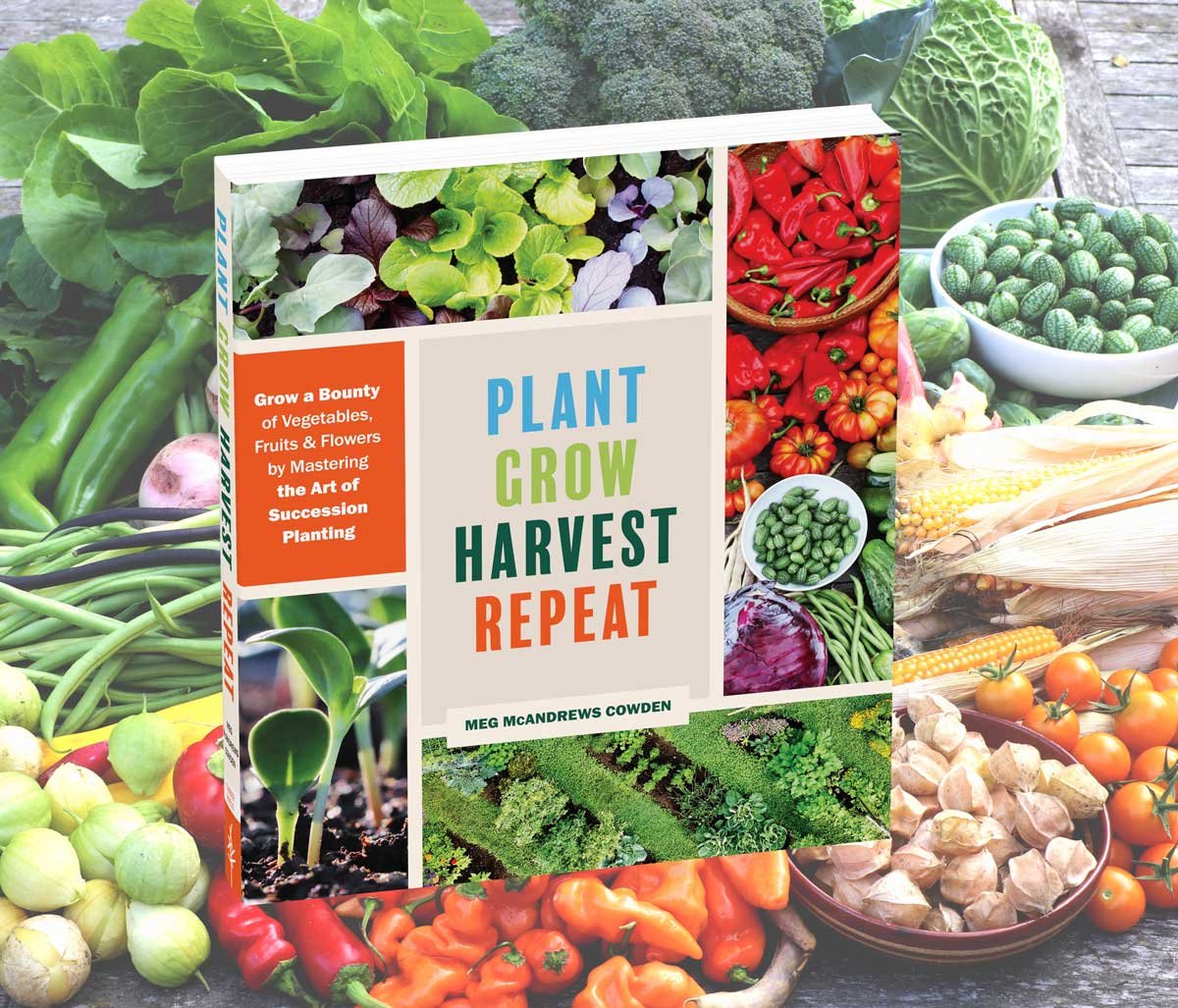
Bittersweet Book Birthday
As many of you know, 2021 was a very difficult year for me and my family. My dad was diagnosed with stage 4 head and neck cancer (two types) in December 2020. I knew it was a death sentence; he was determined to fight it. I knew in my heart that fighting it would result in the same poor quality of life as not fighting it. I hate that he suffered, though he denied he was ever in pain until his final weeks, but respect his decision to want to beat the sh*t out of cancer. He left us six months after he started treatment. It was a whirlwind of care and the daughters are just starting to move forward with our lives after the trauma.
I was with him when I turned my book in on Feb. 1, 2021 to my editor. I was still helping care for him and take him to treatment 2 weeks later when my editor wrote back and told me I had written “a magnificent book”, one he believed was “destined to become a classic”. I read this aloud to my dad in the kitchen, the man who made it almost 83 years without owning an email address, computer, or cell phone. This was an intermediary space, some of the rare daily moments when he was on his feet, navigating the commute between the bathroom and the couch. He tipped his head back, rolled his eyes, and gave a joyful, exasperated “whoa!”. I don’t live for my parents’ pride and acknowledgment, but by that time I knew he’d probably be gone before it came out.
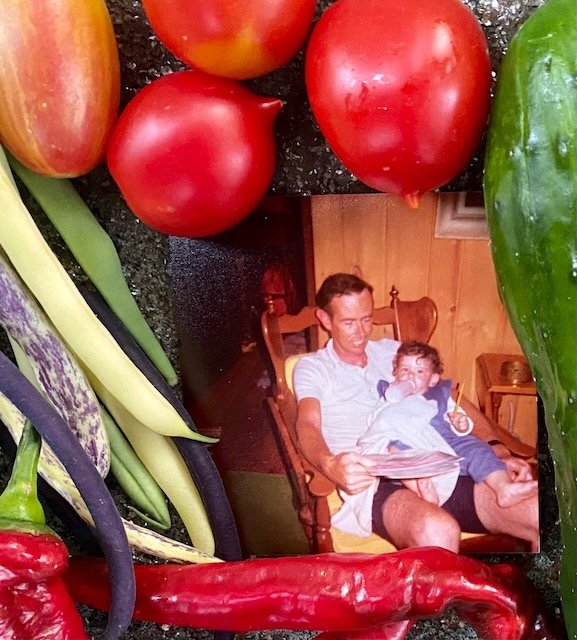
My dad gardened every summer. Vegetables were his domain. It was for him, like me, some of the best outdoor solitude in summer. I’m sure he processed a lot among his vegetables, though we never much discussed it. Compounding the trauma is to understand that we had already lost part of our mother years earlier. She has memory loss, and by the time he fell terminally ill she was much farther along her dementia journey than we had realized; Dad was adept at keeping secrets. He protected her from us, which in turn allowed him to let her live as her independent self as long as possible. In hindsight it was both brave and reckless, and yet also loving and kind.
Today, the book comes out, and I don’t really have parents to celebrate it with. For some reason, this feels significant, arriving at this massive lifetime milestone without parents to cheer me on. It feels a little lonely, I’m not gonna sugar coat it.
I was with my parents when this book concept germinated, on the same property where they honeymooned, where my dad’s mom spent time, and where many wonderful and strong female ancestors frequented. It was an auspicious place for the book idea to take form, and I always have that space and the fact that my dad and mom were among the first people to hear me think through this idea out loud. It felt like an intergenerational blessing that the thesis for this book came to me in this location.
And I’ll never forget it. At that time I had a book deal in hand from a smaller publisher, one destined to publish in February 2021 — a full 13 months sooner than today. And, at that time, I was invited to present book ideas to Timber Press, which was the idea for a book about succession gardening that became Plant Grow Harvest Repeat (my initial book title was Succession Gardening, but the powers that be struck that down and I then I came up with the current title). I shared that their books are superior in quality and the tradeoff is that the process was a full year longer. My dad did that same eye roll and laugh, but this time it was, “2022?! I may not be around by then.” It was as if he knew the cancer was brewing inside him.
So while this is a massive celebration, tears are definitely part of the day. Tears of joy, tears of sadness. Because, the biggest secret I’ve come to learn over the past two years is that as children we are permitted to live wholly in joy or despair, but as we grow and mature we realize that every moment is an amalgamation of all the senses and emotions.
-
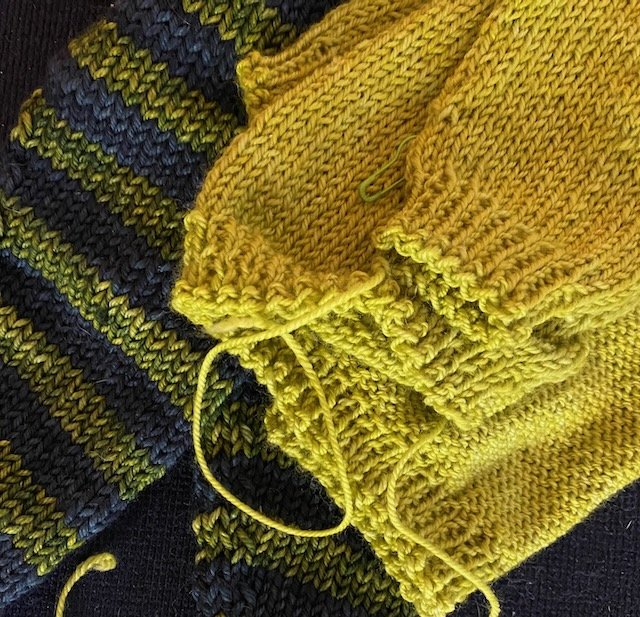
Weaving the Seasons Together
As I take my time weaving the ends of the bits of yarn into this baby outfit I’m knitting for a family friend, it reminds me of the garden so much. These two activities are some of the best ways I know how to care for myself. Let me explain.
Both these crafts busy my hands, each at a different time of year and thus inviting a different kind of attention. With my hands moving, my mind is free to flow and chill. And it’s really when my best ideas materialize. My memory is deeply tied to visual cues, so much so that every time I drive through this one intersection in south Minneapolis I can remember the password I set for my insurance company. When I need to remember it, I remember the billboard in the northeast corner, because that’s what I was looking at when I said the password for the first time. It’s weird, maybe, but it’s how my mind works. I digress, sort of.
These are the final strands of yarn I’ll putter with for probably six months or more. I am weaving hopes and dreams and the framework for the season ahead into this baby cardigan. I love how the seasons and crafts overlap and support one another in this way. The quiet of winter is where the garden really flourishes. This is why I crave knitting in winter, because not having the earth to put my hands into creates a massive crater in my heart. Life is unbearable when my hands are idle. Life is full of hope and beauty when my hands are working. My hands are already finding their way into soil and this passion will soon supersede the beloved and prized winter knitting needles.
As these knitted gifts take final shape, my garden is becoming in my mind. I work to remember the lessons of last summer: plant more zinnia randomly around the garden, not just framing in our original garden patio; ditch peanuts, because rodents; grow more sesame (where will they go?? they are a major landscape statement!); where will the tomatoes get rotated to this summer, and how will their placement impact the garden long garden views? (no blocking the patio view from the garden entrance at the top of the hill); will I be strong enough to take a year off cucumbers because of the fungal pressure we’ve had the past several years?
As I spend time mentally flying over the garden piecing it all together, my hands are pouring all my love and hope into this article of clothing. Soon, the tables will turn and my love will pour itself out all over the garden, and I’ll marvel at how it all mingles, erupts, produces, and nourishes me.
-
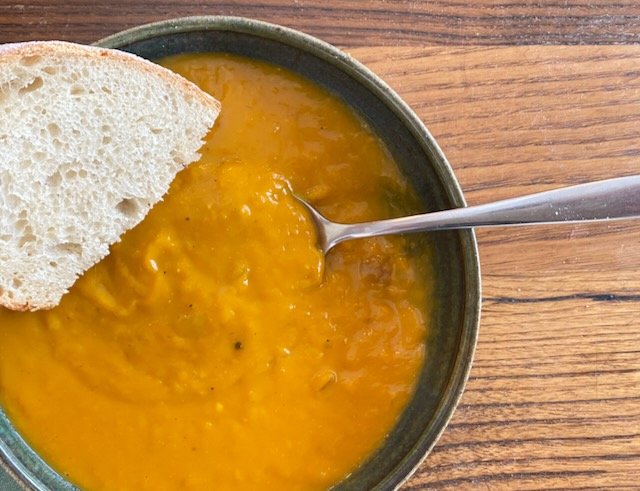
Roasted Butternut Soup
It’s that time of winter (or spring for those lucky enough to live by the meteorological seasons). I am faced with my final half dozen winter squash and they are talking to me every other day warning that the earth is starting to call to them.
Truthfully, I am the sole winter squash lover in our family of four. But I so very much love a roasted squash soup. It’s simple. Comforting. And because the flavor happens largely in the oven, it’s also a very quick meal to actually “cook”. Let’s dig in.
Yield: 2 quartsRoasted Butternut Soup
Ingredients
- 1-2 butternut squash (or the equivalent of a 3 lb winter squash), oven roasted
- 2 cups onions, finely diced and sautéd in olive oil
- 2 tsp garam masala
- ½ – 1 tsp curry
- 1 tsp sea salt
- ½” fresh ginger, finely grated
- 1-2 cups broth (I use chicken broth; use what you prefer)
- 1 can coconut milk
Instructions
- Oven roast squash face down with some water in pan at 350 for approximately 1 hr or until soft to touch. Let cool and scoop out.
- Sauté onions in olive oil until softened 5-10 minutes.
- Add spices and salt, and cook one minute more.
- Add roasted squash and bring to a simmer.
- Add broth, one cup at a time, to desired consistency. Remember the coconut milk will further thin the soup.
- Blend to desired texture (sometimes I don’t even bother if I’m in the mood for chunky soup).
- Grate ginger into soup. Add coconut milk. Let simmer 10-20 minutes, stirring occasionally.
Notes
Serving suggestions: I will sometimes poach an egg and add to this. Always goes well with a slice of fresh sourdough bread.
-
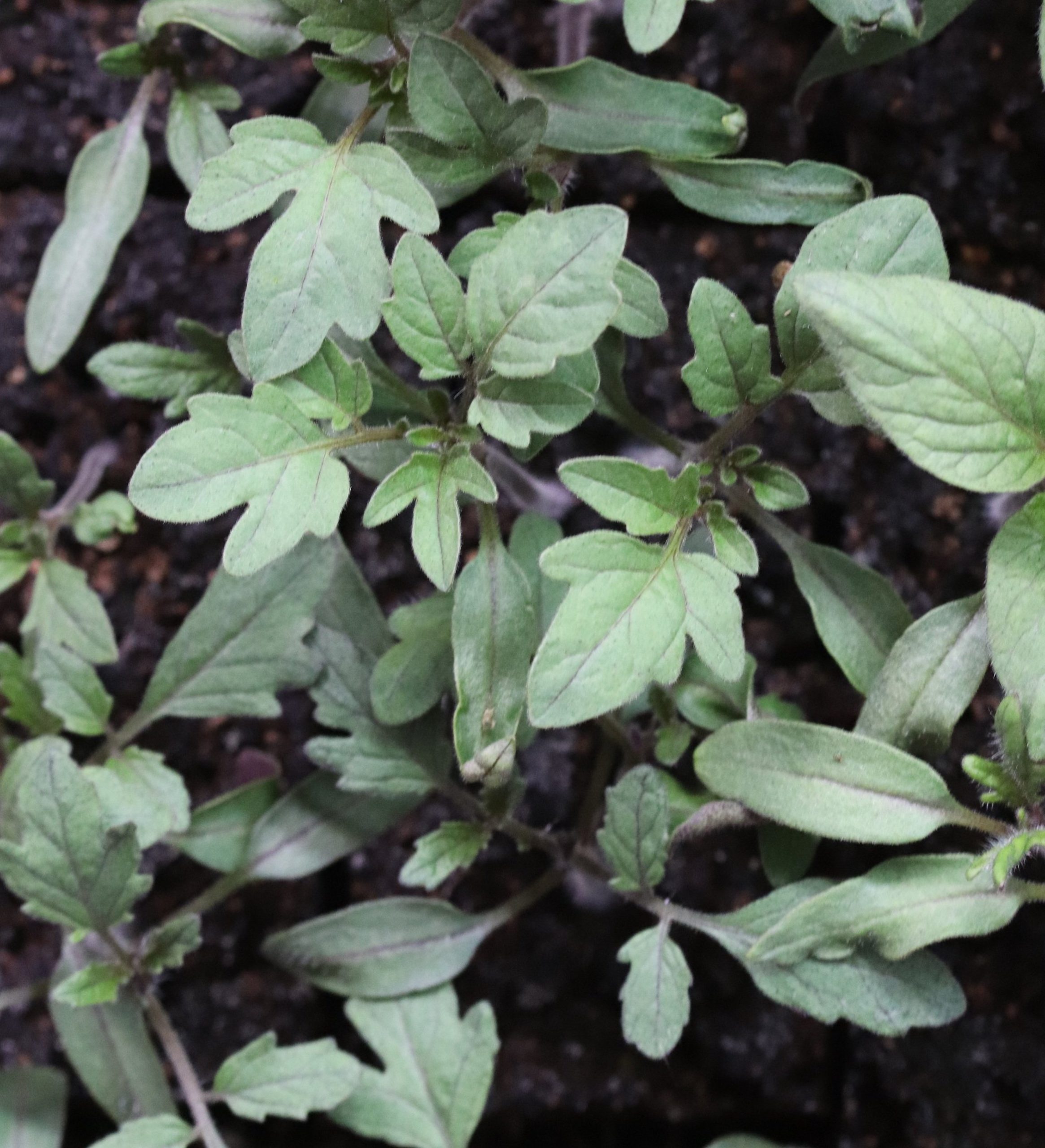
How I Select my Tomato Varieties
Accepting there is neither room nor time to grow them all is the first step. Sometimes it’s hard to move past this. I get it. This is the annual plight of a home gardener.
In 2017, we grew a modest tomato garden. To some of you, it wouldn’t even qualify as growing tomatoes…. I think we had 6-8 plants in total. One each Sun gold, Brad’s Atomic Grape, and Cherokee Purple, plus two each San Marzano and Amish Paste. It was, in hindsight, a perfect succession of tomato goodness commensurate with a time in our lives where eating tomatoes was an exception.
Fast forward to the age of being influenced by the rainbow baskets I didn’t know I needed. But wait, do I really need them? Ah, can you hear my exhale of relief as I remind myself that I don’t actually need them. I mean, we tell ourselves we need all the tomatoes, but I’ll be honest: the pounds of cherry tomatoes I dehydrated last summer are mostly still storing in containers waiting to be needed in a future tomato-based dish that needs a little extra punch of flavor.
I could have grown less tomatoes, and more of the right ones. But it always comes back to this time of year and the seeds in hand and the yearning for those bursts of flavor only summer sunshine can summon on the vine.
Flavor is my number one priority; productivity a very, very close second. So, I am growing some tomatoes again that surprised me last year, like Dragon’s Eye. It’s a subtle tomato, but it pumped them out in quick succession. It was a workhorse for us, and we are tomato sandwich enthusiasts from July – September, and this heirloom was definitely a sandwich stuffer. These are the kinds of tomatoes I am searching for, not only for one year of productivity, but for multiple seasons of consistency. So this second year is its true test: was last year an anomaly, or is it consistently productive across variable seasons? (My 2022 tomato lineup is forthcoming later this week.)
Within the flavor and productivity buckets, I try to bring in as much diversity as possible —that is, represent all the shapes and sizes and colors. I am drawn to a red tomato, to be honest, so if I grew all the tomatoes I think I’d love, I’d have a monochromatic basket. I know this because I have to actively assess the color palette of my grow list.
A few years ago I wanted a rainbow of cherry tomatoes. I achieved it with Sun Gold, Colombianum Wildform, Blue Berries, and Yellow Berries. I was sorely disappointed in the flavor of latter two, but boy did they produce prolifically and look good on glass. It was that 2019 season that really halted my enthusiasm for trying too many new varieties each year. We had a lot of tomatoes that were tasteless. like, a LOT of them.
Since that season, I am much more comfortable growing the same tomatoes year over year, in particular I have really solidified my beefsteak list and am growing many for the fourth year in a row. I’m committed to them. I limit newbies to one or two a season, mixed in for good measure.
Sometimes change is forced upon us, like how I can’t find one of my favorite plum tomato seeds (Plum Perfect) so I had to try a new variety this year. Sometimes sticking with what works is its own kind of strategy, like growing our own comfort food.
While I’ve sowed most of my tomatoes, I will sow more again in a few weeks, so if you haven’t finalized your grow list yet, fear not! There’s still time, no matter where you grow.
-

How to Use My Sowing Guide
In an effort to reduce FOMO (fear of missing out) in all aspects of our lives this growing season, I am committed to helping you create a garden that works for you; a growing list that excites and motivates you; and a space where the information you need will be easy to find. In that vein, I want to spend some time breaking down my thought process for my succession planting sowing guide.
I imagine most of you reading this have my new and completely exhaustive succession planting guide. The pressing question even I have from time to time is, “Am I sowing things early enough? Am I too late?” Truly, I even wonder if Meg-of-season’s-past did it differently, because she probably did. But then I stop and remind myself that this is title a GUIDE for a very good reason. Because that’s all it is.
This most recent sowing guide — and its deconstructed, seasonal siblings that live in various chapters throughout my new book — are launchpads, not mandates. They are invitations, not directions. Spoiler: even I deviate from them from time to time. Like my head lettuce and beets that could have been sowed a week ago? Yeah, I still haven’t even gotten a tray of soil blocks ready for them (it’s the evening of March 7 as I type this).
Why am I “behind” and why am I nonplussed? Because time, friends. Time. The earliest season transplants are as much a testament to faith in warmer weeks as they are for earliest harvests. Will this “delayed sowing” mean a week later for harvests? I actually doubt it, because if anything, I will transplant them a week later with slightly warmer soil and air temperatures and they may acclimate and establish quicker.
Click the image for a downloadable version of the sowing chart. Note: it prints on 8 1/4 x 14” and is the sowing guide I have been mailing with all pre-orders (and proof of purchase). If you haven’t gotten yours yet, shoot me an email.
This sowing guide also extensively reflects my need to enthusiastically focus on my mental health in winter. And that involves being ridiculously excited and organized with planning and executing my successions — at least, at the beginning of the season.
I have been methodically studying, pushing, and recording the growing season of many of the vegetables I love growing for the past six years, and each year I have revised this chart. These charts represent the most accurate and expansive windows of time for each vegetable. I focus on the first sowing, so these dates are the earliest possible date you can sow them to push the season. They are not the latest dates possible to sow them.
So let’s take something like cabbage where I say to sow them starting in the end of the February and again in the end of March. What this means is you can sow cabbages indoors for transplant anytime in that window, from late February through late March for spring planting. It is a wide-open continuum: sow seeds anytime within that timeframe and you’re golden. You don’t need to have sown them yet, and you can sow them anytime until the end of March (or, warmer climates, 4-6 weeks before your last frost) for an early summer harvest.
I’d also say, you’re welcome to use me as your “reminder” of what to sow. I know many of you do, and it’s frankly endearing. Because I do tend to push the envelope here, there is almost always “time to sow” in warmer zones when I’m sowing, and certainly in cooler climates too.
What are you sowing in your garden or seed trays right now? As I said, it’s beets and head lettuce (tomorrow, I swear!) for me this week.
Has Anything Changed?
Have I adjusted sowing dates? How closely do I need to follow the suggested times in this calendar since publishing it in December 2021?
All you have to know is that the Green bars for sowing indoors or the brown bars for direct seeding indicate the earliest sowing I will attempt. If there are more than one succession, basically the space between those two successions is a wide open field for sowing. While I often do one tray every four weeks for brassicas, for example, starting in late February, I could have sowed it the second week in March and the second week in April, too.
For peppers, while I do sow some in mid-February, I also have been known to sow them in mid-March. As mentioned above, these are guidelines, and they are to be followed for the earliest possible harvests. If early is not your game, I’d start in March or April for your first sowings, as this will likely mean, for many of you, low tunnels will be unnecessary.
Let’s Share Our Experiences
I know many of you have been using this guide for years as such — simply a guide. And you’ve created your own sowing charts, spreadsheets, and methods for your particular growing zones. I’d love to see how you’ve made it your own — what ways are working for you to customize it to your growing zone and favorite veggies? The beauty of this community is harnessing the collective creativity.
-
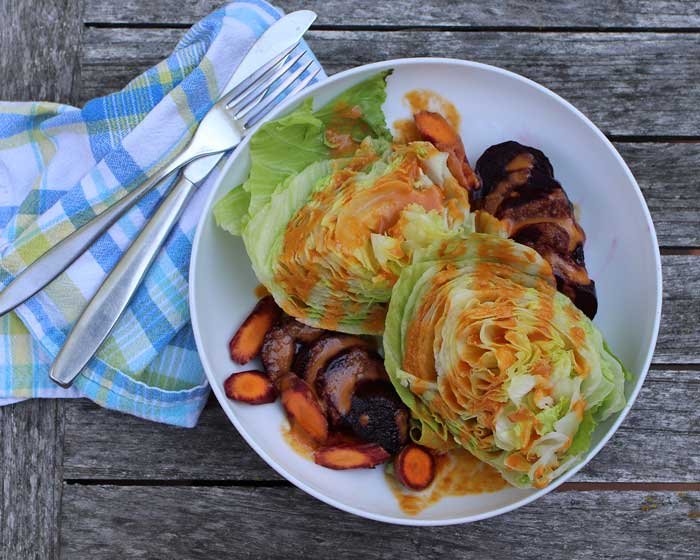
Carrot Ginger Dressing
I could drink this dressing like a smoothie. No, really. This is the essence of fresh. It has the perfect combination of tang and sweet, and some days I pour some into a cup and dip cruciferous veggies into it in lieu of slathering over leafy greens.
Like with all of my dressing recipes, there is some wiggle room — like how much carrot you shred or how generous you are with your ginger or if you actually measure your onion or not.
I confess I rarely measure my carrots out, I just go for it. Some days it is more carrot-y and others less so.
Yield: 1 quartCarrot Ginger Dressing
Ingredients
- 1 cup neutral oil (avocado oil works well)
- 1/2 cup rice vinegar
- 1/4 cup tamari (or soy sauce)
- 1 tablespoon honey
- 1 tablespoon freshly grated ginger
- 1 1/2 cups shredded carrots (about 2 carrots)
- 1/3 cup diced shallot
- 1/2 tsp salt
Instructions
- Place all ingredients into a blender and puree until smooth.
- Make ahead one hour to let flavors meld.
- Stores in fridge for up to one month, though it won’t last that long.
Makes approximately 1 quart of dressing.
-

2022 Garden Goals
My focus for 2022 is to live as simple a life as possible, both in and out of the garden. Perhaps that sounds ambitious and misplaced given my first book publishes in March and I’ve got other projects in the works, but I do believe that I can mute the noise that tends to distract me and create negative tension in my daily life. I look forward to sharing my journey with you as I strive to live a more balanced life.
This yearning has also led me to really try to grow what we know this year. To take inventory this winter of our root cellars and refine our growing space to continue to dial in the seasonal needs of our family of four. It’s the third week of January and we are still enjoying Brussels sprouts, Chinese cabbage, red cabbage, carrots, daikon, radishes, kohlrabi, turnips, beets, potatoes, onions, garlic, winter squash, popcorn, cornmeal, dry beans, sesame seeds, & ginger — plus canned tomatoes, dill pickles, roasted & frozen peppers and eggplants, and more. We are supplementing our vegetables a bit this time of year, but minimally, trying our best to build menu plans around the food we have stored from our fall harvests. It’s a fun and rewarding exercise in culinary creativity and living in the moment.
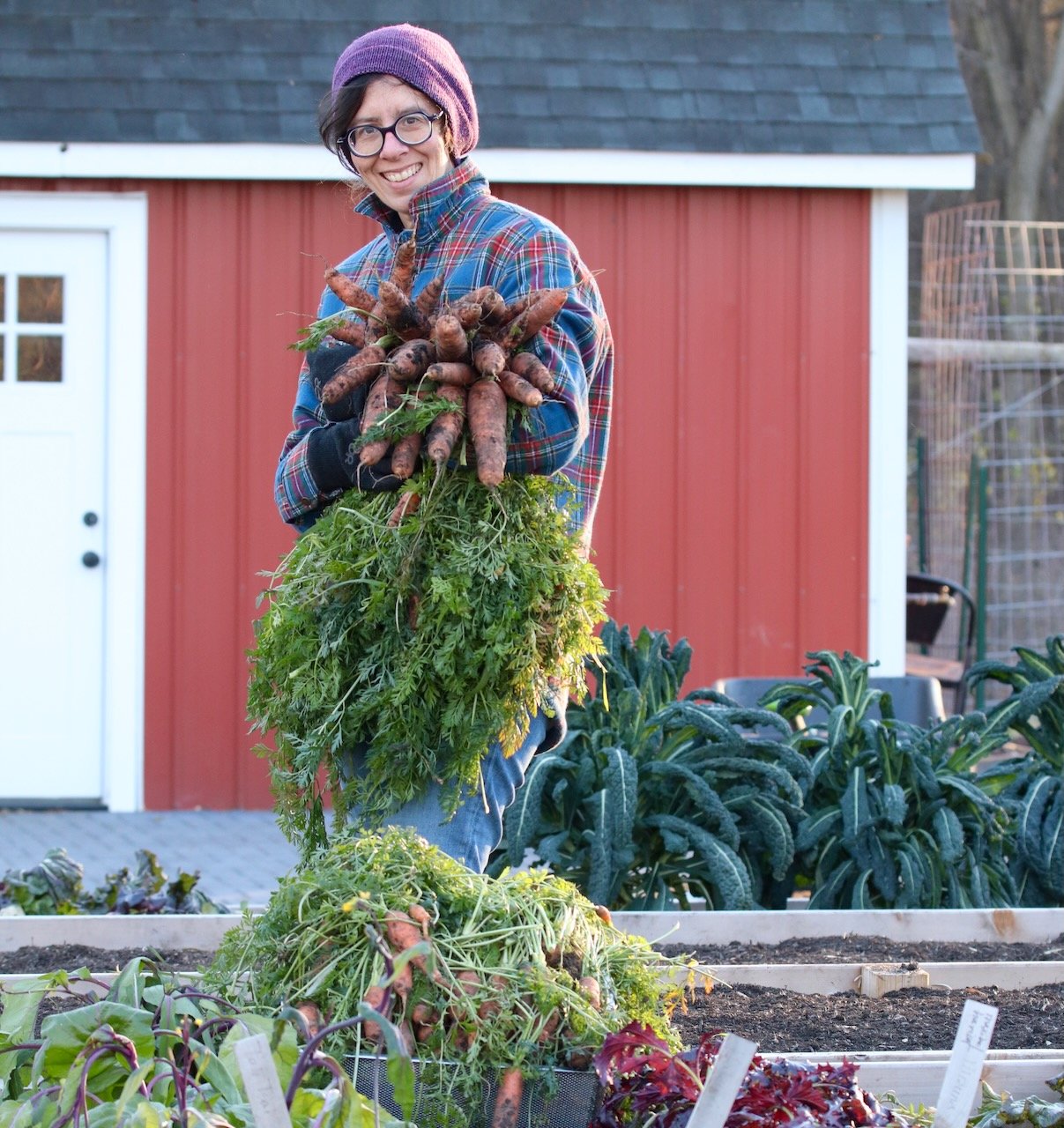
Never enough carrots. I hope my summer travel schedule is not repeated this year and I can focus at the right time to thin our summer carrot garden/root cellar beds. We will surely run out of carrots before May this year. Our goals are to continue to grow what we know. I am not growing new-to-us vegetables this year, with one minor exception: red-veined sorrel. I’ll tuck this into our herb garden and see if it will perennialize for us.
We want to grow more flour corn for nixtamalizing and making our own tortillas. I’ve ordered seed from Native Seed Search to grow here. Being latitude-sensitive with seed hailing from much farther south, I am cautiously optimistic it will yield well for us and I can save seed and keep growing it in our northern garden. I am looking forward to this slow food and growing exercise.
One of the anchors of the summer garden and winter menu is tomatoes. Currently, the tomato garden plans are in flux, but we may plant an overall smaller garden. I think we had 28 tomato plants last year — about half were slicers or cherry tomatoes. I know tomatoes are everything to so many, but I’d rather have more beans for more vegetarian meals come winter. Because winter is long and I want to feed us for as long as possible.
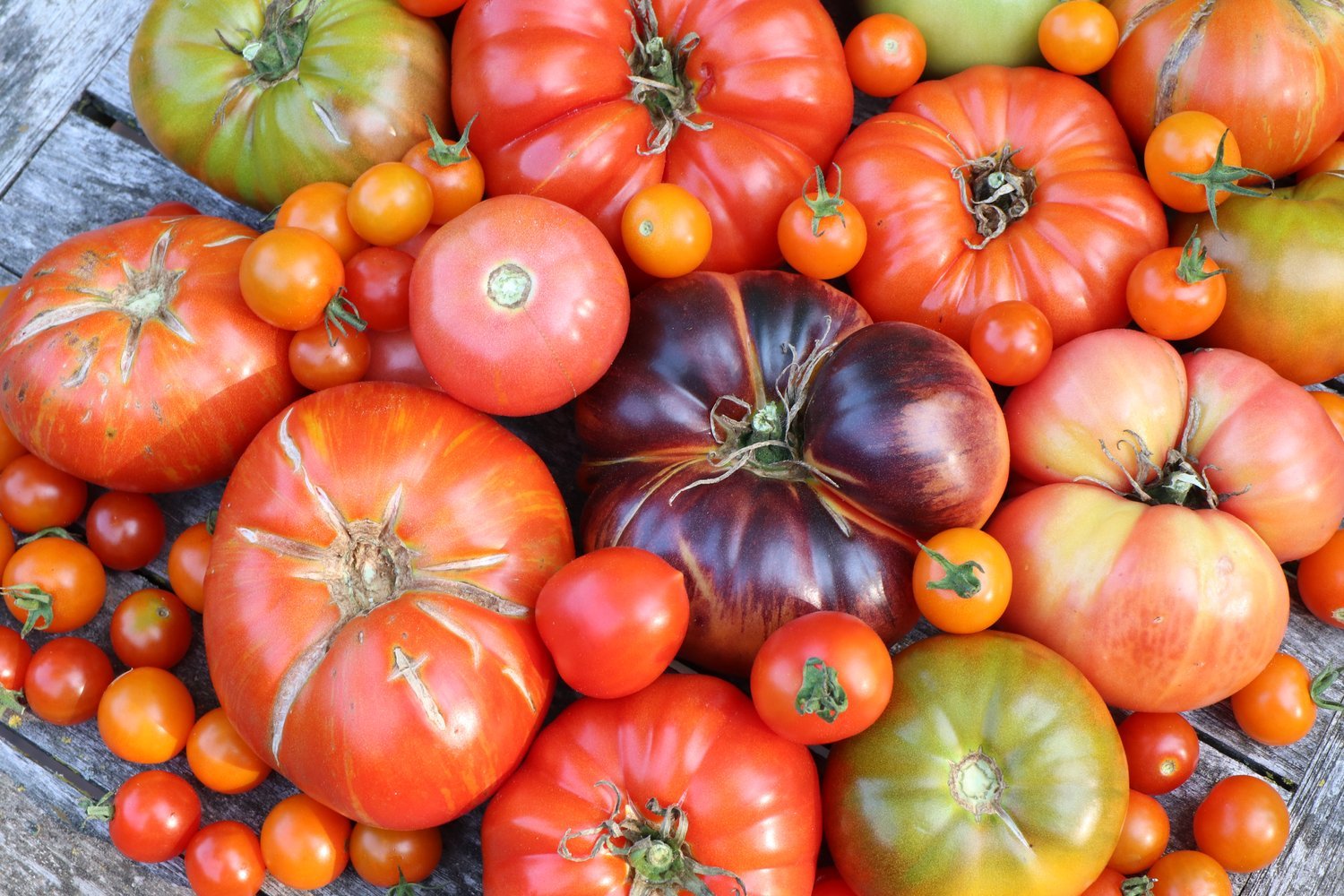
Almost all the varieties seen here will make a comeback this summer. Narrowing down the tomato varieties is one of the most grueling winter tasks a gardener faces. I am resisting the urge to allocate space for flashy Instagram photos. Instead, we are going to increase the number of indeterminate paste tomatoes for saucing as they were the big winner last summer of our tomato garden. More on tomatoes in a separate post very soon!
We are going to drop peanuts for 2022 as the rodents destroyed any hopes of even a small harvest — they beat us to the harvest, and I’m not even sure they were mature when they started digging for them. We had a good few years’ harvesting, but being it was an 80 square foot area, I will return that square footage to more reliable foods like dry beans.
We are bringing tomatillos back into the garden. I’ve had terrible luck with them the past few years and took 2021 off them completely. But this winter we have been devouring salsa verde and so, naturally, it makes me want to attempt to can enough salsa for the year. I ordered a larger, hybrid variety called Super Verde from Johnny’s Seeds. I’m looking forward to hopefully turning a corner with this elusive tomato cousin turns into a vegetal jungle in our garden by August. Let’s hope for fruit this summer.
I also will be trialing more direct seeding this summer as I did the past few years to continue to question the need for indoor sowing my fall crops. If I can successfully transition more of our garden to direct-seeding, it will reduce our carbon footprint all around. I am truly curious to see what else besides Chinese cabbage and kohlrabi can succeed direct sown in mid to late summer here. I’ll keep you posted for sure.
Lastly, we need to make some changes to our new-to-us irrigation. Our landscaper’s irrigation crew used some very common boxes for the turnoff valves for each bed. What these are in reality are many little mouse hotels. I found corn stockpiled in one and a bed of gomphrena in another. Our cat has chased several field mice into these plastic burrows before the snow buried the rascals safely under their winter blanket. So we will be taking the time and probably hiring someone to help eliminate all of those boxes in our 15 or so raised beds.
-

2021 Garden Lessons
A new year is finally upon us. I am not one to make massive resolutions, but I deeply appreciate this opportunity to leave behind in 2021 that which didn’t serve our garden and move into 2022 with even more clarity.
Last year was tumultuous all around. Globally we continue to live through historic times, and the stress and tension of everyday life are downright exhausting. The garden is more important than ever. It grounds me in every way. While I enjoy these quiet weeks of subzero temperatures by the wood stove, not a day goes by that I don’t dream of hot and sticky summer days lazing around the garden endlessly admiring all that flourishes. Lately, I’ve been mentally wandering the 2021 summer garden and wanted to jot down the highs and lows that last year brought to the garden.
What 2021 Taught Us
Some square footage in 2021 yielded very little food, including our peanuts that were ravaged by rodents well before maturity, despite our very effective barn cat.
We typically allocate 4’x12’ for peanuts, so that was a large bed that yielded, well, not even peanuts. As much I LOVE to grow them for both their educational opportunity and the thrill of having them in the garden, I will plant a markedly smaller peanut garden in 2022. I want to minimize what has proven to be a two-year trend of rodents >> humans.

Hill Country Red Okra was a visual delight but I rarely harvested it young enough to be palatable. Okra was a novel vegetable for us last year. I chose an heirloom variety that was visually stunning. I confess, we only ate it a few times — roasted and raw. I preferred it raw. We did donate veggies including okra several times, but as it’s not in our wheelhouse of knowledge, the fast and familiar foods always seemed to win out come dinnertime.
I managed to harvest and save seeds and have used some dried pods in an everlasting bouquet. It was more of a visual garden anchor and really fun experiment to observe how it grew from seed. It contributed vertical interest and structure more than anything. It grew well started indoors in 3” newspaper pots and transplanted into the garden right before a June heatwave — well, it did protest during the heatwave but recovered quickly once the temperatures moderated.
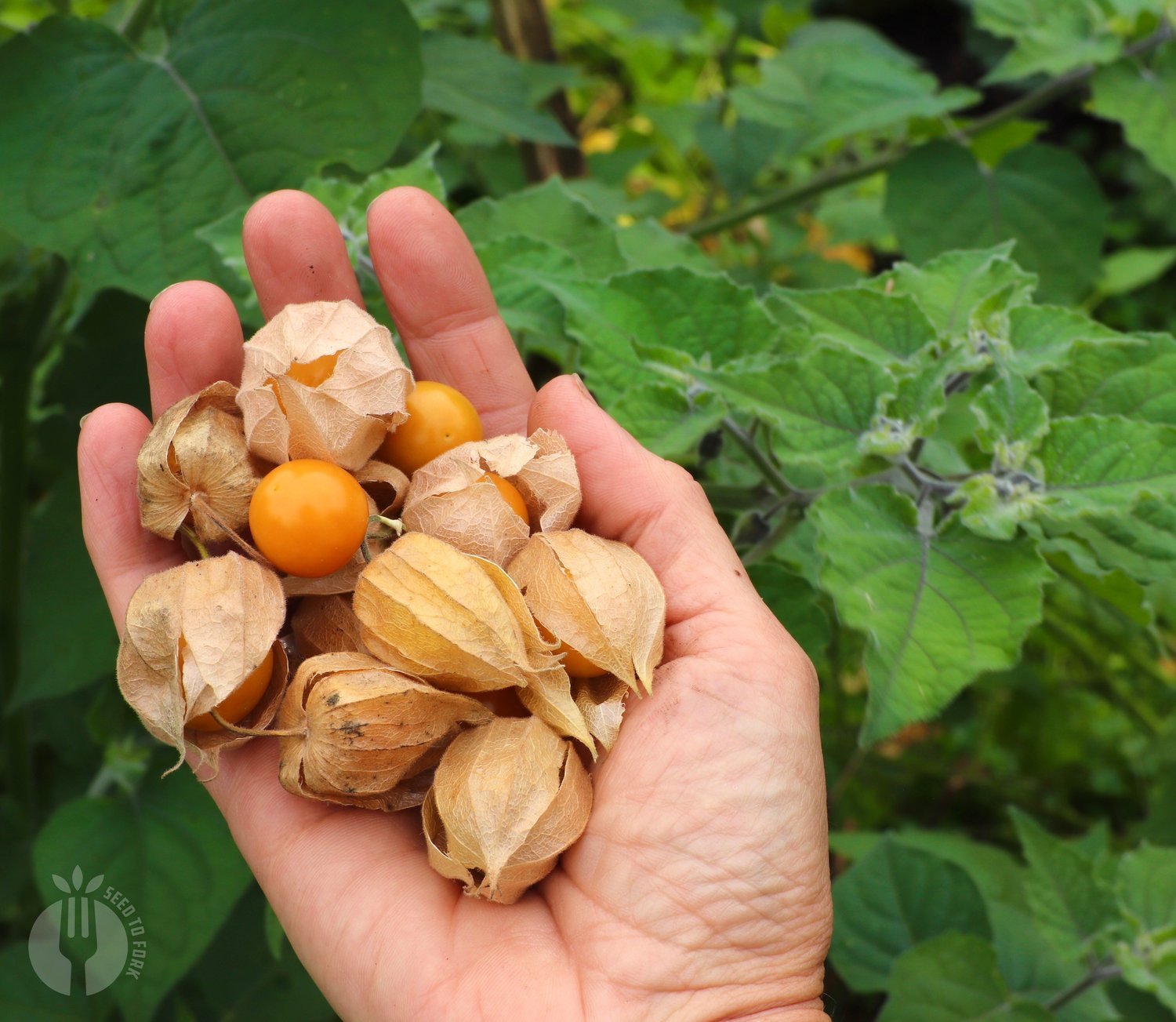
Cape gooseberry, a readily self-seeding subtropical perennial, is a taste of the tropics that can be grown as an annual in our chilly zone 4 garden. One of my favorite unusual subtropical fruits to grow underwhelmed yet again. Despite loving their superior flavor over their cousins, ground cherries, we consumed less than a dozen cape gooseberries from a 4’x6’ space. Twenty-five square feet for a few fruits here and there. It was a grossly underproductive use of space. However, I don’t know if I can go more than a year without their tropical punch. Sometimes space allocated for an occasional pop of wow must be measured with a different kind of productivity. It isn’t always about volume. This delicacy is about a true food experience, and I am certain I won’t be able to resist the urge to sow them very soon (they take extra long to germinate and establish). They also set me up for a happy population of three-lined potato beetles in June through August — a mixed blessing of beetle picking which means quiet and contemplative garden time.
Relatedly, I abandoned our summer carrot bed due to my Dad’s terminal illness and decision to go on hospice; upon returning after his death I was swallowed by tomato harvesting and processing and didn’t get around to thinning them out as well as I’d have if I was around. I am thus, hopeful, for a simpler 2022 without the tight sandwich generation squeeze.
Some years are modest, and our carrot harvest has seen stronger years to be sure. Hoping next summer and fall I will be able to be present for all the minor yet significant garden tending like thinning the fall carrots to ensure a more robust stash for winter consumption.
Compounding the underwhelming carrot bed, we also had very spotty germination of a pelleted variety, Dolvica, which typically germinated and grows really well for us. Carrots are a winter staple and it would be amazing to still have some in storage come April. But I’m not getting my hopes up — our harvest this past fall was 1/3 smaller — at 50-something pounds — than fall of 2020, which yielded around 75 pounds. Last winter we had carrots all the way until May. It was awesome!
We had a very underwhelming pepper year too. I am not sure what the cause was but a few top culprits are too much irrigation, too rich soil (too high in nitrogen), or too warm overnight temperatures that prevented fruit set. Most plants only had one fruit set, and some had less than a handful of peppers. I am hoping as the microbial life establishes, the pepper garden will be more fruitful, as soon as this summer.
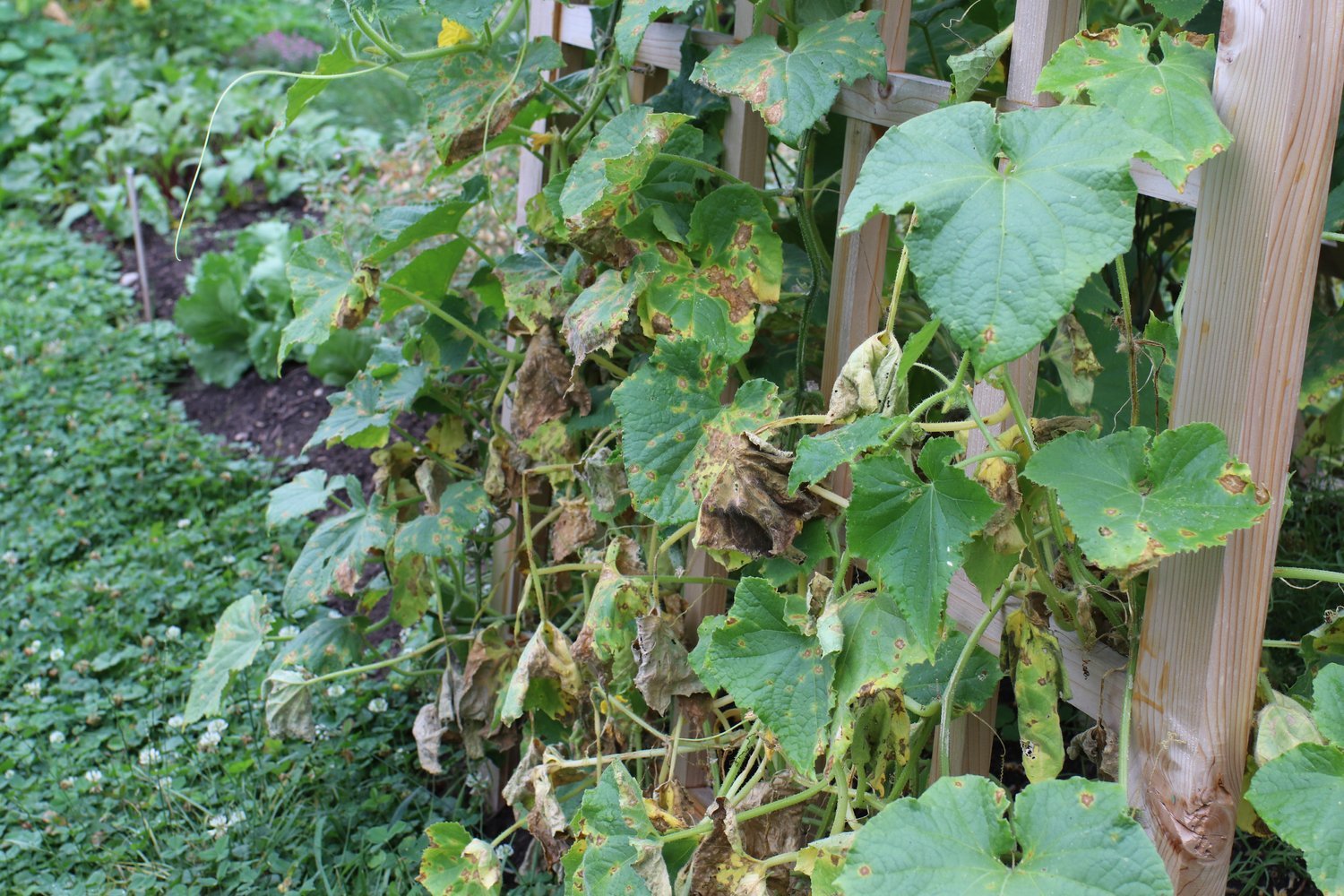
Cucurbit fungal pressure, seen here on our slicing cucumber trellis, has been building for the last few years and some tough decisions lie ahead as we weigh the pros and cons of whether to take a few years off to dampen the population in the garden. Finally, another big downer was the fungal pressure our cucurbits continue to endure. I believe we have an anthracnose fungal disease in our soil or on our cucumber and melon trellises. All varieties were hit with the bullseye on the leaves by late July and I pulled all of them out in mid-August. We only put up one batch of dill pickles, but luckily have some leftover from 2020. I am still pondering our best approach for 2022, including taking a few years off to try to minimize spores in the garden.
What Worked Well
On the plus size of 2021, there are many. First and foremost, I think our tomato garden was large enough. In particular, I think we grew enough paste tomatoes. We had 12 determinate paste tomatoes (Italian Roma, Plum Perfect, and Paisano) and 7 indeterminate paste tomatoes (Inciardi Red, Opalka, Speckled Roman, and Ukrainian Purple). We will be finalizing our tomato grow list soon. We enjoyed the heftiness and meatiness of the indeterminate varieties but the productivity of the determinates is unmatched. We will likely grow a mix of the two again this year and hope for 50-60 quarts of roasted and canned tomatoes again — plus plenty of pounds of ketchup too! Hopefully this summer I’ll get back to salsa as well, both red and salsa verde.
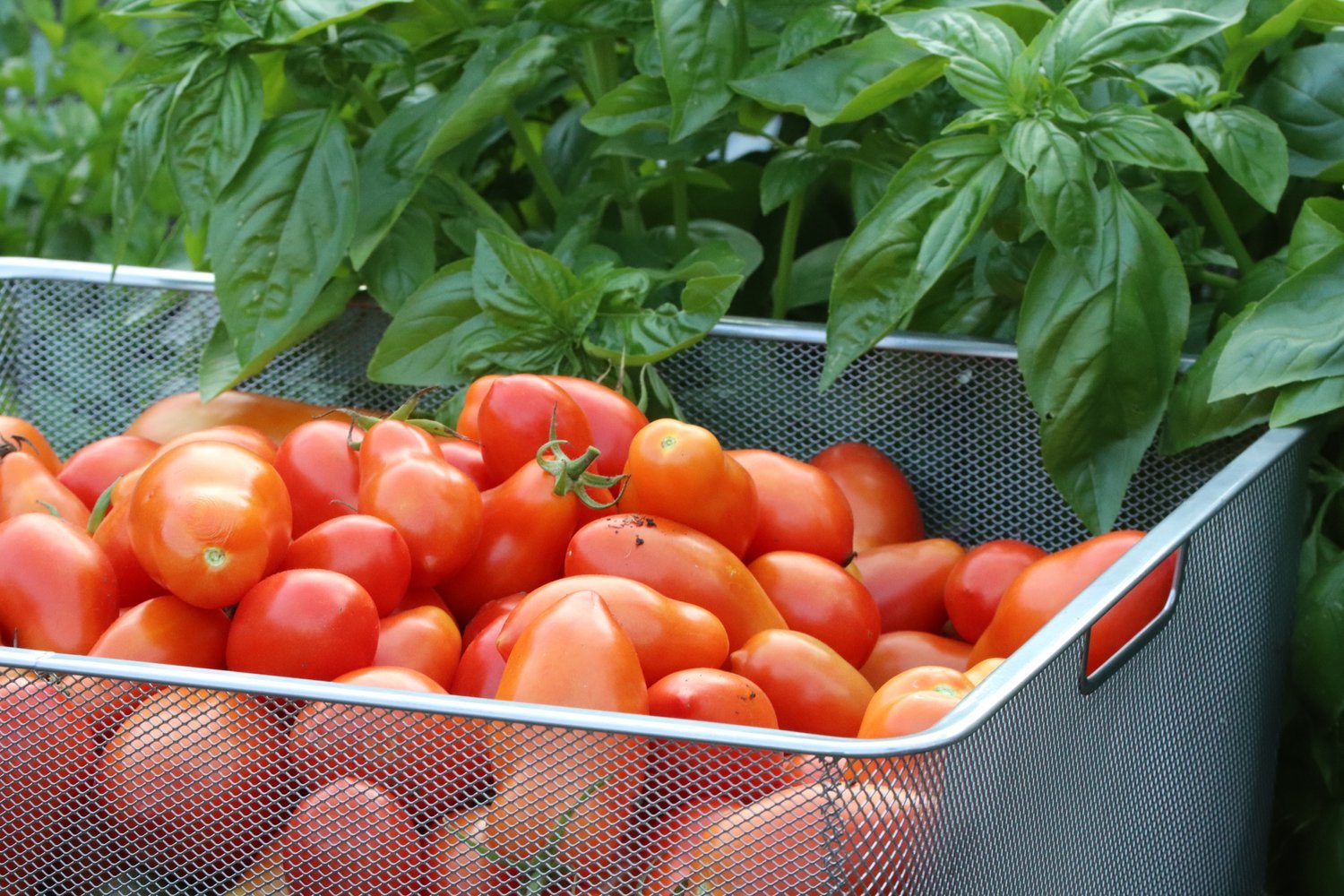
A garden win: enough paste tomatoes to put up for winter with plenty extra for some kitchen experimentations and loads of primavera dinners. We allocated more square footage than ever to potatoes and grew five varieties. Some were more productive than others, but as with the carrot debacle, Colorado potato beetles made home in the potato beds while I was busy caring for my dying father. I did my best upon returning to get a handle on the situation, but the voracious foragers reduced the productivity below-ground and set us up for several years of extra vigilance of our nightshades (they will also feed on eggplants that are also in the same plant family). Despite this minor setback, because we allocated more space, we harvested over 150 pounds of potatoes, our largest harvest to date. We are adding 3 more varieties to the garden this year, two are Russet-type potatoes and one late-season variety hailing from France. We will repurpose some of our peanut and okra square footage to potatoes this summer.
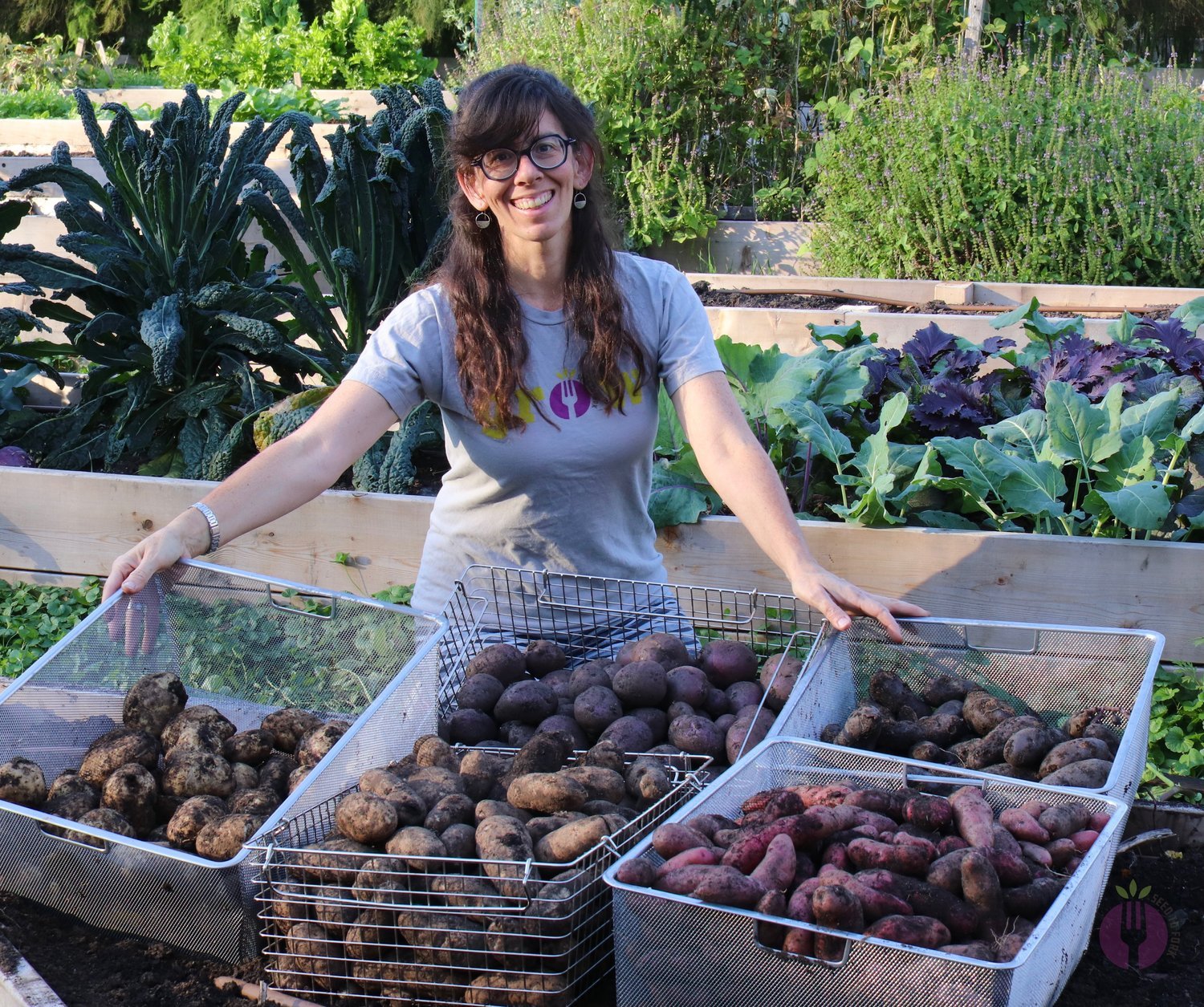
After some occasional light harvests, the final potato dig on a warm October day ahead of a frost yielded 166 pounds of potatoes for the root cellar. I wonderful addition to our winter meals, to be sure. Sesame was by far my favorite new seed/flower we grew in 2021, and over the past few years. Sesame resembles foxglove with its tubular flowers that are set on 2-3’ spikes. We continue to enjoy a small amount of toasted sesame seeds as a topping for various meals. The flavor is unparalleled — its intensity and nutty flavor is so satisfying and rich. The power of homegrown food at its best. Everyone should try growing sesame! (I bought my seeds from fellow northern gardeners/seed company Fruition Seed.)
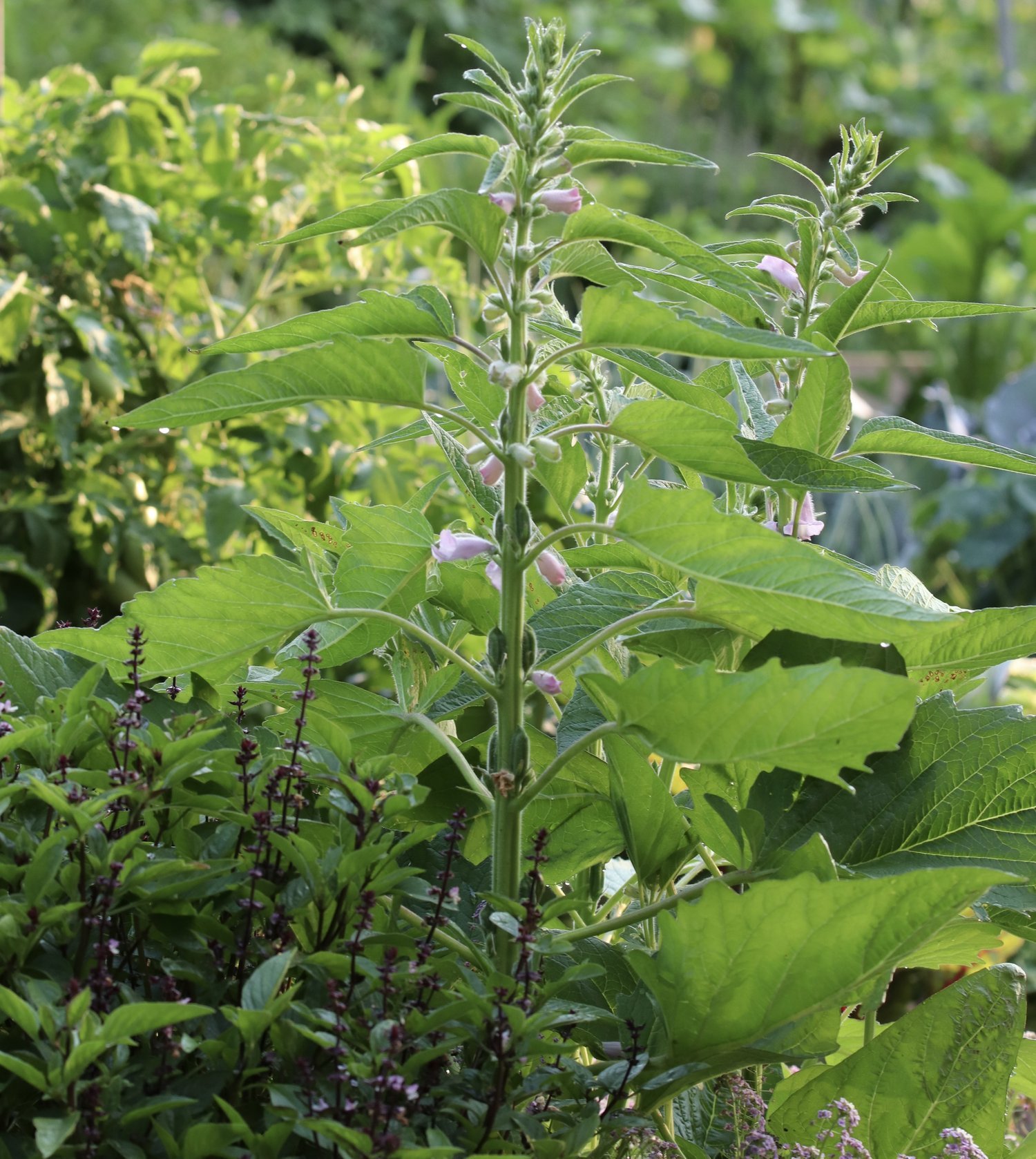
Sesame is a beautiful flower addition to the vegetable garden and the subsequent harvest will rival your strongest memories of your first homegrown tomato. Sweet potatoes made a comeback to the garden this year, and the harvest was moderate. I love the ease of growing sweet potatoes as well as the resilience of the vines against pest pressure. Japanese beetles did forage slightly on the foliage but not as devastating as they do edamame and pole beans. I am not sure if we will grow them again in 2022, or take another few years off, but they are a food I enjoy growing as space allows. We are still enjoying our sweet potato harvest.
Watermelon was a hit this summer. We grew an heirloom variety that weighed in at 26 pounds. They were terribly difficult to determine when they were ripe, as heirlooms don’t tend to follow the dried tendril and pale yellow bottom signals that modern hybrids display when mature. It took 2 underripe ones to finally get it right. We enjoyed two very large watermelons and I’ve ordered a few hybrid watermelon varieties to trial for 2022. Because it is less susceptible to disease than musk melons, it may eclipse cantaloupes as our late summer annual fruit until we can get the cucurbit anthracnose under control.
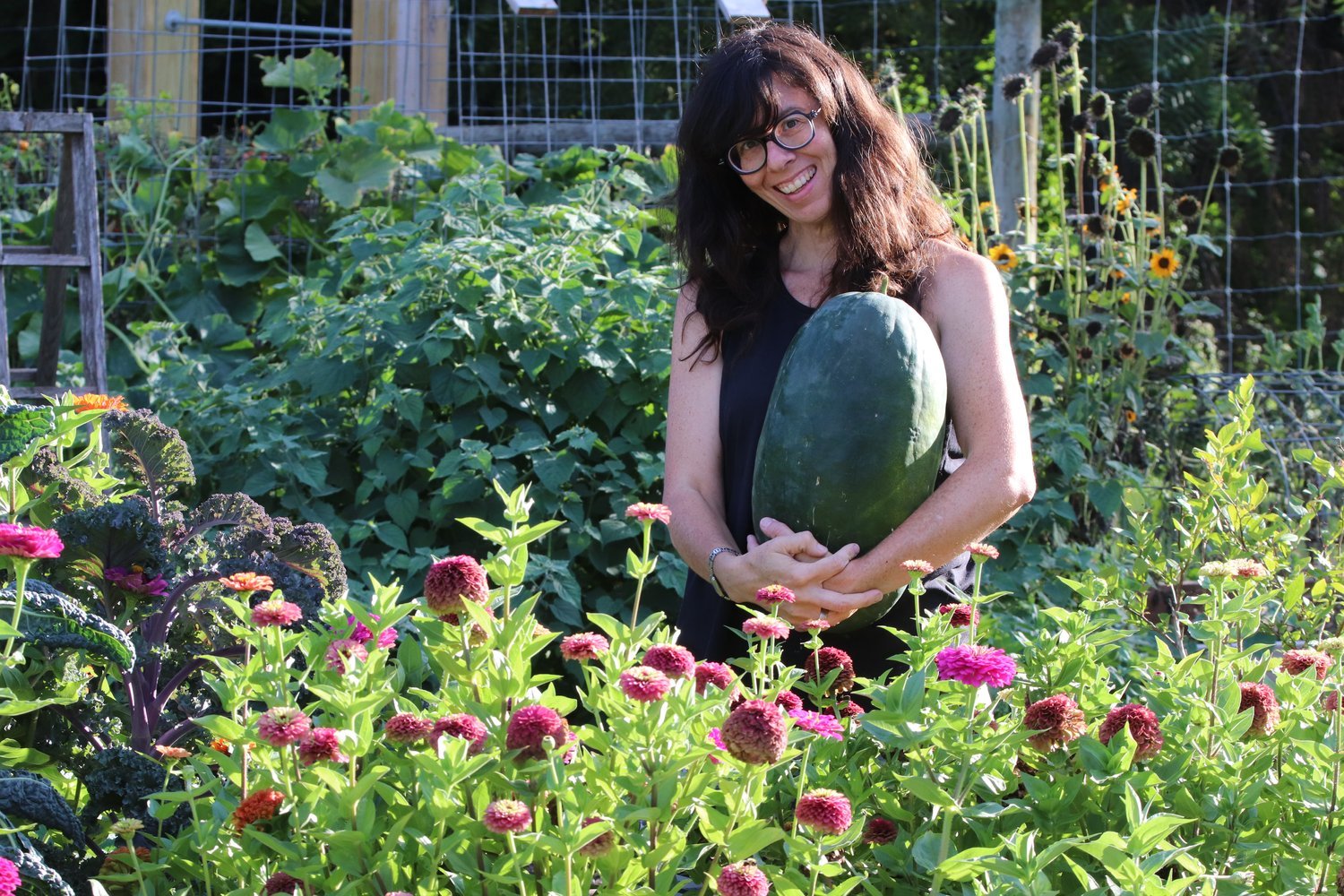
All hail the Halbert Honey watermelon. It was so delicious and really renewed our interest in setting aside space for watermelons annually. Finally, a highlight of the season was our robust dry bean harvest. We harvested somewhere between 12-18 pounds of dry beans. We’ve been enjoying them weekly since late fall and hope to have them on the menu weekly until June sometime until peas and green beans are back in season. This is in large part due to our garden addition that provided ample space to dedicate to shelf-stable crops like dry beans. I find these types of garden adventures the most rewarding and look forward to more exploration with dry beans in the coming years. My dream is to grow enough beans for at least two meals a week year-round. I’m not sure how much space that will be, but growing highly productive beans is certainly one of the best routes to achieve that, and these Borlotti pole beans are highly productive.
The beauty of annual gardens is the opportunity to try new things as well as experience a variety of outcomes with the same seeds and varying environmental conditions. I love growing the same things every year knowing the results will never be quite the same. Something will fail, other things will soar. That’s the alluring beauty of the garden; no matter how experienced you are, you enter each growing season knowing myriad lessons await your curious heart.
-
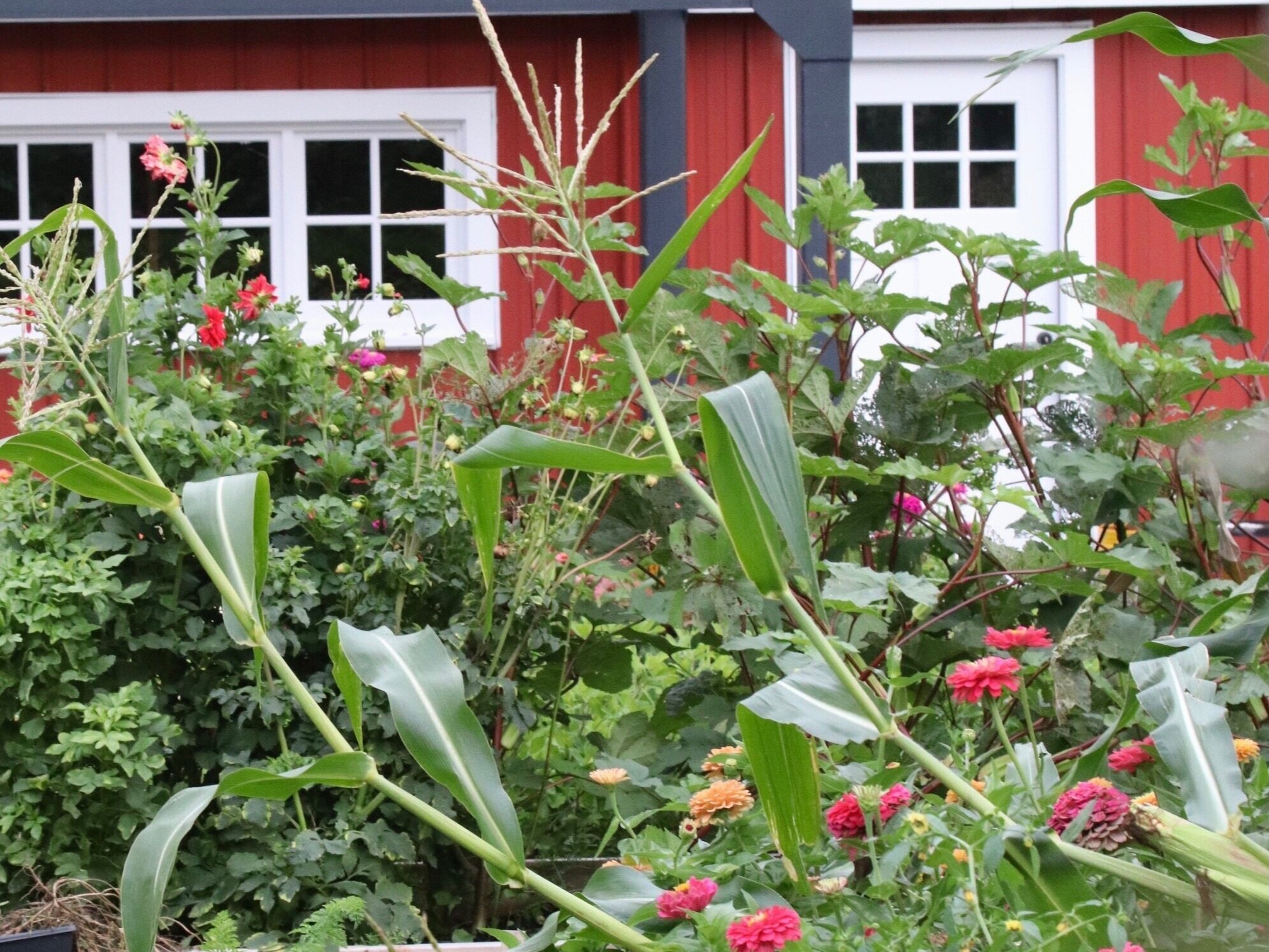
Garden Lessons are Life Lessons
It has been quite a calendar year for me. And it has been a memorable garden year too, so far.
With my time split between our home, family, and garden and tending my terminally-ill father who lived 1,300 miles away, I was absent more than ever this year. While I was gone, my garden came down with its own illnesses from lack of attention.
I am realizing so much about being present in my garden this year. I’ve been gone for weeks at a time from the seed starting weeks of February and March all the way through until late July during what is usually my absolute favorite time of the season. It has been very difficult for my and the garden’s well-being. Seedlings had not been tended to my standards, and legginess ensued. Outdoors, pests and disease managed to slip right in under the radar and have slowly but surely gotten the upper hand in more than one crop.
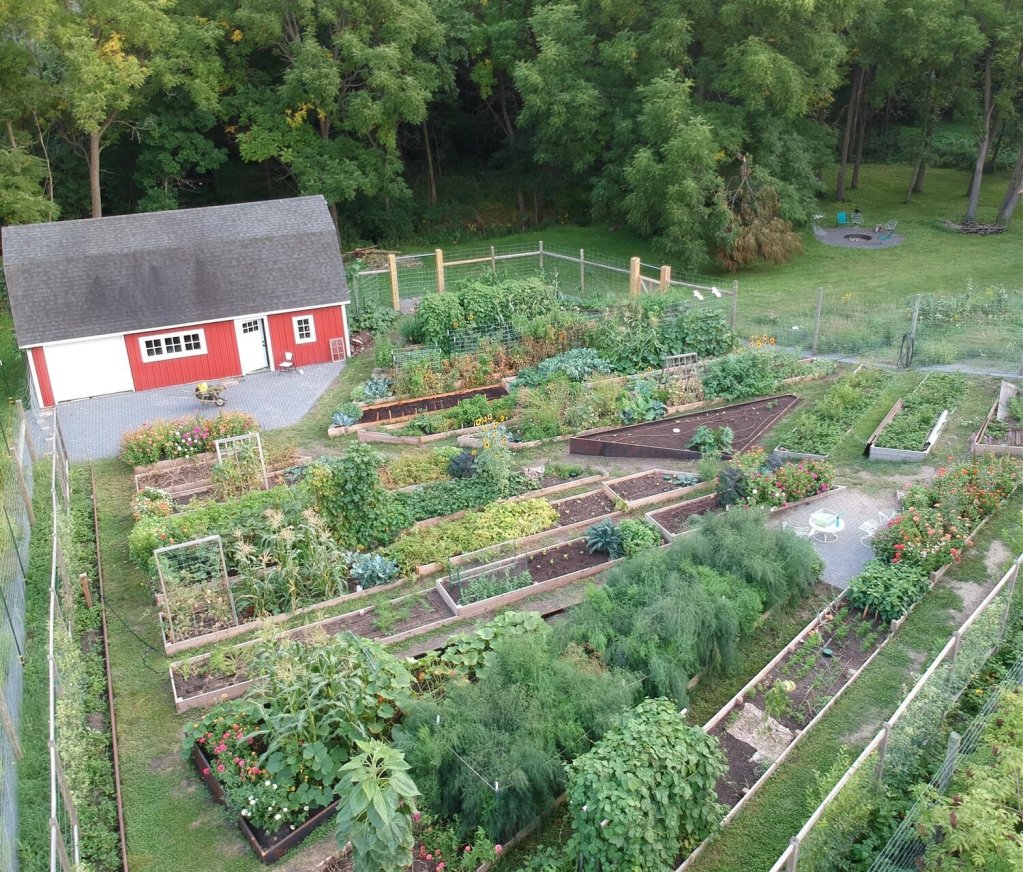
Without my daily, watchful eye, damaging insects made a quick home of our food garden. Without my hourly wandering patrols, eggs were laid and left for good, and ALL the larvae hatched. While I was tending a different kind of garden, the end of my father’s life, spores were spreading among our cucurbits and tomatoes.
After my first summer trip home to care for him, I noticed hints of cucumber disease, an unfortunately familiar sight despite crop rotating annually. After our short trip away the following week, we came back to more disease spreading, this time among our tomatoes. And when I got back from the final and hardest trip of my life, I returned home to potato plants decimated by a large and surely happy population of Colorado Potato Beetles. Meanwhile, our once lush melon plants were nearly dead from disease pressure.

Determinate tomatoes both prevailed amid disease pressure by mid-August. We harvested ample to process, and enough to create holiday novelties too.
This was our year to not fret over disease, because it was not our year for a well-tended garden. It was our year to see what a not-so-well tended garden can produce on the hottest and driest year.
It was a stark reminder that disease must be fretted over. I’ve never considered gardening something we check in on a few times a month, but seeing just how quickly disease progressed and plants deteriorated really cemented further for me the “no vacations in summer” house rule we generally keep. And seeing how fast plants took off and roamed well beyond their allocated space was another benign eyesore I spent some days trying to wrangle upon my return.
Some disease is difficult to manage, but not a complete wash. We kept our cucumbers until late August, and had a hefty supply of cukes that lasted until early September. Our tomatoes have been slowly defoliated by Septoria Leaf Spot, but their productivity was already well on its way; we canned tomatoes a few times a week and felt very homestead-y. There are potatoes to harvest, though yields will be much reduced due to all the defoliation and premature senescence.

Ignoring minor defoliation and not treating at all resulted in the Chinese cabbage recovering quickly, seen here with healthy inner leaves.
Despite the disease, the garden carries on. Some diseases we will be managing for a few years. I am certain the Colorado potato beetle we’ve been so fortunate to live without for years have now established a pretty strong population in our garden — and that will take a few years to find a homeostasis (aka, I hope to fully eradicate them again). We are continuing to hand pick them daily, but I have a suspicion we are not getting them all.
You know the Colorado potato beetles are at home in your garden when they’ve casually been snuggling with your tomatoes.
Crop rotation is one of the many things we will do next year — and we have been doing for our tomatoes. The tomato disease has followed our plants around for what is now the third year, and this is why I strongly believe it was our trellises that harbored the spores overwinter, thus inviting this defoliating disease to spread this summer yet again.
Thanks to the disease pressure, we are taking a serious look at how we clean our trellises this fall. It turns out we never have cleaned off our trellises — ooops! — and I know at least for the cucurbit anthracnose and the tomato septoria leaf spot, both of those can overwinter on trellis material, wood or metal. So some serious garden hygiene is on our fall garden tasks list.
Sometimes you have to lose things to understand the whole picture. Letting things go can often invite reflection that is required to grow and learn in new ways. I appreciate everything the ongoing hardship has taught me about resilience and patience — and most of all, paying attention to what is right in front of you every single day.
-

Growing Ginger in the North
Ginger started popping up at farmers markets in the Twin Cities of Minneapolis and Saint Paul close to 10 years ago. It fascinated me to see fresh ginger on those chilly autumn mornings. I had never considered growing it myself. And it wasn’t until after that first sighting did I consider it a food we may one day grow here.
Fast forward all those years, and I finally found the time to take on growing ginger. It’s not a crop that takes up much space. In fact, it’s a perfect container garden addition in our climate.
Because our growing season is predictably short, I gave ginger a first try last year in containers. I chose containers because I wanted them to be portable in the event temperatures plummeted in early September and I needed to give them protection. It turned out, it was necessary.
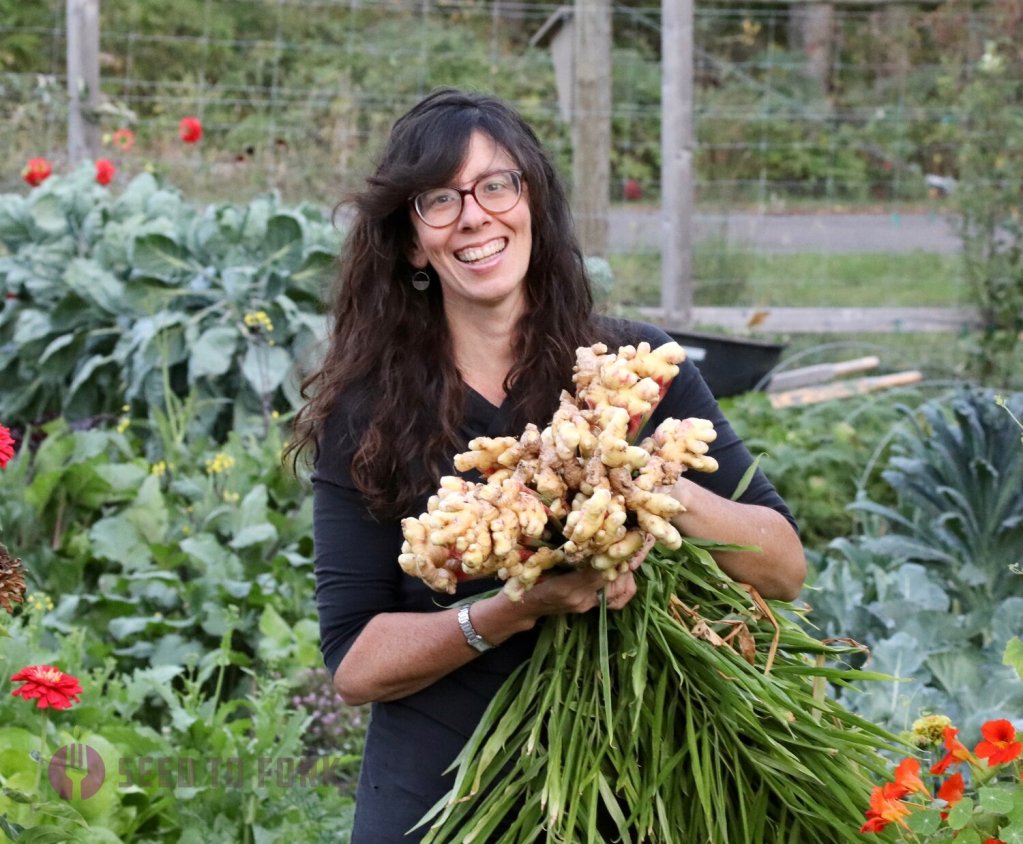
My first ginger harvest. And certainly won’t be our last. It’s now an integral part of our annual growing season, and the best part is it lets me start something during the dregs of winter. Ginger, like garlic, is propagated asexually by cloning plant material. Like how house plants easily root from stem cuttings, a piece of ginger will sprout and produce a new plant. It is the way the organic farmers produce their seed ginger. Curiously, ginger no longer produces seed because it’s been so intensively cultivated, so all ginger is the same plant material from the remaining cultivated varieties, of which there are hundreds!
The biggest thing for keeping your ginger happy (or turmeric, which requires the similar conditions) is you must think tropical. These are tropical plants, so they want warmth and humidity and good moisture. And for those of us living in the northern climates, that won’t be around again until probably July, the kind of heat and humidity ginger loves.
Where to Source your Seed
So I have ordered ginger from an organic seed company and I have grown it from organic ginger from my local food cooperative. The Hawaiian seed ginger order got lost in the shuffle and didn’t arrive in time for my 2019 growing season, so we enjoyed it instead.
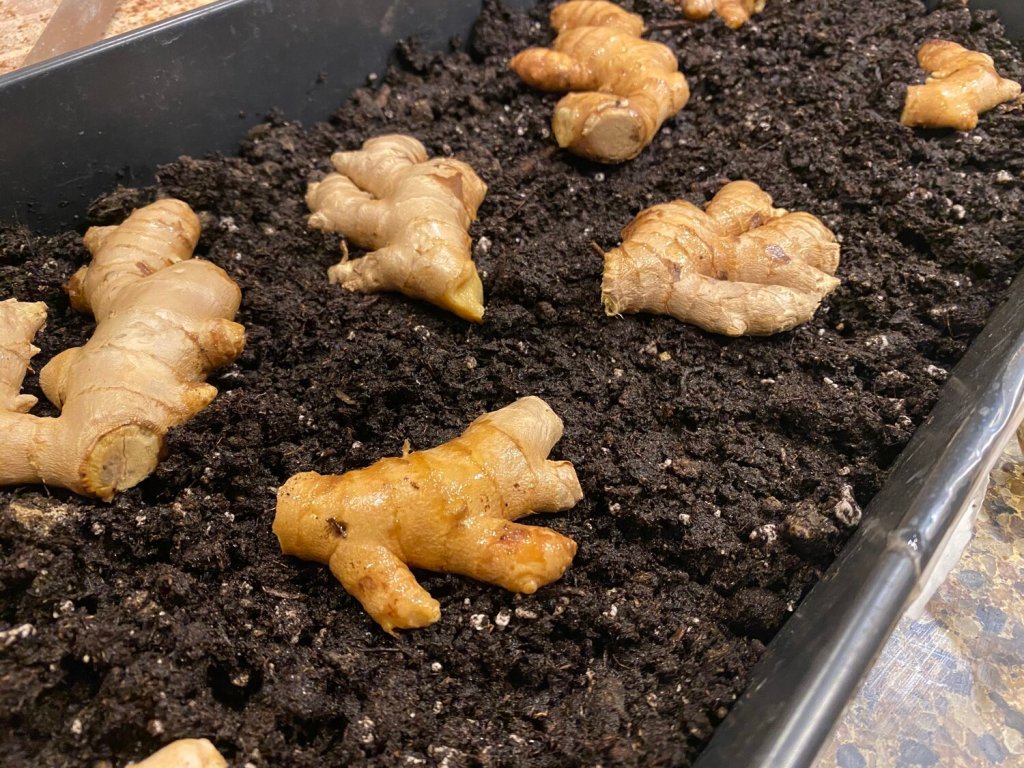
After these rhizomes soaked for a few days, I set them in a 1020 tray with my soil block mixture. I covered them with 1/2” to 1” of soil on top, covered with a germination dome, and on top of a germination mat. Fast forward to 2020, and I decided to try with just some store bought ginger. The danger of using store bought ginger and not ordering seed ginger is that there is a higher chance that the produce could carry diseases; farmers can still yield a crop from a diseased plant, and that disease, especially fungal, could make its way into your garden. Another reason to keep your store-bought sprouted ginger in containers where you can minimize this risk.
I am a fan of sourcing ginger from organic farmers as often as possible. However, because I need my ginger in early January and shipping conditions aren’t amenable to that in our zone, I am using store bought rhizomes again this growing season.
Choosing Your Container & Medium
I was very economical with this project, and used what we had on-hand. I grew in both DIY grow bags as well as in a metal 6 gallon container. Knowing what I now know, I’d say when selecting a container, go for a wider but shallower container. Ginger grows more horizontally than vertically.
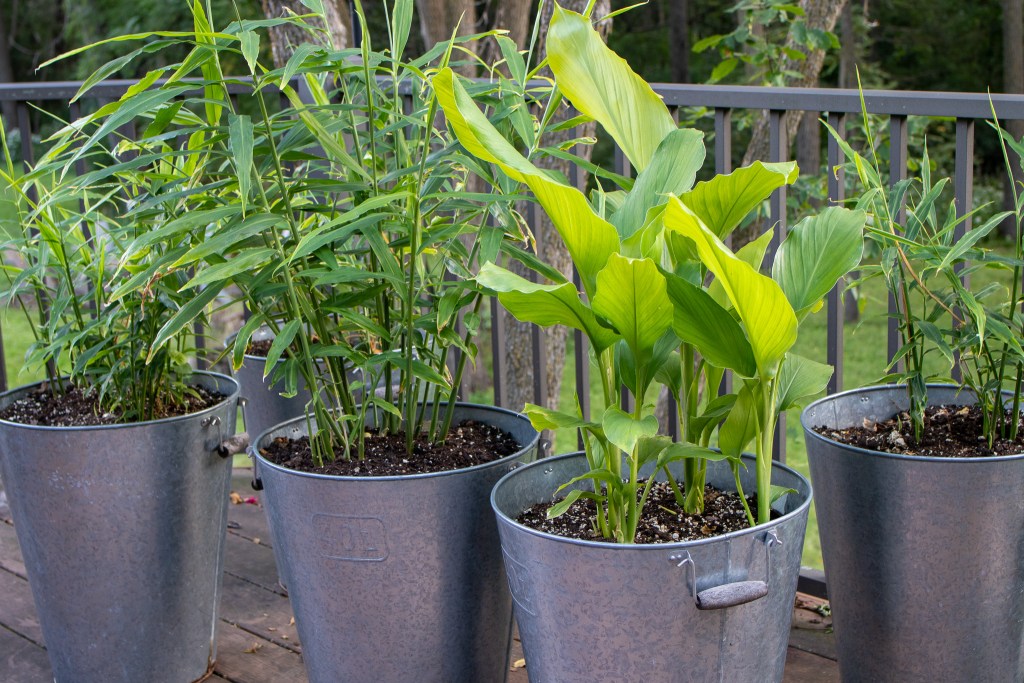
Growing ginger and turmeric in Minnesota was a complete joy from an indoor winter plant to a fragrant summer patio addition. I sort of lucked out on my medium. I didn’t read up on growing ginger ahead of growing it. But I had a lot of extra coconut coir around from a soil block experiment, so I mixed half compost and half coir together. It turns out a mixture of coir and compost is one of the preferred mediums for container grown ginger (pure luck).
I did know, though, that it needed warm soil and moisture so I kept the medium damp and on a seedling mat, and kept a germination dome on top. It took a good 2-3 weeks to sprout the first time I grew it.
And the heating pads stayed on until early June when it was warm enough at night for the containers to move to the patio for the summer. Unless you heat your home to 75 or warmer, keep the heat mat on for fastest establishment. Warm soils means happy ginger.
Then I had another happy accident this month.
Keys to Sprouting Ginger
I soaked my ginger for 2 or maybe 3 days in a dark cabinet with a heat mat prior to planting it in damp soil. It was around the holidays and I admittedly forgot about them. Eventually, I planted them — and they sprouted in about 10 days! It was so fast I could hardly believe it. A good soak will hydrate the ginger and encourage rapid sprouting.
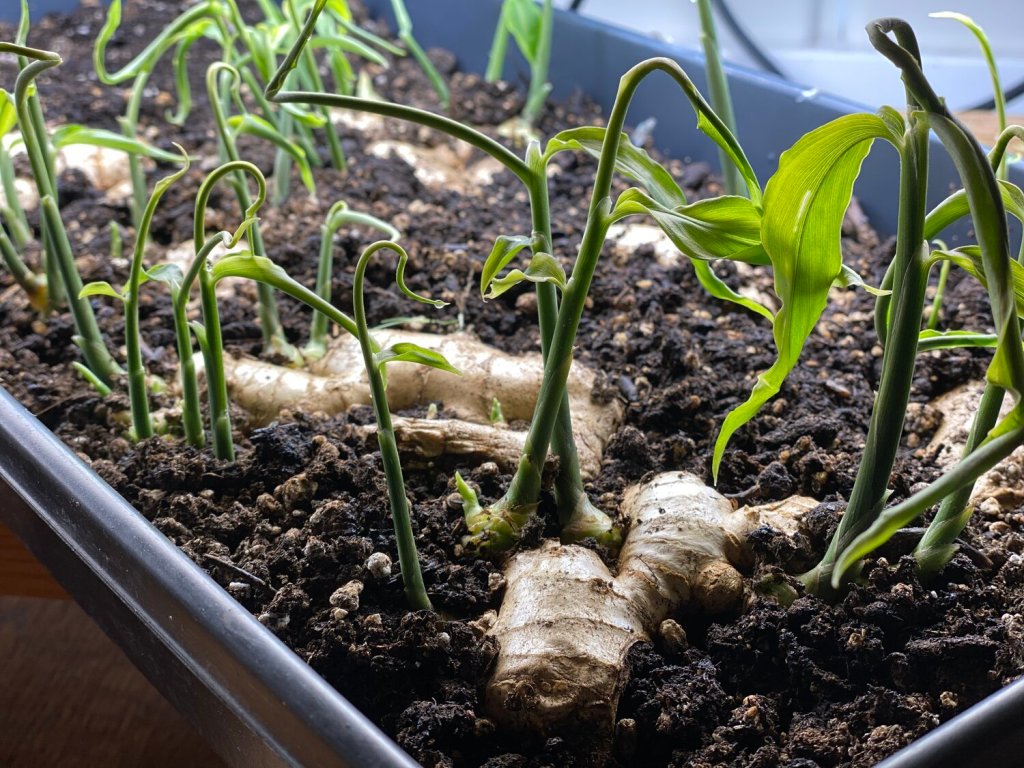
I plant my ginger right at surface level in 1020 trays. I leave them in these trays for the first month or so, and then pot them up into deeper pots. I transplant them several times between now and their eventual outdoor patio life this summer. I will continue to top with compost but as you can see, I haven’t covered them entirely.
Keeping Ginger Happy
Like with all food we grow, ginger will grow best in well-draining soils with ample moisture and fertilization. We gave plenty of food through the compost, and fertilized with compost tea about once a week. It was a hot and dry summer for us, so we lucked out with warm weather. Our deck is part shade in the height of summer, but that didn’t phase the plants.
Ginger does not like to be waterlogged, nor does it enjoy arid conditions. So make sure you’ve got drainage holes in your containers or if you’re growing the ground, be sure the soil is well-draining.
Harvesting & Storing Ginger
The beauty of ginger is that it is entirely edible and can be harvested at any stage. You can dig up little tubers during summer for your meals, or wait patiently the 8-10 months until it’s mature.
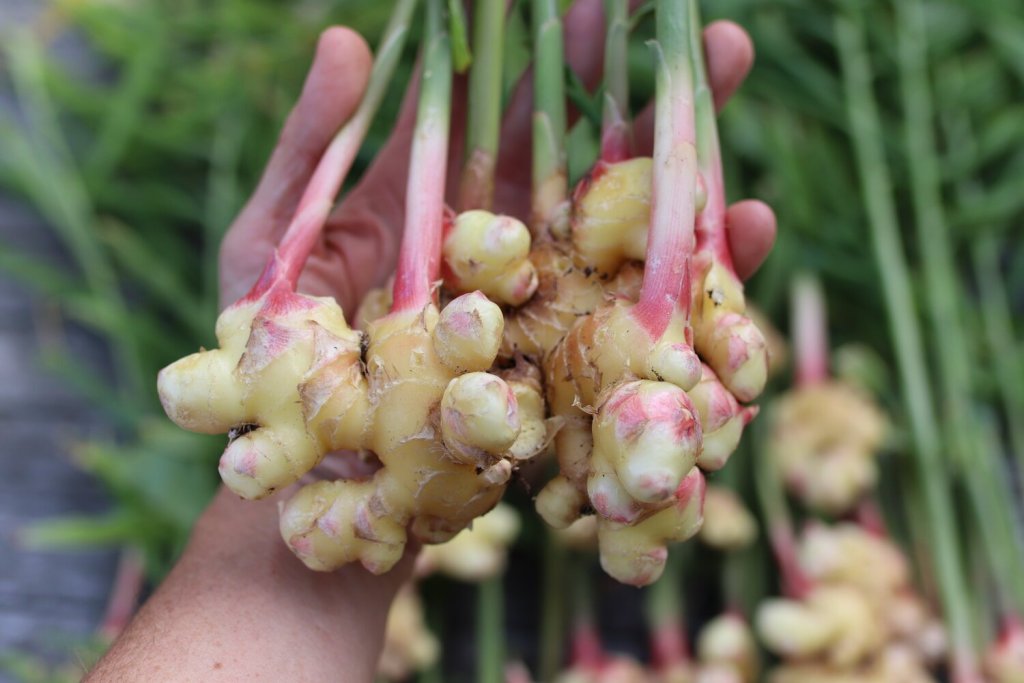
Young fresh ginger is the best we can grow here in our short climate. It is tender, and the best part? You don’t need to take the time to peel it.
The reason I start ginger so early here is that I want to get as close to 10 months of growing as possible before harvesting. I harvested my ginger in mid- to late-September last year, with a few indoor spells during a cold snap before harvest.
We are fans of storing our ginger in the freezer and using it as needed with a microplane in recipes. We also sliced and dehydrated it and are grinding that as needed for recipes. We also made some pickled ginger for our vegetarian rolls (aka sushi). Like with every other homegrown food, fresh ginger from our homestead is a real treat!
Sprouting ginger is a fantastic winter project, and I hope you consider giving ginger a grow soon.