Your cart is currently empty!
Fall Cleanup: To Pull or Cut at the Base

Get updated by email whenever there’s a new post
Grab your sharpest loppers or shears and get cutting, not pulling, this fall.
Why? The roots of all of our vegetables and flowers are chock full of soil microbes, organic matter, and, well, soil — key ingredients to soil health. Our soil, like our plants we cherish, is a living, breathing organism, so we need to be sure we’re feeding it. It’s health is demonstrated in the vigor and health of the plants we grow. So take up the no till method and leave the roots this fall.

And what better way to feed it than to leave behind organic matter for the microorganisms to consume (compost) in place, returning the nutrients back to the soil as bioavailable compounds next year’s plantings will consume.
Also, think about how important air is to our soil profile. Air (gas) comprises almost 50% of soil and water. Roots create air pockets, and leaving them behind, especially in soil that is marginal (too heavy or too light), is an essential strategy to building your soil organic matter and increasing pore space. It’s a slow but steady way to build a healthy and active soil profile. Combined with not tilling and adding a generous amount of compost and/or mulch on top of the soil each fall, it’s a key management strategy for our organic garden and a proven way to build soil heath.

It might be fun to yank a plant out root ball and all, but we are removing so much beneficial activity that occurred this season. Just look at all the soil I’ve disturbed and all those fine roots that could easily be consumed this fall before the ground freezes. So every place you can, take the loppers or pruning shears and cut right at the base. For some larger stemmed plants, it will be difficult, like your cabbages or broccoli. For those, I tend to use a sharp shooter or spade and try to slice the root ball right below the surface.
And yes, sometimes I do yank things up in a haste or a moment of sheer and selfish abandon at wanting instant gratification pulling something up. But it’s always met with regret as I quickly realize just how much soil I’ve disturbed and displaced and all those roots that will now simply get transferred to our compost heap instead of composting in situ.

Now to the question of disease. If my plant is diseased, will the disease persist in the roots persist? Yes. But let’s dig in a little deeper. It’s likely the fungus has already permeated the soil that season with the dead or decaying leaves that fell to the ground, spreading spores anyway. With some diseases like fungal diseases that attack leaves of cucumbers or tomatoes (anthracnose, septoria, etc), water needs to splash onto the plants next year to help the spores spring up onto the plants. By adding fresh compost or mulch to your beds next year, you will be creating a barrier for that potential cross-contamination. You’ll also be doing your best to move those highly susceptible veggie groups (for me it’s cucurbits (cucumber, squash, and melons) and solanaceous plants (tomatoes, peppers, eggplant, and potatoes)) to new beds so that is a second way to prevent disease year to year.
Potatoes are a crop we love but it always irks me that it requires intense soil disturbance to harvest them all. There’s no way around that and you just have to roll with it.
Potatoes, sweet potatoes, and even peanuts require some digging to fully excavate the crops, thus these crops have maximum soil disturbance. I can feel the difference in the soil with them. There’s no way around this unless you grow them in grow bags, but that’s not something we’re setup to do here (I’d need to think through irrigation and that just hurts my brain).
Once you start doing this, I think you’ll be quite happy with the results. If I’m going from an early to late succession in my earliest beds, I may pull out the plants or some of the roots. For example, when I follow earliest cabbage and broccoli with fall carrots, I definitely disturb the soil more than if I was coming through with summer beans or late corn, because those crops don’t need the soil to be loose for crop success as the crop produces above ground.
Carrots are the one area where I am careful to be sure I don’t leave roots behind. However, even with massive corn roots I will leave them in place through winter and decide next spring how much to cut back before planting. Typically I am able to further chop the roots right around the base next year, leaving the bulk of the larger and fine roots in place to decompose and fuel the biodiversity we’re working to cultivate below ground.
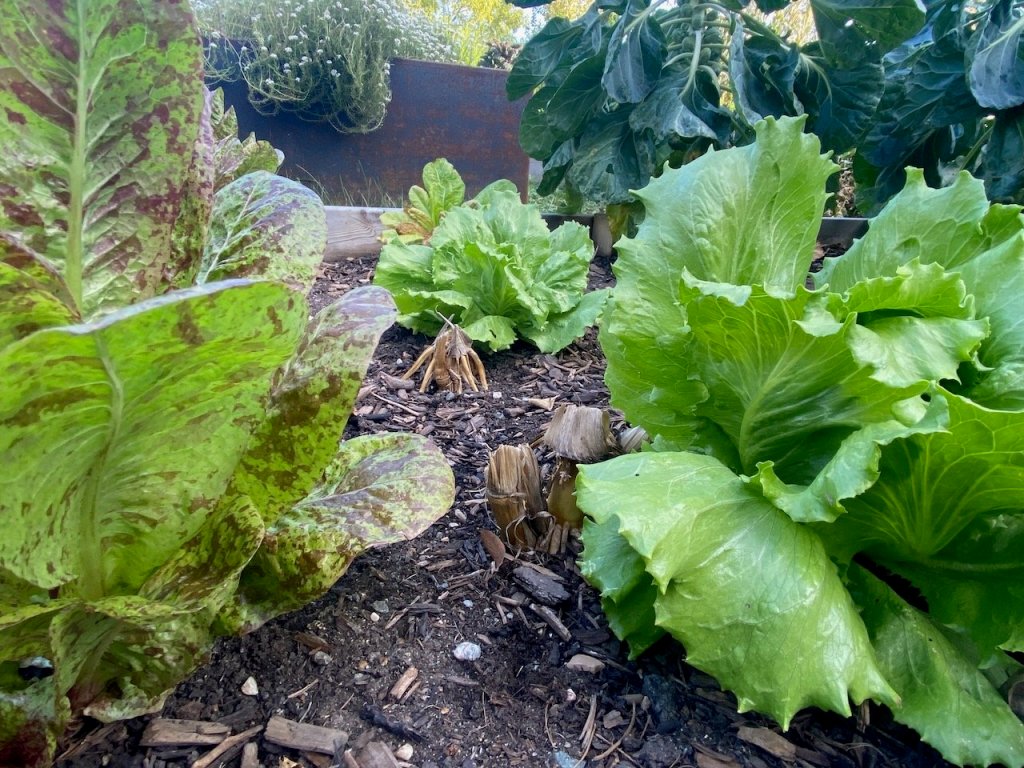
These remnant sweet corn stalks are decomposing in place. Depending on what gets planted there next spring, I may need to further cut them back but at least for now I know they are feeding the soil microbiome and I’ve minimally disturbed this bed this season helping to build soil health.
It’s equally mysterious and as it is simple. Our soil is a highly complex and diverse organism, and I try to support it like I do my native pollinators with as many different types of flowers as possible. I want as much diversity to develop below ground as possible, so the more roots and organic matter, different sizes and at different depths, I can leave behind, the more productive and healthy the soil will be in turn. We need our soil health to feed us, so it’s our job to feed it. And the easiest and best thing to do is to simply let it be.
You might also like:


Get updated by email whenever there’s a new post
Comments
One response to “Fall Cleanup: To Pull or Cut at the Base”
If you’re a subscriber, you can discuss this post in the forums
-
[…] You can read more about this topic in this Blog Post from last fall. […]
Leave a Reply