
Your cart is currently empty!
Welcome to Meg’s Blog
-

The Case for Native Gardening
Besides vegetables and fruit, my other huge and equally important passion is our native prairie gardens. It was probably about 10 years ago when first I became infatuated with common milkweed. I searched for it everywhere. I called every landscape center around, and finally tracked it down north of the city. The kids and I drove over 2 hours round trip and paid money to bring it onto our property. Once I brought it onto our city lot -viola!- the monarchs arrived, laying eggs on the tiniest milkweed plants nestled amid a sea of concrete. That was all it took to turn me into a huge native perennial enthusiast.
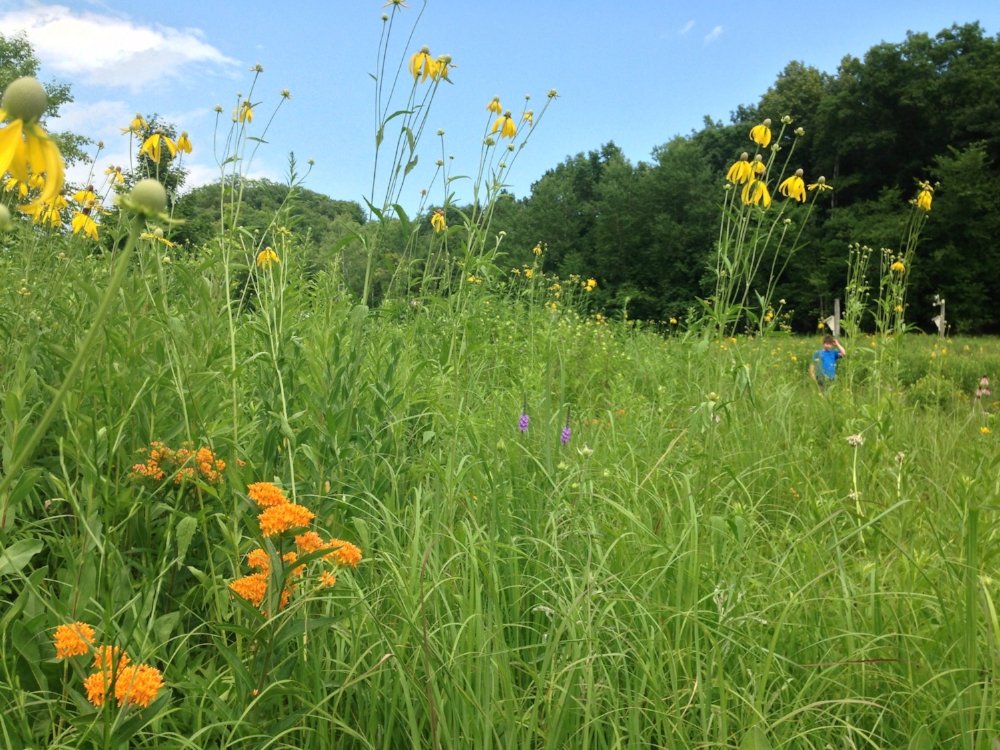
A feast for the eyes was our planted prairies at our ‘farm’ we once owned on the bluffs of the Mississippi River in Wisconsin. Butterfly weed (orange) in the foreground with grey-headed coneflower (yellow) and a hint of hoary vervain (purple) in the middle of the photo.
If you live anywhere in the heartland or up either coast — or many places in between — monarch butterflies likely pass through your area annually, sometimes more than once. For us, they arrive in late May on their way up to northern Minnesota / southern Manitoba, their offspring who lay the “super generation” make their way back down later in summer. Then that fourth generation does the impossible: migrates 2,000 miles to the protective, high altitude mountainous forests of Mexico.
Native gardening has become a deep passion for me personally. We have improved habitat for these and so many other incredible insects on every property we’ve owned in Minnesota. Once we witnessed the simple changes that make significant impacts to monarchs and pollinators at large, our desire to expand our butterfly and pollinator gardens were simply too easy and too important to not pursue. At our current home, we immediately found common milkweed in several areas and stopped mowing those areas to allow the plant to mature and sow seeds. Additionally, last fall we winter sowed 1/2 acre of our property back to prairie, which will be carefully tended for the next two growing seasons before blooming in earnest in the spring and summer of 2020.
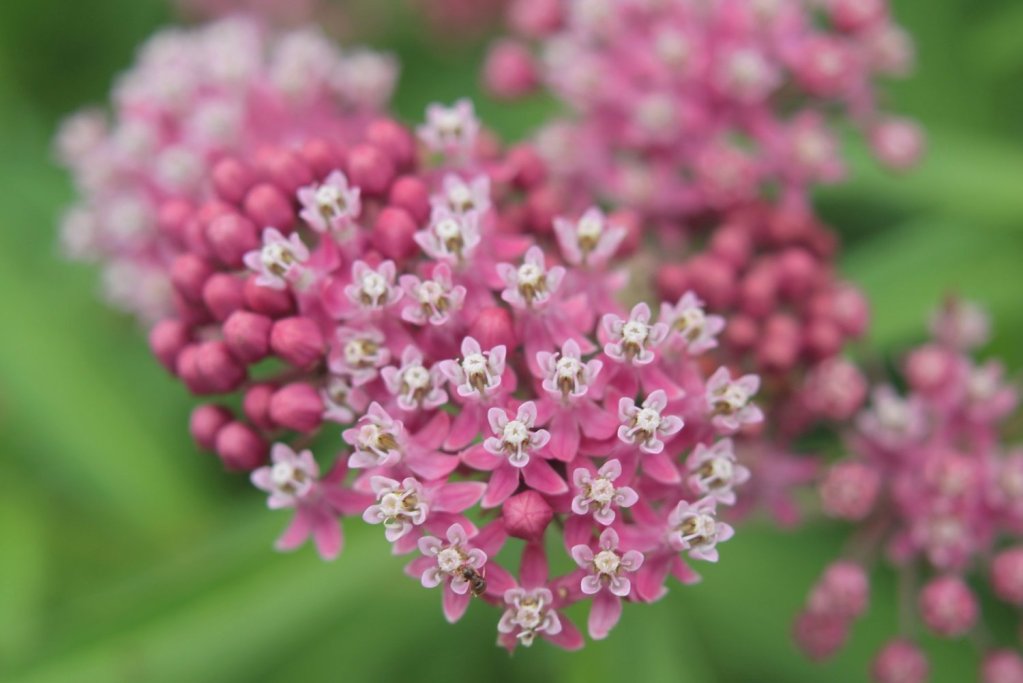
Rose or swamp milkweed is a hardy plant that matures quickly and provides monarchs a place both feed both on nectar and lay their eggs. It is also an incredible nectar source for so many beneficial and beautiful insects in mid to late summer.
The beauty of it is, it takes very little to make a difference. That’s probably the best part. Even with just a single milkweed plant, you can and likely will attract monarchs — and other beneficial pollinators — to your yard, assuming you live in their fly over country. That’s how it started with me. Just a single common milkweed plant in our south Minneapolis alley, an innocuous beginning. And now, every plant I consider adding to our landscape must benefit the pollinators, migratory birds, monarchs, or the like.
I’ve come to appreciate all of the unlikely benefits of native landscaping.

First and foremost, they are hardy, vastly disease-resistant plants. These are plants that have been around for millennia. They know what to do. And the insects that rely on these plants have also been around for as long, and their relationships strong. Native plants require so very little of the gardener, other than maybe some occasional dividing if that’s your thing. Those that are short-lived will self-seed and those that are longer-lived with drop their roots deep into your land and slowly spread, filling out an area with remarkable ease.
Second, they do not need irrigation. Native plants have adapted to your region, and thus have an advantage over cultivated perennials. I am a huge proponent of no-fuss gardening and this is why I lean toward natives. I like to just drop something into the ground and see what happens. If it survives, welcome to my garden, love. If it perishes, well, it wasn’t tough enough for my landscape. With native plants, they have the intrinsic advantage over cultivars. I really love this about them.
And what about the local fauna? Your yard will become a haven for birds, bees, butterflies, small mammals, and likely predators, too. Even a small patch of native prairie can and will provide important habitat for all the local fauna in your area.
Lastly, deer resistance! I almost forgot this awesome benefit of planting natives. They are the MOST deer resistant plants I have in my garden, hands down. They flower, they take care of themselves, and the deer don’t find them appetizing. If you have deer pressure in your area, you know what it’s like to wake up and find the herd had meandered through your garden and mowed down your plants. I love the confidence with which I can garden when planting natives, knowing they will provide themselves with everything they need, including being unappealing to our hungriest and most curious of neighbors.
If a more formalized look is what you prefer, consider massing native perennials together — a backdrop of joe pye weed or ironweed with big bluestem — the tallest ones in the back or center of your massing — and then fill in with pale purple coneflower, penstemon, lupine, butterfly weed, asters, and others in the front or all around the bed. Any combination will look beautiful and benefit the local pollinators.
Bare Bones: The Foundation Plants
Even in the smallest space, you can make a significant impact on the monarchs and pollinators, these benefits will be seen also in your vegetable garden with higher pollination and increased productivity. Our prairies are adjacent to our vegetable patch so the pollinators have a reason to come back time and again, a mutually beneficial arrangement indeed.
1. Milkweed. Whatever milkweed is native to your area, plant it. I love that we have several here, and they range in both color and height providing us with both compact and showy to tall and rosy blossoms in the height of summer. We of course plant them all, and you should, too!
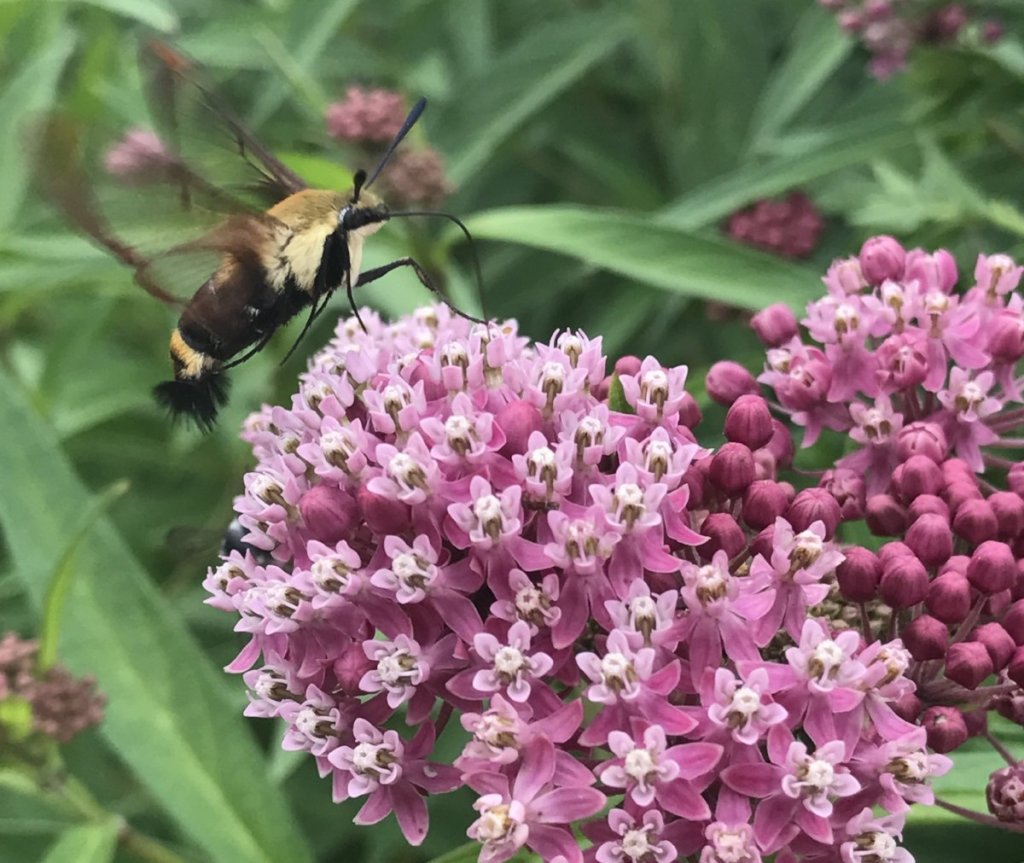
In addition to loving monarchs, this amazing moth is one of my other favorite insects to attract to my garden. I was delighted last summer to see one here in our new very small prairie remnant. Seen here the hummingbird clearwing moth is filling up on the rose (swamp) milkweed nectar. This milkweed is a fast and prolific spreader, so if that’s a concern, I’d use caution in planting it in your yard. We let it do it’s thing with wild abandon here. And we are thanked with visitors as graceful as this one. It’s worth it.
2. Penstemon. For us, early nectar sources are really important since our springs can be late. I like to ensure we have nectar as early as possible. To that end, I love penstemon, or beard’s tongue. Again, this is another highly cultivated perennial. I only have native varieties in our gardens. I believe we have foxglove beardtongue in our gardens. This is another one that really has done well for me, and every spring I rack my brain as to what plant greens up early with opposite, ovate leaves. Then it opens its flowers and I am wowed once again.
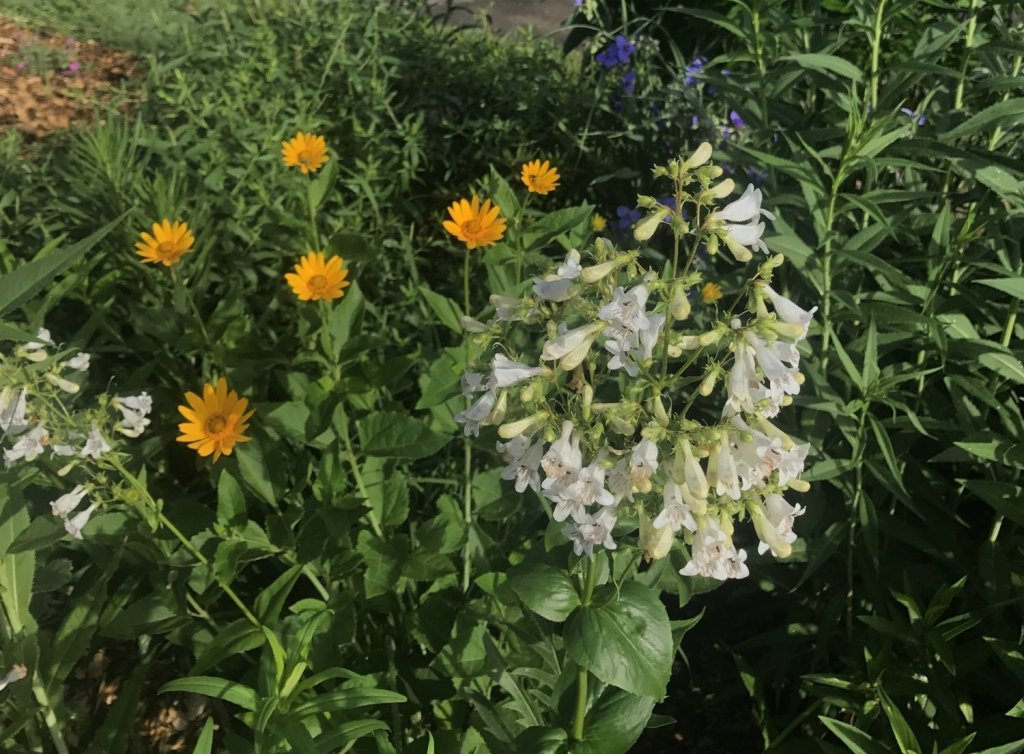
The white foxglove beardtongue has been known to even attract hummingbirds to our gardens! Seen here with some early sunflower (Heliopsis sunflower) and in the background a splash of Ohio Spiderwort. This prairie remnant one year earlier was less than 2 dozen one gallon pots of prairie plants we moved from our farm to our new home, and this is the first summer it bloomed here. Talk about hardy and resilient plants.
3. Meadow Blazing Star. This one is a non-negotiable to me. It is the ultimate monarch magnet in mid to late August, depending on their migration and your climate. We have planted both the cultivar and the native, and both have attracted monarchs at a rate higher than any other single nectar source. It is renowned for its attractiveness to them, and I have to say, I agree. It’s one of my favorite August blossoms in my native planting.

4. Asters. This late blooming native is an unparalleled magnet in fall for the bees doing their final push before cold weather shuts them down for the year. I prefer native over cultivars because of all the benefits I’ve already mentioned. I love Aromatic aster. It’s one of the last to bloom and it is a robust plant that will fill in a space quickly. You won’t be disappointed.

Aromatic aster blooms for us well into October and this single plant was a mere 1 gallon container in 2016. I’ve already divided it and started a second prairie remnant with it in another area adjacent to our vegetable garden.
Take the Next Steps
First thing you may want to do is read more. Here are some amazing resources to whet your appetite and get you and your family going on your path toward a pollinator-friendly and/or monarch attracting landscape.
The Xerces Society’s website is a wealth of knowledge and resources. Go get lost on their site: https://xerces.org/pollinator-resource-center/
My favorite locally-owned and operated native seed source in the Upper Midwest. All of our seeds are from Prairie Moon and their customer service is off the rails: https://prairiemoon.com/
Understanding the importance of natives over cultivars can be confusing. I found this article helpful, and you may, too: http://www.wildones.org/wp-content/uploads/2011/12/Nativars-Statement.pdf
-

DIY Plant Stand
Who doesn’t love when beauty and function harmoniously coexist? So many of our gardening support systems have been hacked together hastily with whatever has been around at the time, many of them customized to accommodate constraints of former spaces. While still functional, our primary 3-tiered plant stand really felt outdated for the past several years.
I knew at the end of last year’s growing season that even without starting a full flat of asparagus seeds in early February (that would occupy one whole light until early May), we would still need another stand this year; my list of flowers I want to grow is exponentially lengthening. As an aside, I am aiming for a deer resistant cut flower garden along our driveway including the likes of zinnia, gomphrena, cosmos, and strawflower. Wish me luck!
Lucky for me, my husband found a simple plant stand pattern online here. He took this Fine Gardening plant stand and, well, made it his own. Here’s what he did.

He made it taller and wider, and instead of assembling with screws, he assembled with mortise and tenon joints (to practice his woodworking skills. Because, winter). The result? A seamless look that makes for a very light and airy three-tiered stand. The extra width accommodates the cords more easily, and the extra height allows for us to have a full 2′ height for each shelf, which we only sometimes need but is a nice option to have since we aren’t constrained by vertical space. It is so beautifully designed, we decided to promote it to our main living space. Not only is it warmer, it’s also much sunnier, and the plants will definitely get more attention as we will be around them all day long.
I am presenting the materials as if you would be assembling this with screws instead of mortise and tenon joints. If you are handy enough to mortise and tenon, he used 3/4″ tenon (1.5″ longer) to achieve this fully seamed plant stand. The following measurements — after squaring up the material — will result in perfectly square joints and a fully ‘seamed’ plant stand. If you don’t have a well-apportioned wood shop, use 2×2 stock instead of ripping, jointing and planing the lumber.
Materials:
8 2x4x8′, halved, jointed, and planed to 1 3/8″ inch square which become:
- 14, 10 1/8″ long side supports
- 8, 54″ long main shelf supports
- 4, 79″ tall vertical supports
- 4, 10 3/16″ x 51 15/16″ 1/2″ plywood rectangles (for shelves)
- 4, 3/4″ x 7/8″ x 51 1/4″ shelf / light brace supports
- 2, 1 3/8″ x 3 1/4″ base feet (could also use a 2×4)
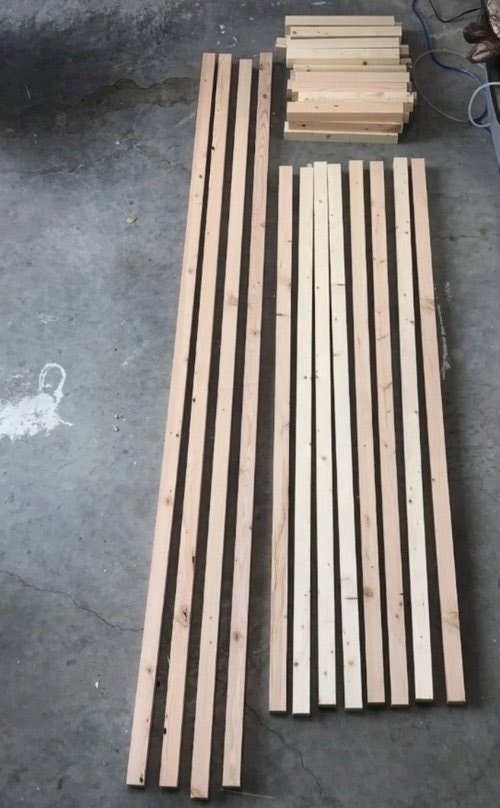
Dimensions:
- 80 3/4″ high
- 13″ deep x 56 3/4″ long
- 51 15/16″ x 10 3/16″ plywood insert
- shelves at 4 5/8″, 30″, 55 3/8″, and 80 3/4″ from the floor
- base 3 1/4″ high
Assembly
After vertical supports are assembled, lay on floor to square up and attach shelves in equal parts (thirds) relative to total height.
- Build the shelves (54″x13″ rectangles), be sure to remember to include the middle brace support.
- Router shelf edge with a 1/2″ rabbiting bit to snugly fit 1/2″ plywood for shelf.
- Build the vertical side supports by fastening 5 of the 10 1/8″ side supports — one each at the top and bottom, and 3 evenly spaced so the brace supports and four shelves make 6 equally spaced side supports. (See photo below).
- Clamp shelves to vertical posts to screw together. Be sure they are square and at the correct fixed height before securing.
- Secure base feet to stand.
- Rabbit plywood edges with 1/2″ round over bit and insert into shelves.
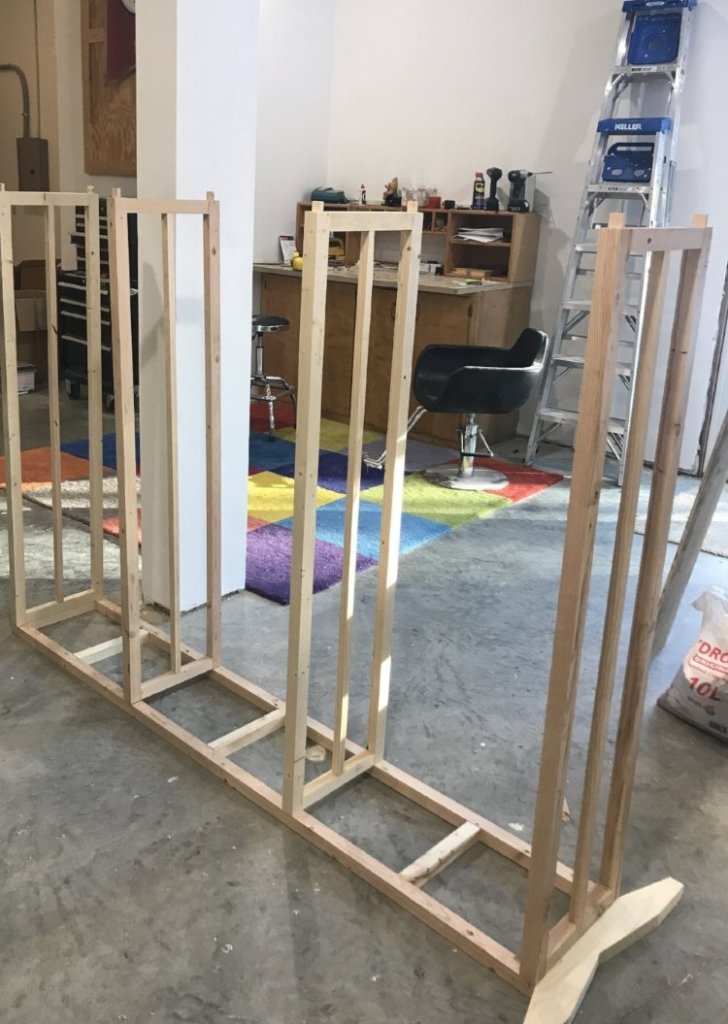
To be honest, this was a multiple weekend project for my handy husband, but he spent a lot of time thinking about how to customize it and use what we had for this. Because we had disassembled a large, deep, awkward shelf in his wood shop last summer, we had all the materials we needed on hand to build this. Even still, a project like this is much less expensive than a catalog plant stand. Granted, much of the cost I think is sunk in the light systems they use, but I still prefer to save costs in the garden as much as possible and place our resources in things like trellises and establishing perennial fruits and investing in unique seeds.

-

The Ultimate Garden Plan
Yes, that’s my goal: to present a simple-to-execute vegetable garden plan for all of you who love the idea of the garden but the execution becomes fraught with mistimed ambitions and then a runner up veggie patch in the summer. And for gardeners of all levels, I have conducted a thorough mind scraping and subsequent presentation of what my years of experience have taught me. The best part: it fits on a single sheet of paper.
So what do you love to eat? Grow what your palette most desires is my motto. In our gardens, we stretch our palettes and continue to try new foods as we learn about them. By way of example, we made room for 3 pear trees (yes, pears!!!) after having consumed many out-of-this-world delicious, juicy, locally grown pears this past fall at our local farmers market. The best motivation for a successful garden is simply to grow your favorite foods. So, start with a list. I’m keeping this post to just vegetables and some popular herbs and companion flowers. Perhaps I will address our perennial fruit garden strategy sometime later this winter.
Why Start So Many Plants From Seed
If you can just drop beets and lettuce, broccoli and parsley seeds into the earth and they will grow successfully, why the heck do we spend the extra effort and start them indoors and then transplant, you may ask?
For one, I find germination rates are higher. Also, I care for the little pots (new this year will be soil blocks for us) with more precision than I am able to outdoors in our garden space. There are no weeds competing for the sunlight. Our plants have a stronger start. These are my second category from the section above. These can also be sown directly, but our preferred method is the indoor head start and I wanted to present that option here for you to ponder.
Your Turn
I hope you will use my list to help you brainstorm what you want to grow. May this chart provide inspiration and ideas for your home garden. The crops I have detailed as ‘Direct Sow’ in the bottom half of the chart really only do well when you buy seeds and sow them yourself. These are among my favorite crops, for you witness their birth right before your eyes and they possess from their first moments of every bit of knowledge they need to provide you with food in a few months time.
Also remember those ‘commitment’ crops like tomatoes and peppers, and that they can be easily procured at your garden center. These are investment crops, investment in your time and space. We enjoy starting our growing season in February, mentally, and we have relished in developing and honing our indoor growing system with each passing year. This should not inhibit you from growing these foods – just buy starts if it’s too much, and don’t for one second regret it.
The Fine Print
So, there are caveats to this. Here they are, in no particular order.
- We push our growing climate to its extremes, and implement season extending methods to achieve the desired results. This includes row covers for the first transplants that go into the garden in late March/early April.
- If you don’t want to be that extreme and you live in zone 4 or 5, skip the first sowing recommendation and wait to start your plants until my second sowing; plan to purchase tomatoes, peppers, and eggplants from a farmers market or garden center.
- We also start the same set of crops up to 3 times in a growing season (indicated as SI1, SI2, SI3 in chart). If you are new to gardening, I recommend to follow my second sowing schedule (or if there’s only one, just follow that) and you will have a lovely spread of veggies.
- If you live in a warmer climate (zone 6+), you can follow my first sowing and transplant dates and you won’t need to worry about row covers. Also, your harvest times will extend deeper into Autumn because of your later first frost dates.
- Harvest times vary according to variety. We plant a wide range of seeds to spread maturity out over as long of a window as possible. It’s fun and practical to garden this way.
- Planting your starts earlier than your recommended last frost date may result in your plants being exposed to a late frost. Take precaution with your seedlings accordingly.
- I also start my squashes and cucumbers in pots, but get them in the ground immediately because their roots cannot be disturbed. Sowing them directly in the ground as I recommend above I believe is easier for new gardeners and will yield similar success.
- While we start some things super early, from experience I have come to the conclusion that waiting to start our cucumbers, squash, and melons until the soil is warm is ideal. For me, that means waiting until the first week in June to sow these crops in the garden.
- If I think of anything else, I promise to add it here. Happy planning!