
Your cart is currently empty!
Fall Garden Guide
Get updated by email whenever there’s a new post
I know, I haven’t even planted my summer tomatoes, yet I want us each to have this long term foresight front and center in our minds as we plunge into planting season. Planting a fall garden is a cornerstone of our garden plans each year, and I hope you will consider some of the crops mentioned and timings suggested in this guide. Remember, you don’t have to do all or even most of what we do. It’s your garden, and thrives under your unique dreams, goals, and tending, so keep it sacredly yours.
This guide will walk you through the various stages of fall garden planning and planting: my late season successions that I’m planting now, where I’m earmarking for summer transplanting, as well as where and how I’ll eek out ever more square footage for the fastest fall garden.
The Long Game
I aim to have a sizable percentage of our entire raised beds in late succession crops. I estimate it’s at least 1/3 of the garden. These include the crops dry/shelling beans, popcorn, leeks, brussels sprouts, winter squash, watermelons, potatoes, and sweet potatoes. Most of these (except leeks, brussels, and potatoes) are frost intolerant and warm season crops, but they are in their beds from sometime in May until October most years — or longer, as in the case of the brussels, leeks, and potatoes. I dedicate space for these singular successions each year, and don’t grow in them before or after these crops.
As I think about it, my tomato beds often behave like a late succession crop too because I don’t tend to utilize that space after its main succession is done, in large part, because at that point, I’m feeling done, too. And, because space isn’t a constraining factor for my fall garden at that point.
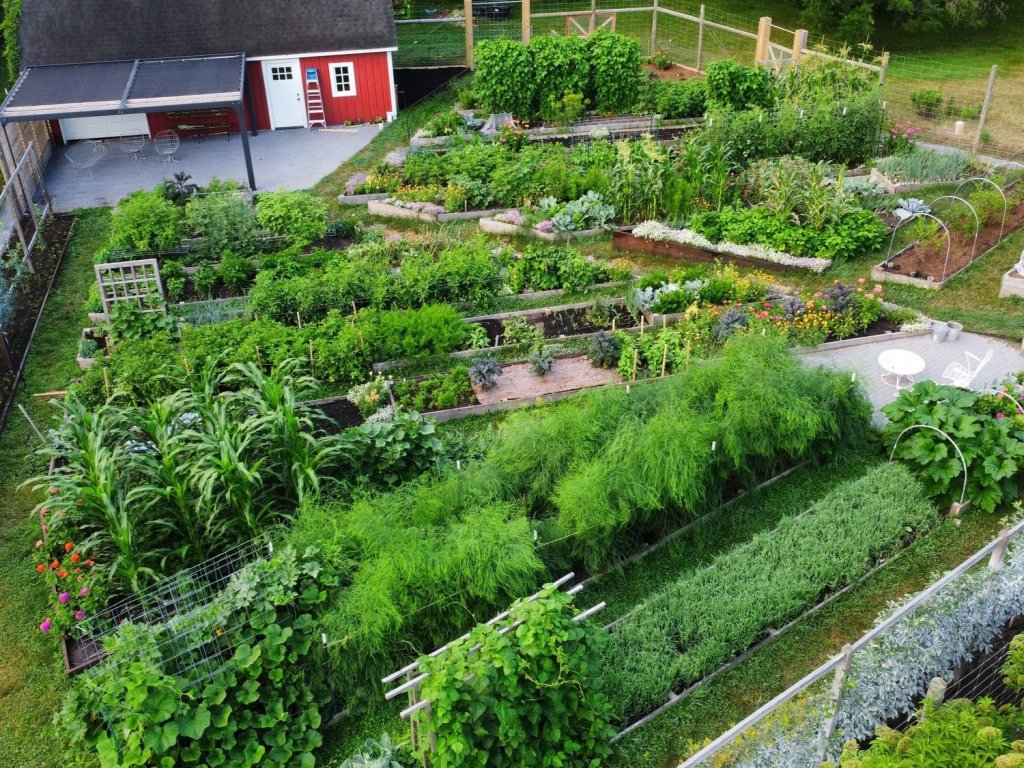
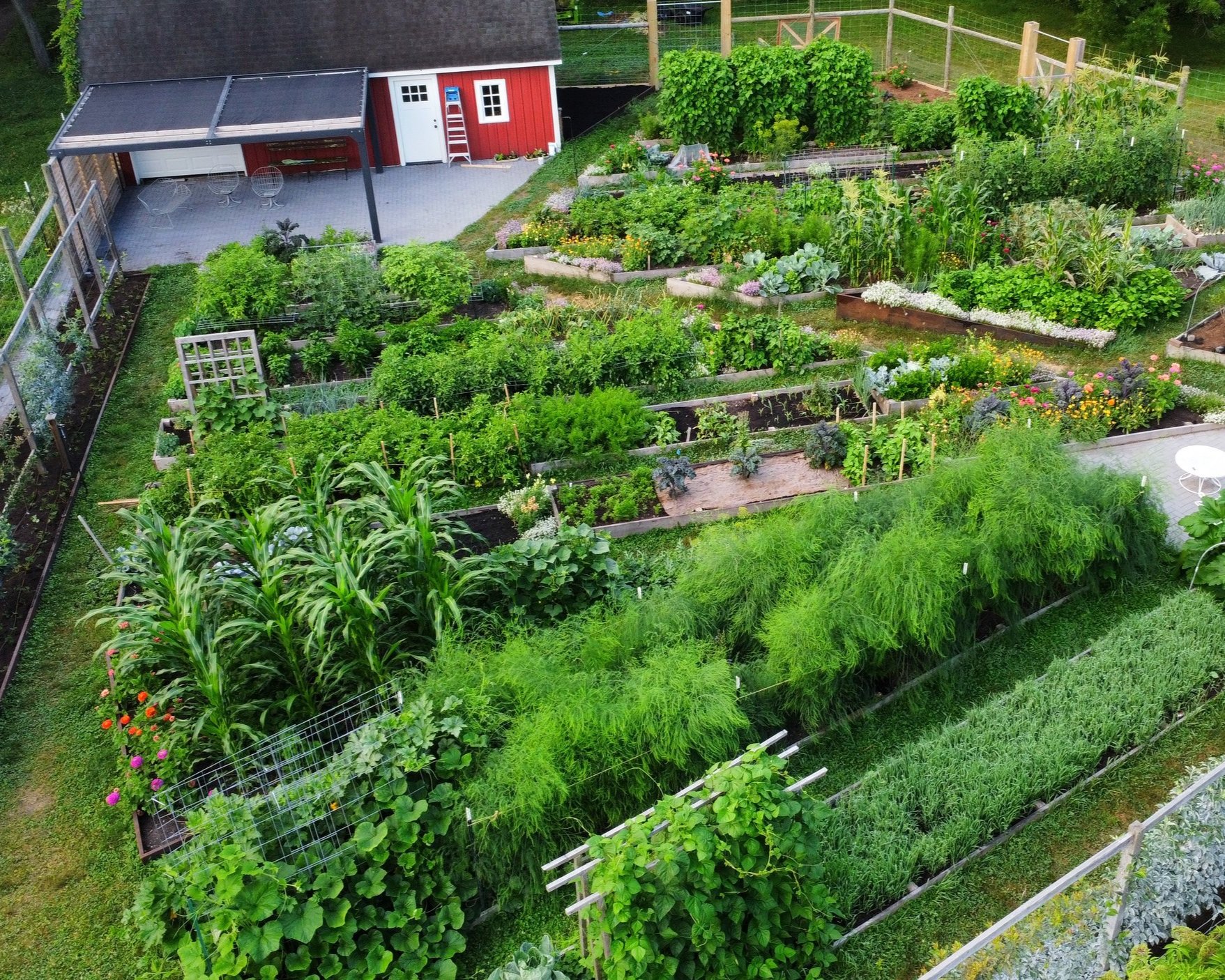
Dry corn, squash, tomatoes, potatoes, and dry beans are scattered about this garden. They are often some of the earliest things I plant, often before my pepper seedlings that I’ve been tending for a few months now.
These crops are all planted in mid-May through early June. It’s critical to partition off space for these crops now. That’s why I wander the garden with a sheet of paper and stakes to literally stake a claim for a crop. It’s honestly one of my favorite activities of the growing season, dreaming up where everything will live and grow and with whom they will co-mingle.
Also, these crops are largely not interplanted at all — rather, their beds are dedicated to just one crop (a method I called Blocking in my book). Watermelon and sweet potatoes are the exception here as I often like to interplant those with flowers. Because, every garden needs more flowers. And because the leeks and potatoes need hilling, interplanting is not viable in those beds.
These are my late succession foods. And they are a cornerstone of our garden.
Spring into Fall
Fall gardening starts now, not only with the late succession crops, but also with how we plant our fast maturing spring garden too.
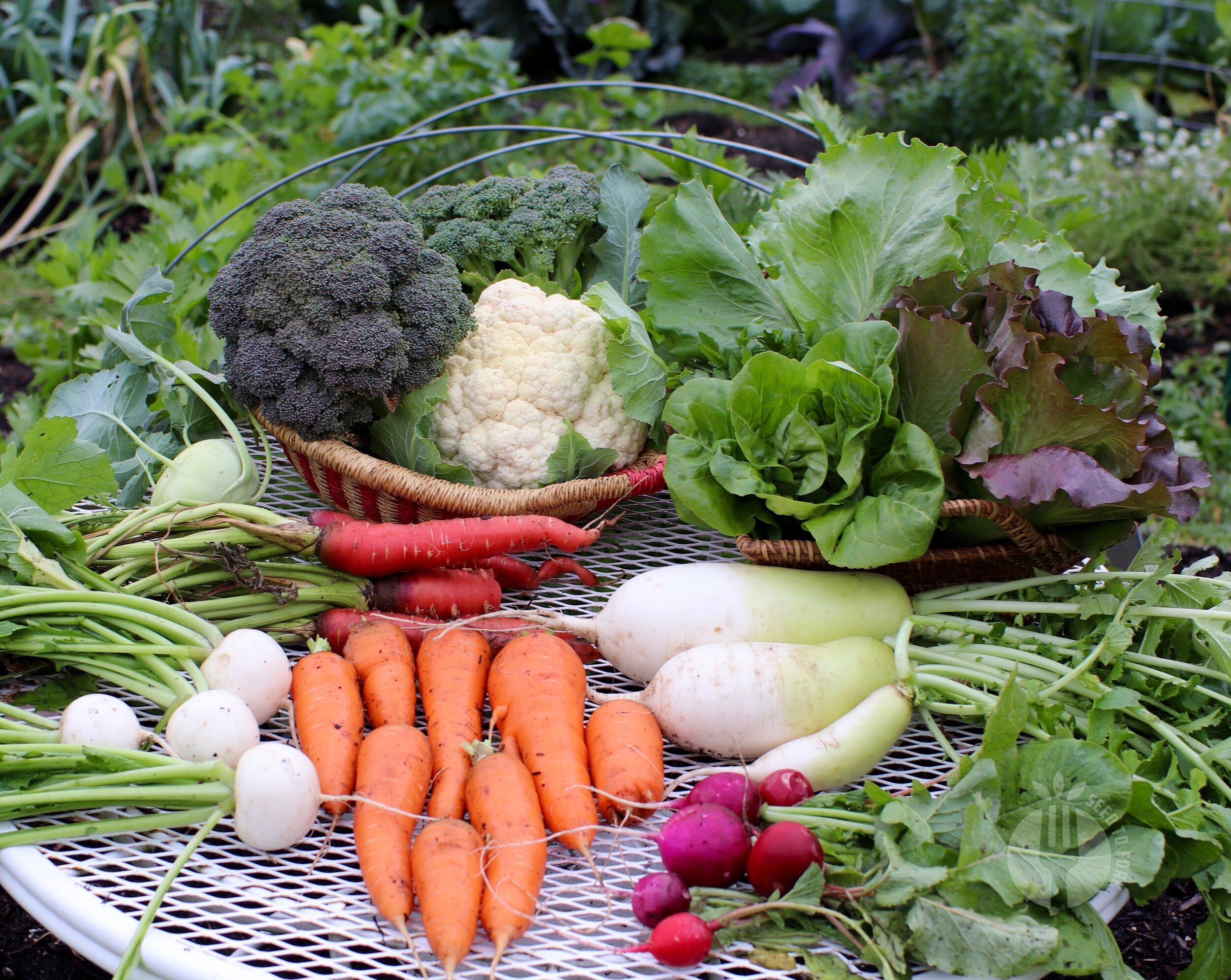
Be strategic as you tuck transplants and sow seeds into your bare beds this month. Clump plants together that will mature at similar rates, especially for things that will be done well before fall like your onions, sweet corn, spring peas, and so forth. These are the areas where I direct seed my later fall successions such as carrots, daikon, and even kohlrabi, napa cabbage, bok choy, and head lettuce.
At the same time, take into consideration your sunlight. Main season, frost intolerant plants like winter squash, tomatoes, beans, and peppers can go in areas that will be shady come fall, as there’s a chance – at least for me – that a frost will descend around the time the beds get shaded out for much of the day. This is a strategy I’m getting better at with each year, but is something I’ve had to learn by doing. I used to plant my garden from the top down, meaning I’d work from my northern most beds and plant toward the barn which is not only further south but also lower down so more prone to shoulder season shade.
As I watched my brassicas get shaded out in early October, it dawned on me to rethink how I plant the sunnier beds thinking ahead for the fall garden. Meaning, I want to have those spaces open for my quicker fall crops as well as some of the spaces open up in mid-August for those 50-day varieties too. This has been a big change in my mindset, and something I may have to remind myself (aka make the same mistake) a more few times before it sticks.
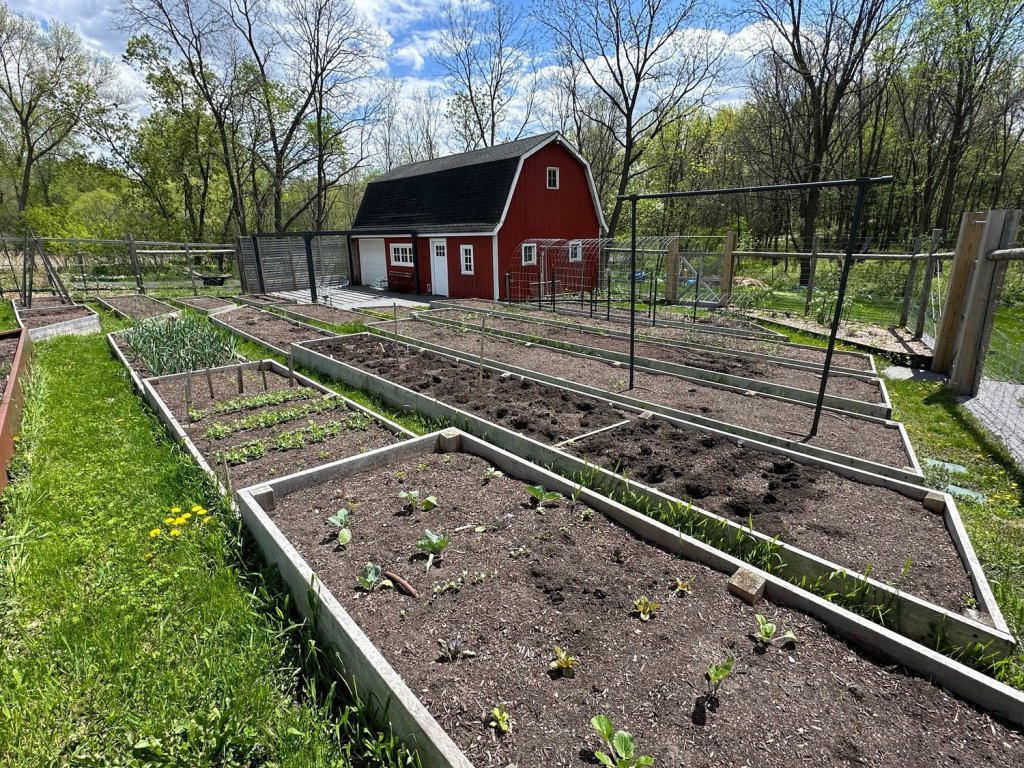
The northernmost bed before our triangle bed this year is planted exclusively with crops that will be mature between June and August. This bed will be succession planted with carrots, greens, napa cabbage, and probably some overwintering spinach later in summer.
In this way, you are partitioning off the sunniest part of your garden to be growing food for the longest possible time, rather than using it for just one, longer crop that will be mature before fall frost. You’re extending your growing season in one or more beds by considering how crops will mature and how you can utilize that space even with weeks left in the frost-free season.
Things I now try to remember to plant in the sunniest spots are: onions, garlic, early brassicas, spring peas, and cucumbers. These are my heaviest succession planting beds, the ones that will get 2-4 successions each growing season, including interplanting successions.
The Sneaky Space Saver
One essential spring planting is a buckwheat cover crop where I will transplant my cabbages, cauliflower, and broccoli for fall (and beyond, being root cellar crops). Buckwheat is an insanely fast cover crop, going from seed to flowering in under 6 weeks usually. I plant it in mid-May so the pollinators can enjoy the nectar before I cut it all down in early July to prepare for transplanting.

Buckwheat is the perfect spring garden cover crop for someone who wants to fall cabbages and cauliflower but doesn’t want empty space now.
We didn’t eat all of our cabbage in winter this year; some of it molded enough that we tossed them out in the compost heap, so I’m partly rethinking my square footage. That being said, I usually earmark 4’x20’ (80 square feet) for our fall brassica transplants. This ends up being about 5 broccoli, 5 cauliflower, and 12 cabbages (green, red, and napa).
I was successful last summer with hooping them, and I plan this year to potentially cover more brassicas because the cabbage whites are so intense for us. And this will somewhat impact my plant spacing as I won’t want them growing outside of the raised bed so I’ll need to plant them differently so the foliage doesn’t flop outside the raised bed.
As I covered in last summer’s guide, I also find space for the fall garden through strategically timing my cururbits: planting a LOT of pickling cucumbers only to tear them out when enough jars have been canned; planting early summer squash and pulling them out, opening up a hefty 4×4 space come late July — meanwhile thwarting any squash vine borer eggs that might be lingering; and onions and garlic that naturally mature by August or so, thereby being prime beds for 50-day root crops and kohlrabi, as well as quicker maturing greens. And, finally, sweet corn plantings are out by August too, carving out even more space for fall crops — I usually plant my head lettuce in the ample space between the corn stubbled rows.
Interplanting
Some fall crops can be interplanted. They are a short list, to be sure. And they are short-growing plants too, which means they don’t need large trellises and, generally, that they crop faster, which is why they make great companion plants for other longer season veggies.
Celery
For a spring harvest, I will often plant celery in a block. Last summer was my very best celery garden; this spring I have about half a dozen plants in need of transplanting. And, it’s almost time to sow my fall celery starts! (More on that timing below…) Celery can be interplanted for fall … it does need some good light and plenty of water, but it can be planted in the understory of tomatoes (trying this for the first time this year), at the edge of a bean trellis, edges of garden beds, and so on. I wouldn’t recommend trying to get a good crop between squash plants, as they
Beets
Beets work great interplanted, and they grow well this far north any week of the growing season. I interplanted them last summer in the gaps in my garlic bed and I was floored at how well they produced, both their speed and size impressed me.
Chard
Other than the fact that I don’t like this veggie and therefore don’t grow it, it’s a great choice for interplanting so I felt obligated to add it here. I’d even go so far as to say it could work well in with your tomatoes, cucumbers, and planted under other vining crops that you trellis, especially as you prune them and disease sets in … if you can handle the flavor, that is. (Just kidding. If you love it, lucky you. I wish I did because it’s so beautiful!)
Fennel
I love fennel as much as an ornamental as an edible. And for this reason, it tends to get planted in prime spots, interplanted among flowers at my “end caps”. It’s foliage and gorgeous bulb demands prime real estate. It is pretty ow growing so those ends of beds tend to be places where sunlight will be strongest, especially if you’ve got taller crops growing in the same space. Go for a south-facing end rather than north-facing for something like this.
Head lettuce
Except for iceberg, I tend to interplant my romaine and bibb type head lettuces. Under trellises, on the north side of vining crops, under young tomato plants, lettuce can handle some light shade, and in the case of a quickly warming summer, it helps curb the bitterness if you’re not growing heat tolerant varieties. My first head lettuce succession is iceberg, and then I switch to heat tolerant varieties through August, at which point I’ve moved back to iceberg types.
Cilantro
I plant cilantro about every other week now through September. It basically will go anywhere I have some decent light and open space. It needs 30-40 days to produce in warmer months, so it’s rather quick. Right now it’s between rows of peas, but later in spring it will be under tomatoes, and between later successions of beans. I just keep finding space wherever I can, and it doesn’t have to be much to be effective. Even just a strip 12” long can produce several bunches of cilantro for your pico de gallo salsa needs in August.
Arugula
This stuff grows faster with each passing week! Sowing often and in shadier spots will give it the best chance at continuing to produce. I tend to take some time off arugula in July, but I will be sowing it a few more times here this spring, anywhere I feel I have enough sunlight and space for 40 days or so. It will likely go between fall iceberg lettuce at that point or the final succession of bush beans, or between our fall peas. Similar places where it’s currently growing.
Bunching Onions
This is another keep planting it veggie I’ve grown to love. Loads of recipes call for scallions, though we often just use the chives that have run amuck in our garden beds along the driveway. I tend to direct sow these nowadays, and like arugula and cilantro, can be seeded in small amounts and grown, gloriously, in bunches for ease of harvest and space saving. I will start sowing them again in July for fall harvests as we have a few plantings in seedling stage at the moment, interplanted in my main flower/veg garden bed just off the garden patio.
Timing Transplants
I have developed a staged approach to starting my fall transplants. It was not without years of soft-ball sized cabbages in December, and broccoli and cauliflower sowed in late July with a late August transplant, timing that seemed to “make sense” based on current weather, rather than considering the plant’s needs in the weeks and months ahead.
I now sow 3-4 successions of fall transplants, because it’s not a one-size fits all adventure, much in the same way I don’t plant my spring or even summer garden in one day. If I sowed them all at the same time, some crops would crop in August (way too soon), while others would not be happy trying to grow in the hottest weeks of summer and bolt or grow terribly bitter. This is kind of the fun but also the exhausting thing about it, and the fact that doing it all makes for a very hectic schedule every week from now until sometime in August. But I enjoy the complexity of the timing and the diversity of produce that results from this extraordinary effort.
Speaking of summer, it’s challenging to accept that during our hottest weeks in summer is exactly when hardening off and transplanting many of our precious fall brassicas needs to happen. Yes, it will feel wrong, and you might second-guess yourself like I do most years, but it works. Not only does it work, it’s needed. Especially for cauliflower and cabbage.
Celery and late season brassicas (they should note if they are late/full season cabbages, usually over 90 days to maturity) are best sowed in mid- to late May, a solid 6 weeks before transplanting. I will be sowing my celery next week in soil blocks, and might do some cabbages at the same time although knowing their germination rates vary so wildly it’s best to put them in separate trays. I’ve learned from watching and talking with my local organic farm friends that fall cabbages are often started in May sometime. I still find this odd, but after having given it a try, it does work. However, with the shifting climate and later falls, they end up quite large and our root cellar not cool enough for storage when they are ready to be harvested, so every year ends up being a little different. I’d rather have slightly smaller cabbages in October than really big ones, because smaller cabbages actually are the best storage quality. But I’m guessing that’s not a priority for most home growers, even though it’s an interesting fact.
June 1 is when I aim sow my cauliflower indoors, along with most of my cabbages. These cabbages include my red cabbage and main season (75-90 days to maturity) varieties. They get transplanted about 4-5 weeks later, around the same time I transplant the longer season ones.
Late June is when I sow my iceberg lettuce and broccoli, because sowing broccoli any sooner will result in summer harvests, not fall. And sowing later in July will result in lackluster harvests, neither will size up due to diminishing light in late September and October. Trust me, I’ve screwed this one up both ways, more than once.
Mid-July is when I start my kohlrabi, napa cabbage, and last fall head lettuce (not iceberg). This can easily be direct seeded or indoor sowed and transplanted.
Timing of direct-seeded fall crops, especially carrots, can start sooner than later too. I’ve sowed my main/early season carrot bed already, and we will eat out of that bed in June, July, and August. But starting in about a month, sowing carrots for late summer and fall harvests is a great plan! They really keep so well in the ground, and are a joy to harvest.
I hope this has given you new insight into how you can enrich your fall garden and succession planting plans this growing season.
You might also like:


Get updated by email whenever there’s a new post
Comments
If you’re a subscriber, you can discuss this post in the forums
Leave a Reply